
The Last Unicorn
The Last Unicorn
Your feedback improves this guide
Your feedback highlights guides that need a second look and keeps the rating trustworthy.
Does this age rating seem accurate to you?
Sign in to vote
Watch-outs
What this film brings
Content barometer
Violence
3/5
Notable
Fear
3/5
Notable tension
Sexuality
1/5
Allusions
Language
1/5
Mild
Narrative complexity
1/5
Accessible
Adult themes
0/5
None
Expert review
The Last Unicorn is an animated fantasy tale with a poetic, melancholy mood, visually beautiful but emotionally darker than many family films. The main concerns come from its lonely atmosphere, the repeated threat of a fire monster, a sinister witch, an attacking harpy, and a few deaths or dangerous situations that are easy for children to understand. The intensity stays stylized and not graphic, yet fear and sadness appear regularly, which can unsettle younger viewers, especially because the story lingers on worry and touches on loss, regret, and the fading of innocence. There are also some mild dated gender stereotypes, especially around the heroine becoming a romantic young woman and a few rescue or protection dynamics, though this is not the film's main focus. For sensitive children, it is best saved for an age when they can handle a dark mood, then talk afterward about the capture scenes, the chases, and the idea of being the last of one's kind.
Synopsis
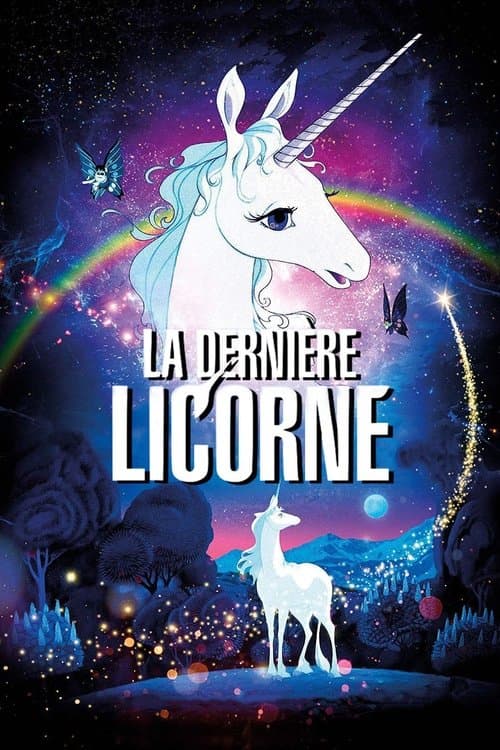
A unicorn learns from a riddle-speaking butterfly that she is supposedly the last of her kind, all the others having been herded away by the monstrous Red Bull. The unicorn sets out to discover the truth behind the butterfly's words. She is eventually joined on her quest by Schmendrick, a second-rate magician, and Molly Grue, a middle-aged woman who dreamed all her life of seeing a unicorn. Their journey leads them far from home, all the way to the castle of King Haggard.
Difficult scenes
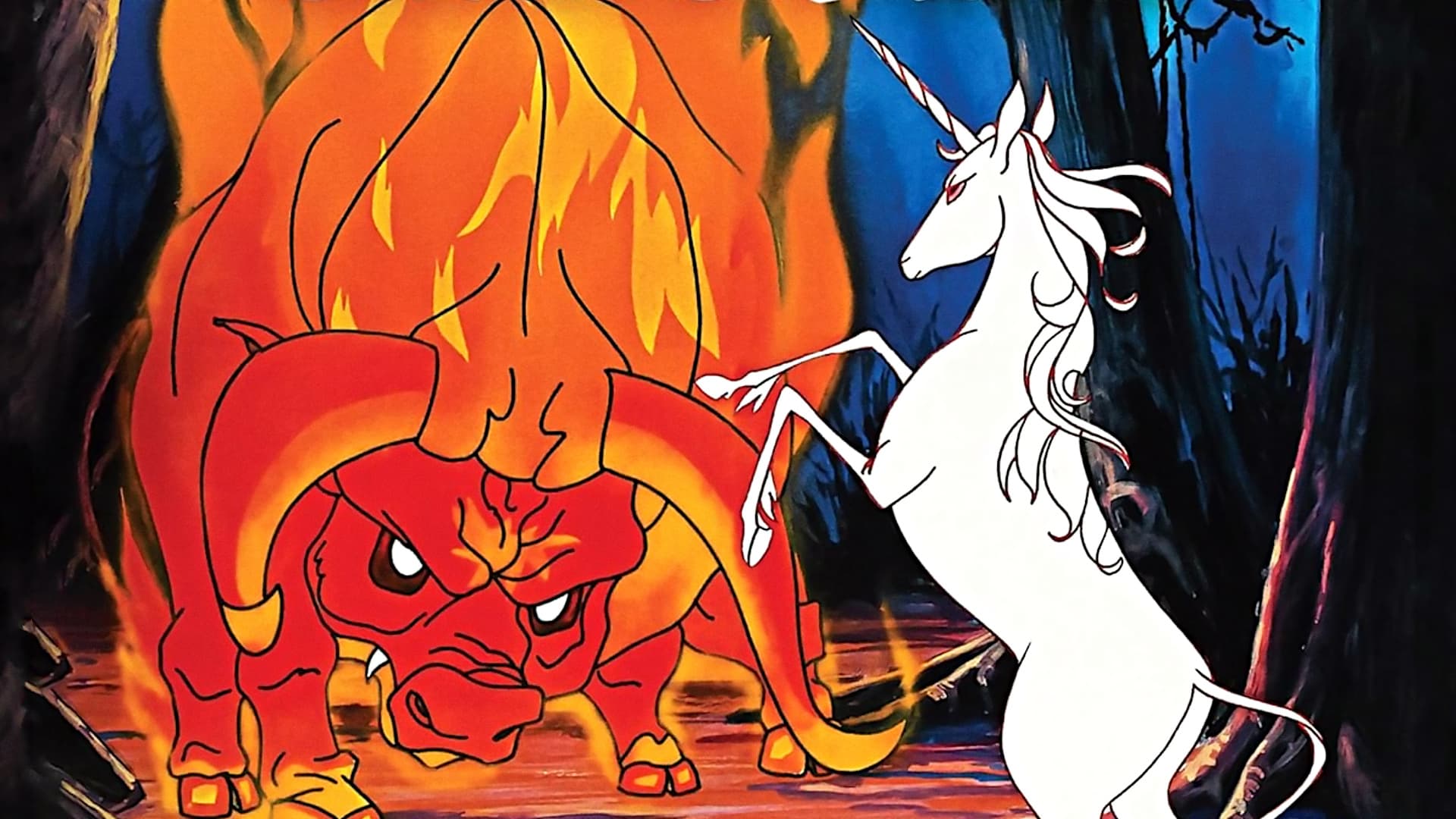
The Midnight Carnival sequence is one of the most unsettling parts for young children. The unicorn is captured, kept in a cage, and surrounded by ordinary animals made to look monstrous through illusion, creating a strong feeling of imprisonment, deception, and ongoing threat. The harpy Celaeno is shown as an ancient and dangerous creature, with a very harsh visual and vocal presence. When she is freed, she violently attacks and kills Mommy Fortuna in a stylized but unmistakable way, which may shock a child who does not expect a character death in an animated film. The Red Bull scenes are among the film's most intense moments. This huge fiery creature relentlessly chases the unicorn, and the escape scenes carry real panic because the heroine seems genuinely powerless and at risk of being captured. At King Haggard's castle, the atmosphere becomes colder and sadder, with a dark, distant, unsettling adult figure whose presence weighs on everyone around him. The unicorn, after being turned into a human, also starts forgetting her identity, which gives the story a more emotional tone and may unsettle children who prefer clear and comforting storytelling.
Where to watch
No verified platform for the US market yet. We keep this section updated as availability changes.
About this title
- Format
- Feature film
- Year
- 1982
- Runtime
- 1h 32m
- Countries
- United Kingdom, United States of America
- Original language
- EN
- Directed by
- Jules Bass, Arthur Rankin, Jr.
- Main cast
- Mia Farrow, Alan Arkin, Tammy Grimes, Jeff Bridges, Christopher Lee, Angela Lansbury, Robert Klein, Keenan Wynn, Paul Frees, René Auberjonois
- Studios
- Rankin/Bass Productions, ITC Entertainment
Content barometer
Violence
3/5
Notable
Fear
3/5
Notable tension
Sexuality
1/5
Allusions
Language
1/5
Mild
Narrative complexity
1/5
Accessible
Adult themes
0/5
None
Expert review
The Last Unicorn is an animated fantasy tale with a poetic, melancholy mood, visually beautiful but emotionally darker than many family films. The main concerns come from its lonely atmosphere, the repeated threat of a fire monster, a sinister witch, an attacking harpy, and a few deaths or dangerous situations that are easy for children to understand. The intensity stays stylized and not graphic, yet fear and sadness appear regularly, which can unsettle younger viewers, especially because the story lingers on worry and touches on loss, regret, and the fading of innocence. There are also some mild dated gender stereotypes, especially around the heroine becoming a romantic young woman and a few rescue or protection dynamics, though this is not the film's main focus. For sensitive children, it is best saved for an age when they can handle a dark mood, then talk afterward about the capture scenes, the chases, and the idea of being the last of one's kind.
Synopsis
A unicorn learns from a riddle-speaking butterfly that she is supposedly the last of her kind, all the others having been herded away by the monstrous Red Bull. The unicorn sets out to discover the truth behind the butterfly's words. She is eventually joined on her quest by Schmendrick, a second-rate magician, and Molly Grue, a middle-aged woman who dreamed all her life of seeing a unicorn. Their journey leads them far from home, all the way to the castle of King Haggard.
Difficult scenes
The Midnight Carnival sequence is one of the most unsettling parts for young children. The unicorn is captured, kept in a cage, and surrounded by ordinary animals made to look monstrous through illusion, creating a strong feeling of imprisonment, deception, and ongoing threat. The harpy Celaeno is shown as an ancient and dangerous creature, with a very harsh visual and vocal presence. When she is freed, she violently attacks and kills Mommy Fortuna in a stylized but unmistakable way, which may shock a child who does not expect a character death in an animated film. The Red Bull scenes are among the film's most intense moments. This huge fiery creature relentlessly chases the unicorn, and the escape scenes carry real panic because the heroine seems genuinely powerless and at risk of being captured. At King Haggard's castle, the atmosphere becomes colder and sadder, with a dark, distant, unsettling adult figure whose presence weighs on everyone around him. The unicorn, after being turned into a human, also starts forgetting her identity, which gives the story a more emotional tone and may unsettle children who prefer clear and comforting storytelling.