Treasure Hunting
たからさがし
Treasure Hunting
たからさがし
Your feedback improves this guide
Your feedback highlights guides that need a second look and keeps the rating trustworthy.
Does this age rating seem accurate to you?
Sign in to vote
What this film brings
Content barometer
Violence
1/5
Mild
Fear
0/5
None
Sexuality
0/5
None
Language
0/5
None
Narrative complexity
0/5
Simple
Adult themes
0/5
None
Expert review
This is a very gentle animated short aimed at young children, with a calm, playful, reassuring mood built around a small disagreement over a found object. Sensitive content is minimal and mostly comes from childlike rivalry, with a few friendly physical contests such as running, jumping, and sumo play, but there is no harmful violence and no real threat. The intensity stays very low throughout, because the conflict is quickly guided by a caring elder and the story focuses on cooperation, play, and a peaceful solution. For parents, this is well suited to preschool and early elementary viewers, especially as a simple way to discuss sharing, fairness, and handling frustration. Even sensitive children are unlikely to be upset, though some may briefly react to the initial argument about who owns the stick.
Synopsis
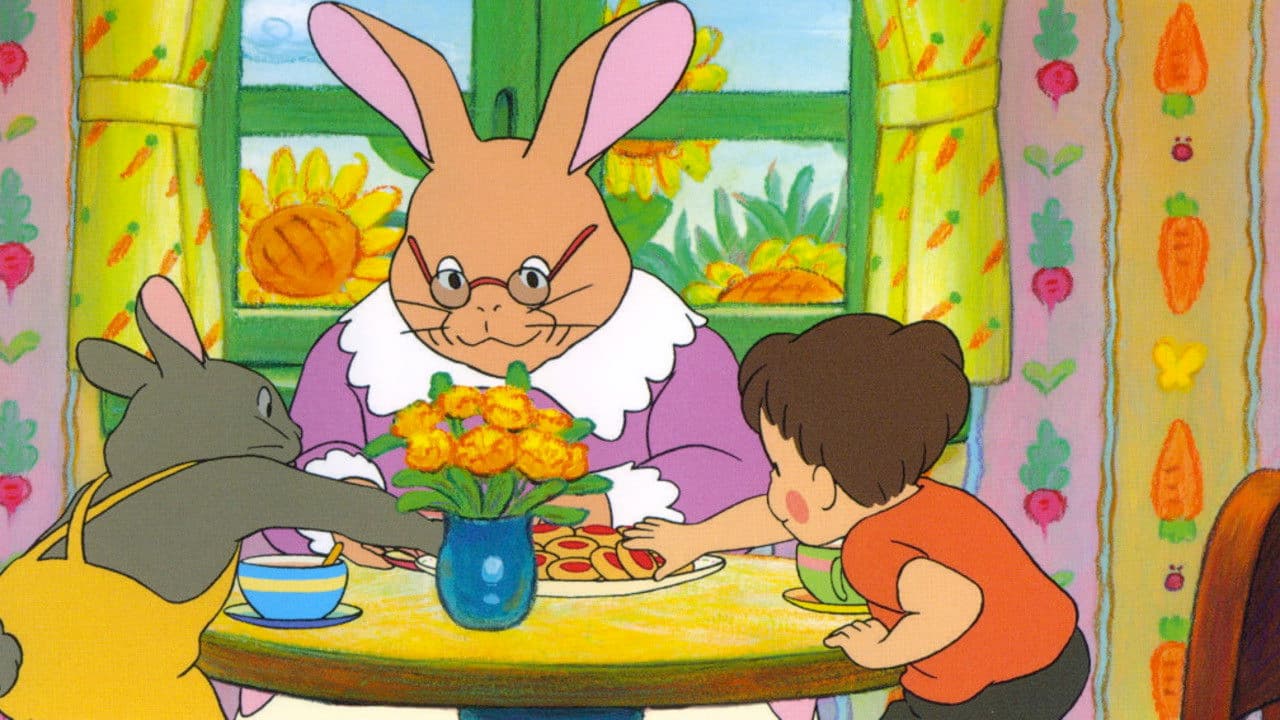
The film is an adaptation of a picture book by Rieko Nakagawa and Yuriko Yamawaki, with illustrations by Yuriko Omura. In the story, a boy named Yuuji and a rabbit named Gikku find a stick at the same time, and decide to compete in games to decide who can keep the stick. However, whether it is a foot race, long jump, or sumo wrestling, they always end up in a tie.
Difficult scenes
At the beginning, Yuuji and Gikku find the same stick at the same time, and each insists that it belongs to them. This small ownership conflict may feel familiar to young children, since both characters become attached to the object and refuse to give in, though the tone remains calm and never strongly aggressive. The two children then try to settle the matter through several physical contests, including a race, a long jump, and a very stylized sumo match. These scenes involve competition and mild body contact, but they stay firmly playful, with no injuries, no fear, and no upsetting consequences.
Where to watch
No verified platform for the US market yet. We keep this section updated as availability changes.
Availability checked on Apr 01, 2026
About this title
- Format
- Short film
- Year
- 2011
- Runtime
- 9m
- Countries
- Japan
- Original language
- JA
- Directed by
- Hayao Miyazaki, Takeshi Inamura
- Studios
- Studio Ghibli
Content barometer
Violence
1/5
Mild
Fear
0/5
None
Sexuality
0/5
None
Language
0/5
None
Narrative complexity
0/5
Simple
Adult themes
0/5
None
Expert review
This is a very gentle animated short aimed at young children, with a calm, playful, reassuring mood built around a small disagreement over a found object. Sensitive content is minimal and mostly comes from childlike rivalry, with a few friendly physical contests such as running, jumping, and sumo play, but there is no harmful violence and no real threat. The intensity stays very low throughout, because the conflict is quickly guided by a caring elder and the story focuses on cooperation, play, and a peaceful solution. For parents, this is well suited to preschool and early elementary viewers, especially as a simple way to discuss sharing, fairness, and handling frustration. Even sensitive children are unlikely to be upset, though some may briefly react to the initial argument about who owns the stick.
Synopsis
The film is an adaptation of a picture book by Rieko Nakagawa and Yuriko Yamawaki, with illustrations by Yuriko Omura. In the story, a boy named Yuuji and a rabbit named Gikku find a stick at the same time, and decide to compete in games to decide who can keep the stick. However, whether it is a foot race, long jump, or sumo wrestling, they always end up in a tie.
Difficult scenes
At the beginning, Yuuji and Gikku find the same stick at the same time, and each insists that it belongs to them. This small ownership conflict may feel familiar to young children, since both characters become attached to the object and refuse to give in, though the tone remains calm and never strongly aggressive. The two children then try to settle the matter through several physical contests, including a race, a long jump, and a very stylized sumo match. These scenes involve competition and mild body contact, but they stay firmly playful, with no injuries, no fear, and no upsetting consequences.