The Whale Hunt
くじらとり
The Whale Hunt
くじらとり
Your feedback improves this guide
Your feedback highlights guides that need a second look and keeps the rating trustworthy.
Does this age rating seem accurate to you?
Sign in to vote
What this film brings
Content barometer
Violence
1/5
Mild
Fear
1/5
Mild
Sexuality
0/5
None
Language
0/5
None
Narrative complexity
0/5
Simple
Adult themes
0/5
None
Expert review
This short animated film by Hayao Miyazaki follows very young children who turn a classroom game into an imaginary sea voyage, with a gentle, colorful, highly accessible atmosphere. The only potentially sensitive elements are the idea of whale hunting, a harpoon mentioned by some of the children, and a few moments of mild peril linked to the ocean, such as rough weather or the boat seeming to take on water. Everything remains very stylized, brief, and unreal, with no visible injury, no cruelty, and no sustained sense of threat. The tension is light and infrequent, because the film mainly focuses on play, wonder, and shared imagination. For most children from age 4, this should be suitable, though parents of very sensitive viewers may want to mention beforehand that it is an imaginative game and that the whale is not presented as frightening.
Synopsis
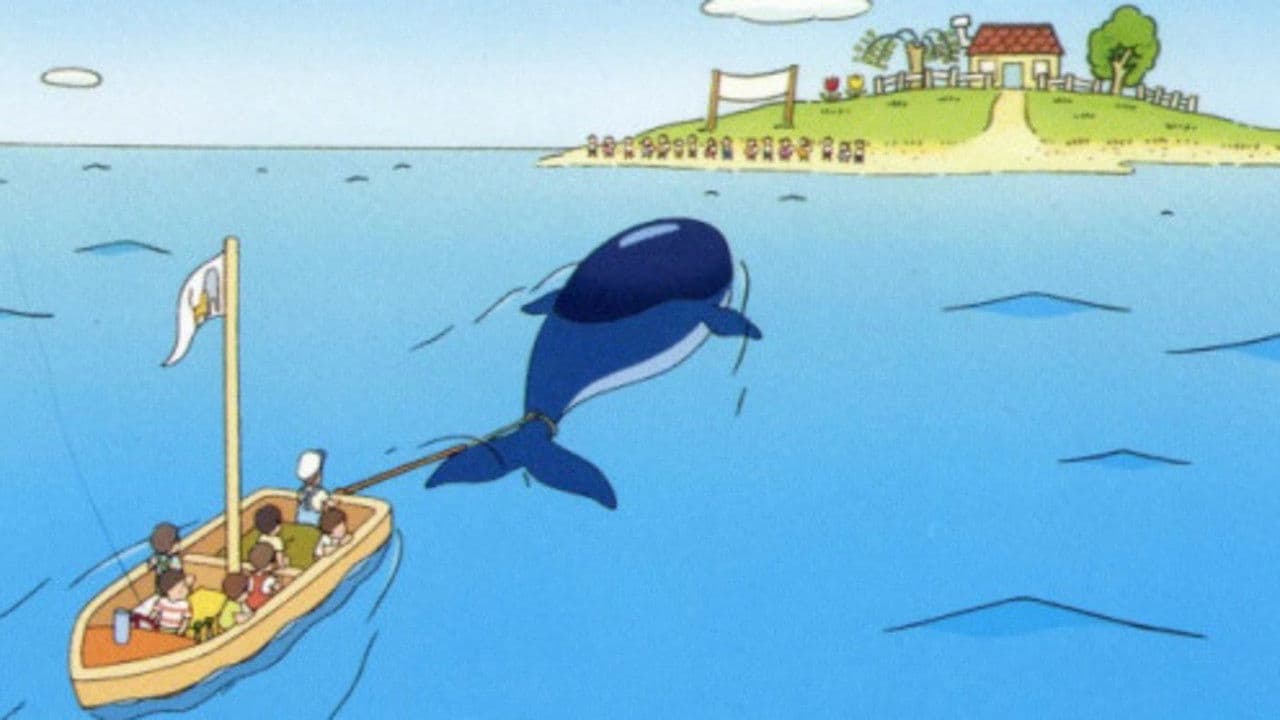
Kujiratori tells the story of school children pretending they are building a boat. As imagination replaces reality, they find themselves on the ocean, hunting for a whale. A big, gentle whale appears, accompanies them back to land and plays with them. Then the fantasy ends and the children are back in their class room.
Difficult scenes
The children pretend they are going whale hunting, and some of them talk about harpooning the whale. Even though the scene stays fully within childlike imagination and contains no graphic violence, the word and the idea of catching a large animal may unsettle very sensitive young viewers. Once the game shifts into a sea adventure, the makeshift boat faces a few difficulties, including a sense of stormy weather and mild danger. These moments are brief and stylized, but they may create small bursts of suspense for children who are especially reactive to ocean scenes or to stories that move away from a familiar classroom setting.
Where to watch
No verified platform for the US market yet. We keep this section updated as availability changes.
Availability checked on Apr 01, 2026
About this title
- Format
- Short film
- Year
- 2001
- Runtime
- 16m
- Countries
- Japan
- Original language
- JA
- Directed by
- Hayao Miyazaki
- Main cast
- Yoshiaki Hakamada, Hiroki Ise, Keito Ishihara, Mao Onodera, Yuta Sasaki
- Studios
- Studio Ghibli
Content barometer
Violence
1/5
Mild
Fear
1/5
Mild
Sexuality
0/5
None
Language
0/5
None
Narrative complexity
0/5
Simple
Adult themes
0/5
None
Expert review
This short animated film by Hayao Miyazaki follows very young children who turn a classroom game into an imaginary sea voyage, with a gentle, colorful, highly accessible atmosphere. The only potentially sensitive elements are the idea of whale hunting, a harpoon mentioned by some of the children, and a few moments of mild peril linked to the ocean, such as rough weather or the boat seeming to take on water. Everything remains very stylized, brief, and unreal, with no visible injury, no cruelty, and no sustained sense of threat. The tension is light and infrequent, because the film mainly focuses on play, wonder, and shared imagination. For most children from age 4, this should be suitable, though parents of very sensitive viewers may want to mention beforehand that it is an imaginative game and that the whale is not presented as frightening.
Synopsis
Kujiratori tells the story of school children pretending they are building a boat. As imagination replaces reality, they find themselves on the ocean, hunting for a whale. A big, gentle whale appears, accompanies them back to land and plays with them. Then the fantasy ends and the children are back in their class room.
Difficult scenes
The children pretend they are going whale hunting, and some of them talk about harpooning the whale. Even though the scene stays fully within childlike imagination and contains no graphic violence, the word and the idea of catching a large animal may unsettle very sensitive young viewers. Once the game shifts into a sea adventure, the makeshift boat faces a few difficulties, including a sense of stormy weather and mild danger. These moments are brief and stylized, but they may create small bursts of suspense for children who are especially reactive to ocean scenes or to stories that move away from a familiar classroom setting.