The Bird & The Whale
The Bird & The Whale
Your feedback improves this guide
Your feedback highlights guides that need a second look and keeps the rating trustworthy.
Does this age rating seem accurate to you?
Sign in to vote
Watch-outs
What this film brings
Content barometer
Violence
1/5
Mild
Fear
2/5
A few scenes
Sexuality
0/5
None
Language
0/5
None
Narrative complexity
0/5
Simple
Adult themes
0/5
None
Expert review
This poetic animated short follows a young whale separated from his own in a visually beautiful ocean world shaped by loneliness and survival. The main sensitive elements are family separation, isolation at sea, the aftermath of a shipwreck, and several moments when the small characters seem genuinely at risk in the open ocean. The intensity stays moderate and non graphic, yet sadness and vulnerability are present through much of the story, which may unsettle very young children who react strongly to loss or lonely imagery. There is no coarse language, no sexual content, and no substance use, while physical danger comes mostly from the natural environment. For children around age 4, it can work best with an adult nearby to offer reassurance, talk through the emotions, and highlight the story's themes of friendship, resilience, and mutual help.
Synopsis
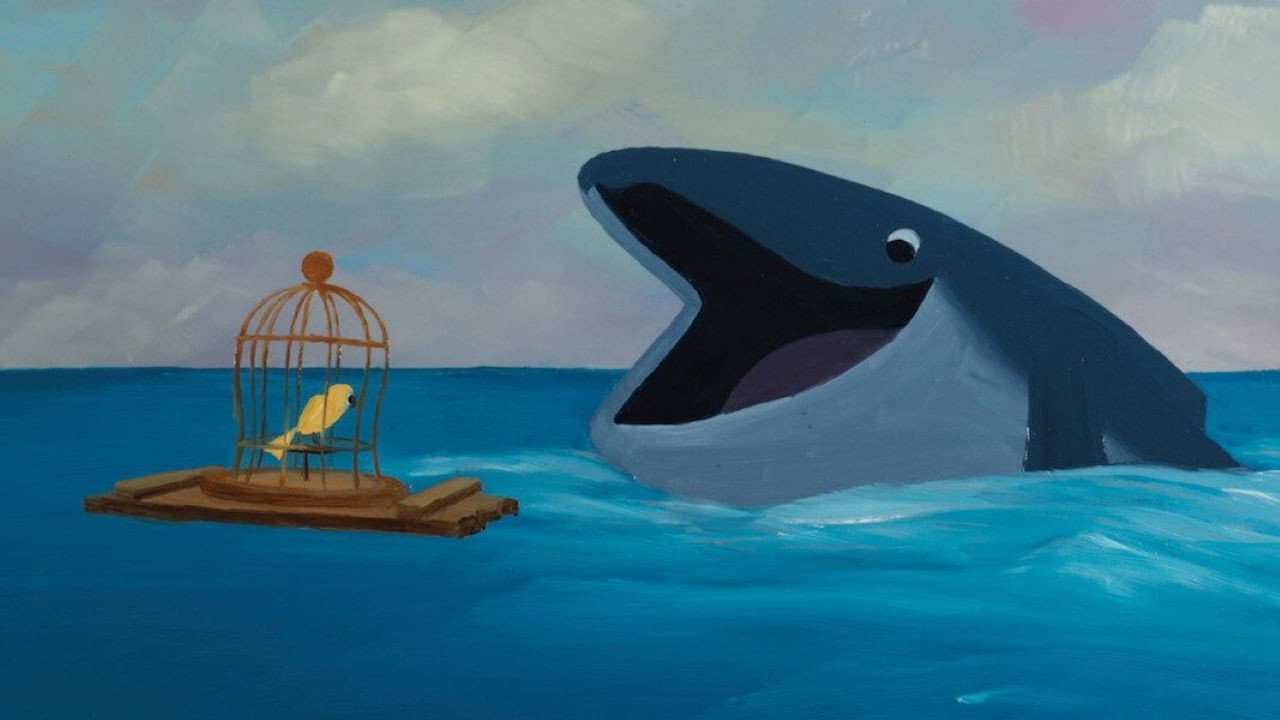
A baby whale separated from his family discovers a caged bird, the sole survivor of a shipwreck. Together they struggle to survive, lost at sea.
Difficult scenes
The opening centers on the young whale being pushed away by his group because he cannot sing like the others. This exclusion may affect sensitive children because it links being different with loneliness and fear of not belonging. The story includes the aftermath of a shipwreck, revealed through the caged bird who appears to be the only visible survivor. The sequence is not graphic, yet the idea that a disaster happened and left a character alone may lead children to ask about death and loss. Several scenes show the two animals adrift in the ocean, dealing with hunger, exhaustion, and the dangers of the sea. The tension remains suitable for young viewers, yet the constant sense of vulnerability may worry children who need a very reassuring atmosphere.
Where to watch
No verified platform for the US market yet. We keep this section updated as availability changes.
About this title
- Format
- Short film
- Year
- 2018
- Runtime
- 7m
- Countries
- Ireland
- Original language
- EN
- Directed by
- Carol Freeman
Content barometer
Violence
1/5
Mild
Fear
2/5
A few scenes
Sexuality
0/5
None
Language
0/5
None
Narrative complexity
0/5
Simple
Adult themes
0/5
None
Expert review
This poetic animated short follows a young whale separated from his own in a visually beautiful ocean world shaped by loneliness and survival. The main sensitive elements are family separation, isolation at sea, the aftermath of a shipwreck, and several moments when the small characters seem genuinely at risk in the open ocean. The intensity stays moderate and non graphic, yet sadness and vulnerability are present through much of the story, which may unsettle very young children who react strongly to loss or lonely imagery. There is no coarse language, no sexual content, and no substance use, while physical danger comes mostly from the natural environment. For children around age 4, it can work best with an adult nearby to offer reassurance, talk through the emotions, and highlight the story's themes of friendship, resilience, and mutual help.
Synopsis
A baby whale separated from his family discovers a caged bird, the sole survivor of a shipwreck. Together they struggle to survive, lost at sea.
Difficult scenes
The opening centers on the young whale being pushed away by his group because he cannot sing like the others. This exclusion may affect sensitive children because it links being different with loneliness and fear of not belonging. The story includes the aftermath of a shipwreck, revealed through the caged bird who appears to be the only visible survivor. The sequence is not graphic, yet the idea that a disaster happened and left a character alone may lead children to ask about death and loss. Several scenes show the two animals adrift in the ocean, dealing with hunger, exhaustion, and the dangers of the sea. The tension remains suitable for young viewers, yet the constant sense of vulnerability may worry children who need a very reassuring atmosphere.