Intelligent Trees
Intelligente Bäume
Intelligent Trees
Intelligente Bäume
Your feedback improves this guide
Your feedback highlights guides that need a second look and keeps the rating trustworthy.
Does this age rating seem accurate to you?
Sign in to vote
What this film brings
Content barometer
Violence
0/5
None
Fear
1/5
Mild
Sexuality
0/5
None
Language
0/5
None
Narrative complexity
1/5
Accessible
Adult themes
0/5
None
Expert review
This science documentary explores the hidden life of forests in a calm, reflective, and highly educational atmosphere, using nature imagery and expert explanations to show how trees communicate, support one another, and respond to their environment. Sensitive content is very limited, mostly involving ideas that may unsettle very young viewers, such as trees being attacked by pests, the suggestion that plants can experience a form of fear, or the discussion of weakened and damaged trees surviving through forest networks. The intensity stays low throughout, with no graphic violence, no direct threat, and no shocking scenes, although the serious tone and scientific language may require patience and some emotional and cognitive maturity. For parents, the main issue is not distressing content but engagement, since younger children may simply find it slow or too abstract. A helpful way to watch is to explain the concepts in simple terms, pause for questions, and connect the film to real world nature experiences and conversations about protecting forests.
Synopsis
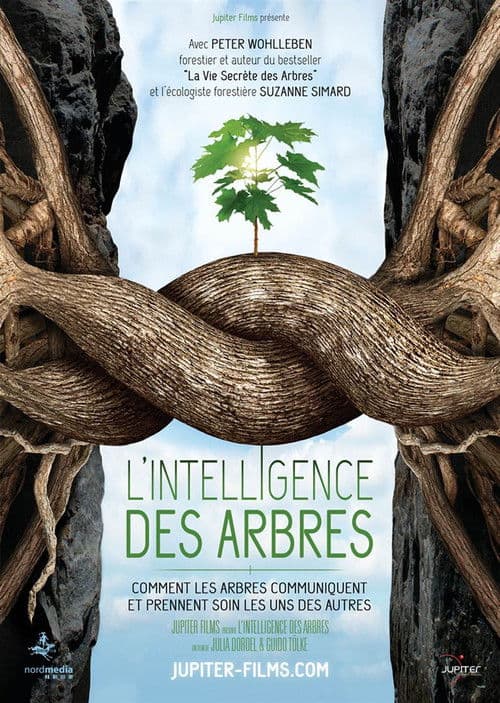
Trees talk, know family ties and care for their young? Is this too fantastic to be true? German forester Peter Wohlleben and scientist Suzanne Simard have been observing and investigating the communication between trees over decades. And their findings are most astounding.
Difficult scenes
The film discusses how trees can be attacked by pests and send warning signals to nearby trees. This biological threat is presented in a scientific and non sensational way, but it may still unsettle very sensitive children who strongly empathize with living things. One notable section focuses on an old trunk or stump that could no longer survive on its own, yet is still being sustained by surrounding trees. This image may raise questions about death, decay, and the vulnerability of nature, even though the documentary mainly uses it to illustrate cooperation within the forest.
Where to watch
No verified platform for the US market yet. We keep this section updated as availability changes.
About this title
- Format
- Feature film
- Year
- 2017
- Runtime
- 45m
- Countries
- Canada, Germany
- Original language
- DE
- Directed by
- Julia Dordel, Guido Tölke
- Main cast
- Suzanne Simard, Peter Wohlleben, Denise M'Baye, Teresa (Sm'hayetsk) Ryan, Monika A. Gorzelak, Amanda Asay, Julia Amerongen Maddison
Content barometer
Violence
0/5
None
Fear
1/5
Mild
Sexuality
0/5
None
Language
0/5
None
Narrative complexity
1/5
Accessible
Adult themes
0/5
None
Expert review
This science documentary explores the hidden life of forests in a calm, reflective, and highly educational atmosphere, using nature imagery and expert explanations to show how trees communicate, support one another, and respond to their environment. Sensitive content is very limited, mostly involving ideas that may unsettle very young viewers, such as trees being attacked by pests, the suggestion that plants can experience a form of fear, or the discussion of weakened and damaged trees surviving through forest networks. The intensity stays low throughout, with no graphic violence, no direct threat, and no shocking scenes, although the serious tone and scientific language may require patience and some emotional and cognitive maturity. For parents, the main issue is not distressing content but engagement, since younger children may simply find it slow or too abstract. A helpful way to watch is to explain the concepts in simple terms, pause for questions, and connect the film to real world nature experiences and conversations about protecting forests.
Synopsis
Trees talk, know family ties and care for their young? Is this too fantastic to be true? German forester Peter Wohlleben and scientist Suzanne Simard have been observing and investigating the communication between trees over decades. And their findings are most astounding.
Difficult scenes
The film discusses how trees can be attacked by pests and send warning signals to nearby trees. This biological threat is presented in a scientific and non sensational way, but it may still unsettle very sensitive children who strongly empathize with living things. One notable section focuses on an old trunk or stump that could no longer survive on its own, yet is still being sustained by surrounding trees. This image may raise questions about death, decay, and the vulnerability of nature, even though the documentary mainly uses it to illustrate cooperation within the forest.