
The Invisible Man
The Invisible Man
Your feedback improves this guide
Your feedback highlights guides that need a second look and keeps the rating trustworthy.
Does this age rating seem accurate to you?
Sign in to vote
Watch-outs
What this film brings
Content barometer
Violence
2/5
Moderate
Fear
2/5
A few scenes
Sexuality
0/5
None
Language
0/5
None
Narrative complexity
2/5
Moderate
Adult themes
0/5
None
Expert review
This 1970s science fiction TV movie follows a scientist who becomes permanently invisible, with a mood closer to light suspense and spy adventure than to horror. The sensitive material mainly comes from chases, secret missions, threats tied to military misuse of the invention, and the unsettling idea of an invisible body and an artificial face made with prosthetics, which may confuse or unsettle younger viewers. The intensity is moderate, with little graphic violence and generally controlled tension, but the story regularly depends on danger, pursuit, and uncertainty. Because the treatment is fairly serious and realistic for its era, very young children are more likely to be bored or puzzled by the scientific and political stakes than truly frightened. There may also be some dated gender stereotypes in how roles are distributed, which was common in television of that period, and parents may want to discuss that briefly with children. I would suggest it from about age 9 with support, especially for kids who enjoy classic science fiction and can handle mild suspense without needing fast paced action.
Synopsis
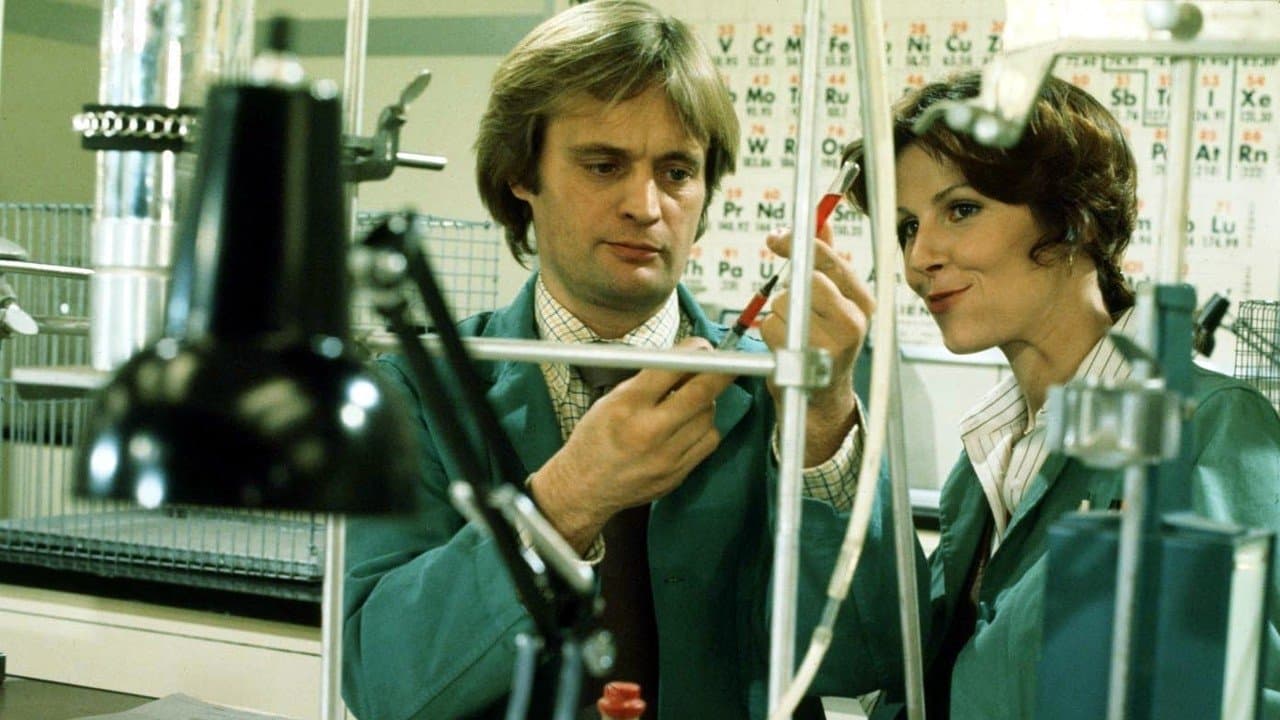
Dr. Daniel Westin creates a formula to be used for matter transformation. To test the formula he uses it on himself. Before he can return to normal he discovers the government wants to use his formula for wrong, so he destroys it. Being unable to become visible again, he and his wife become agents for KLAE fighting crime.
Difficult scenes
The setup shows Daniel Westin testing his own formula and then becoming permanently invisible after realizing that powerful authorities want to misuse his invention. This can affect sensitive children because it combines a scientific experiment, loss of bodily control, and the frightening idea of not being able to return to normal right away. Several scenes rely on escape, surveillance, and the risk of being captured so others can exploit the hero's power. The threat remains fairly clean and television friendly, but it is present often enough to create steady tension for younger viewers who do not enjoy chase or espionage stories. The creation of an artificial face and artificial hands so the character can appear visible may feel strange to some children. Even without gore, the idea of prosthetics that perfectly imitate human skin, and the need to maintain that appearance, can cause discomfort or prompt a lot of questions.
Where to watch
No verified platform for the US market yet. We keep this section updated as availability changes.
About this title
- Format
- TV series
- Year
- 1975
- Runtime
- 48m
- Countries
- United States of America
- Original language
- EN
- Directed by
- Harve Bennett, Steven Bochco
- Main cast
- David McCallum, Melinda O. Fee, Craig Stevens
- Studios
- Universal Television, Silverton Productions
Content barometer
Violence
2/5
Moderate
Fear
2/5
A few scenes
Sexuality
0/5
None
Language
0/5
None
Narrative complexity
2/5
Moderate
Adult themes
0/5
None
Expert review
This 1970s science fiction TV movie follows a scientist who becomes permanently invisible, with a mood closer to light suspense and spy adventure than to horror. The sensitive material mainly comes from chases, secret missions, threats tied to military misuse of the invention, and the unsettling idea of an invisible body and an artificial face made with prosthetics, which may confuse or unsettle younger viewers. The intensity is moderate, with little graphic violence and generally controlled tension, but the story regularly depends on danger, pursuit, and uncertainty. Because the treatment is fairly serious and realistic for its era, very young children are more likely to be bored or puzzled by the scientific and political stakes than truly frightened. There may also be some dated gender stereotypes in how roles are distributed, which was common in television of that period, and parents may want to discuss that briefly with children. I would suggest it from about age 9 with support, especially for kids who enjoy classic science fiction and can handle mild suspense without needing fast paced action.
Synopsis
Dr. Daniel Westin creates a formula to be used for matter transformation. To test the formula he uses it on himself. Before he can return to normal he discovers the government wants to use his formula for wrong, so he destroys it. Being unable to become visible again, he and his wife become agents for KLAE fighting crime.
Difficult scenes
The setup shows Daniel Westin testing his own formula and then becoming permanently invisible after realizing that powerful authorities want to misuse his invention. This can affect sensitive children because it combines a scientific experiment, loss of bodily control, and the frightening idea of not being able to return to normal right away. Several scenes rely on escape, surveillance, and the risk of being captured so others can exploit the hero's power. The threat remains fairly clean and television friendly, but it is present often enough to create steady tension for younger viewers who do not enjoy chase or espionage stories. The creation of an artificial face and artificial hands so the character can appear visible may feel strange to some children. Even without gore, the idea of prosthetics that perfectly imitate human skin, and the need to maintain that appearance, can cause discomfort or prompt a lot of questions.