
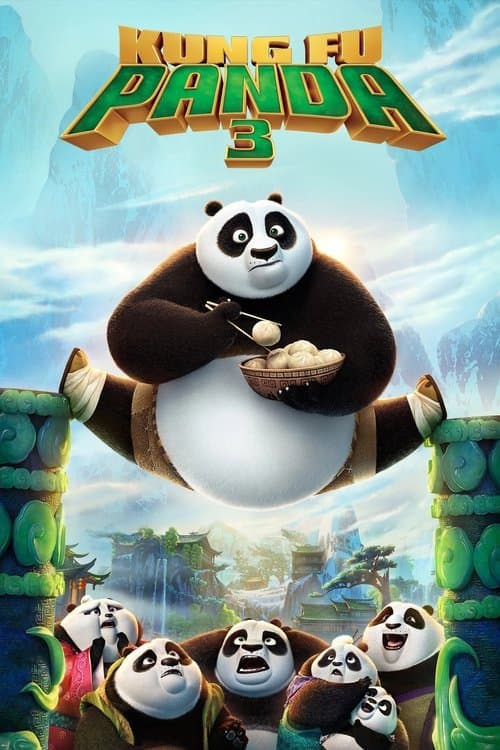
Kung Fu Panda 3
Does this age rating seem accurate to you?
Detailed parental analysis
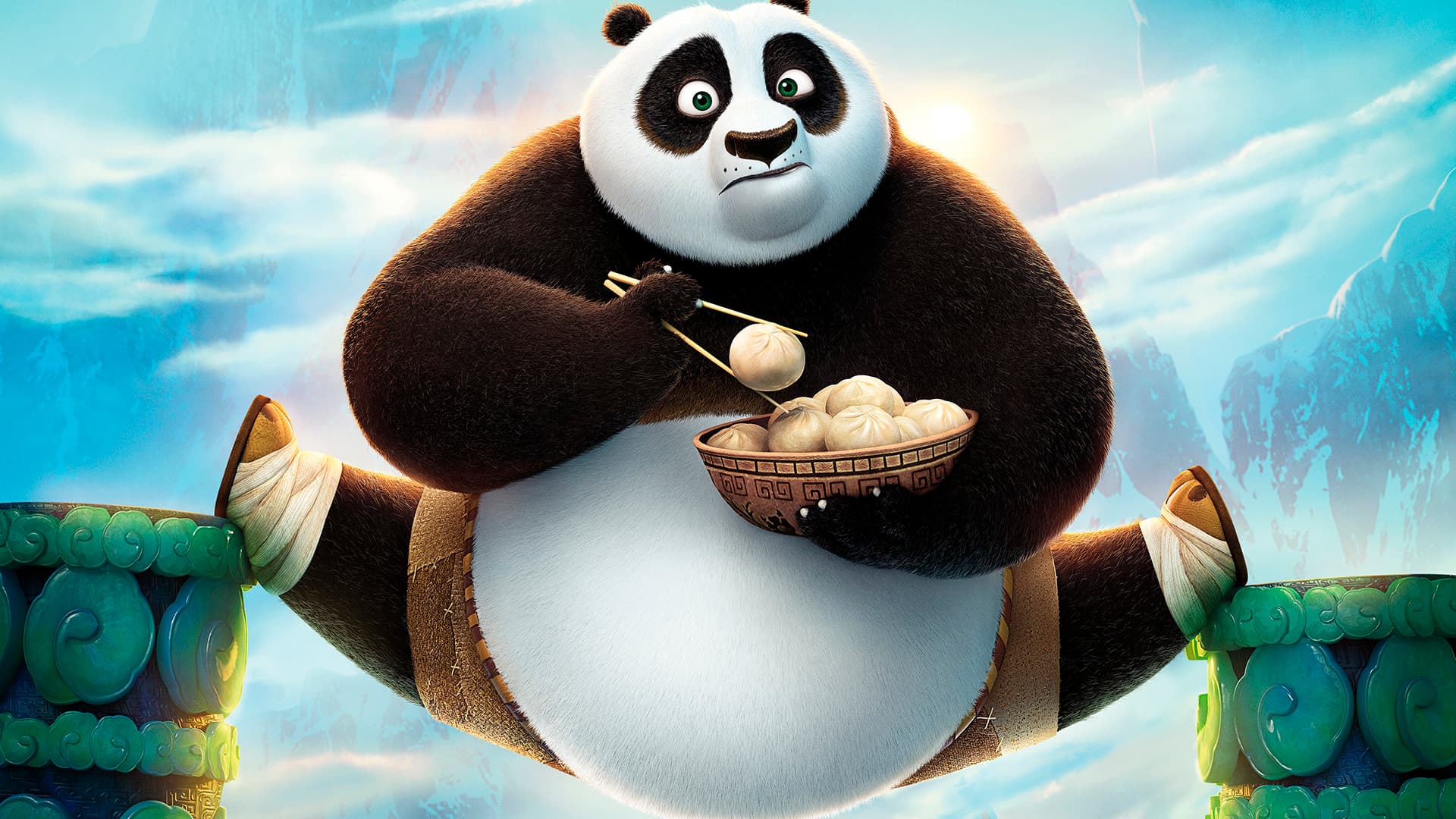
Kung Fu Panda 3 is a family animation film with a warm and cheerful atmosphere, interspersed with stylised action sequences and moments of genuine emotion. The plot follows Po, the Dragon Warrior, who must learn to teach kung fu to a community of pandas in order to face a powerful enemy from the spirit world. The film is designed for young children and their families, with an overall light and reassuring tone.
Underlying Values
This is the film's genuine strength. The narrative constructs a celebration of plural identity: Po belongs to both his adoptive family and his biological family, and the film's resolution rests precisely on his capacity to accept these two allegiances without having to choose one over the other. The notion of community clearly takes precedence over individual performance, with Po triumphing not by accumulating personal power but by transmitting his skills to others. Chi, the film's central power, is presented as a spiritual and peaceful energy, distinct from brute force, which gives the film a more contemplative tone than previous instalments. Self-sacrifice emerges as a positive value, embodied by several characters to varying degrees.
Parental and Family Portrayals
The parental question lies at the heart of the narrative. Po has two fathers, one adoptive and one biological, and the dynamic between these two figures runs through the entire film with humour and tenderness. Neither is discredited: they are depicted as complementary, clumsy but genuinely loving. A flashback shows Po's mother sacrificing her life to save her child, a brief but emotionally charged scene that may move young viewers, or even unsettle them depending on their sensitivity. This reminder of parental loss is treated with delicacy but is not softened. This is a point to anticipate for children who have experienced family bereavement.
Violence
The fights are numerous, dynamic and stylised in the tradition of animated martial arts films. There is no blood, gore or realistic physical consequences: violence remains in a spectacular and choreographed register, clearly distinct from reality. The villain Kai, equipped with chain weapons, is regularly mocked by Po, which defuses his frightening potential and prevents him from embodying an overwhelming threat. A scene where Po thinks he has sent himself into the spirit world, believing himself dead, may surprise the youngest viewers, although the film treats it lightly. Comic violence, particularly centred on food and utensils being hurled about, is sufficiently present to suggest that young children may attempt to replicate it.
Discrimination
The film incorporates, without making it an explicit subject, a character with atypical physical characteristics (irregular dentition, strabismus, speech difficulties) who is fully included in the panda community, without mockery and without condescension. Overweight pandas appear with enthusiasm and greed without their size ever being an object of shame or dietary moralising. A female character, Mei Mei, takes the initiative in seduction with confidence and humour, reversing a narrative pattern often expected. These elements are not commented upon within the film itself, which is precisely their strength: they normalise without preaching.
Language
The language is generally family-friendly and without major roughness. A few words from a mocking register appear in English in the original version (stupid, idiot, loser, shut it), at a moderate frequency and without particular aggressive force. In dubbed versions, the equivalent remains within common children's registers. There is nothing that warrants specific caution, except to remind younger viewers that these terms, even when used lightly on screen, are not formulae to be repeated in all circumstances.
Strengths
The film achieves something rather rare in family animation: treating the question of identity and dual family belonging with genuine emotional depth, without ever becoming heavy-handed. Po's arc as a teacher rather than a simple warrior hero is a coherent and unexpected narrative evolution in a trilogy of this type. The sequences in the panda village are driven by solid visual inventiveness and a sense of comic timing. The film also offers a dignified and unspectacular treatment of maternal loss, which gives it a discreet maturity that children perceive differently depending on their own experience. Finally, the emphasis on transmission rather than individual performance is a narrative structure that deserves to be highlighted aloud with a child.
Age recommendation and discussion points
The film is suitable from ages five to six for most children, with fully serene viewing from age six onwards. For more sensitive children or those who have experienced bereavement, the flashback about Po's mother and the spirit world scene merit brief preparation. Two angles of discussion are worth pursuing after viewing: firstly, why Po can only win by sharing what he knows rather than keeping his power to himself, and secondly, what it means to belong to multiple families at the same time, particularly for children living in their own complex family configurations.
Synopsis
While Po and his father are visiting a secret panda village, an evil spirit threatens all of China, forcing Po to form a ragtag army to fight back.
Where to watch
Availability checked on Apr 03, 2026
About this title
- Format
- Feature film
- Year
- 2016
- Runtime
- 1h 35m
- Countries
- China, United States of America
- Original language
- EN
- Directed by
- Jennifer Yuh Nelson, Alessandro Carloni
- Main cast
- Jack Black, Bryan Cranston, Dustin Hoffman, Angelina Jolie, J.K. Simmons, Jackie Chan, Seth Rogen, Lucy Liu, David Cross, Kate Hudson
- Studios
- DreamWorks Animation, China Film Group Corporation, Oriental DreamWorks, Zhong Ming You Ying Film
Content barometer
- Violence2/5Moderate
- Fear2/5A few scenes
- Sexuality0/5None
- Language1/5Mild
- Narrative complexity1/5Accessible
- Adult themes0/5None
Values conveyed
- Acceptance of difference
- Forgiveness
- family
- courage
- teamwork
- self confidence