Kubo and the Two Strings
Does this age rating seem accurate to you?
Detailed parental analysis
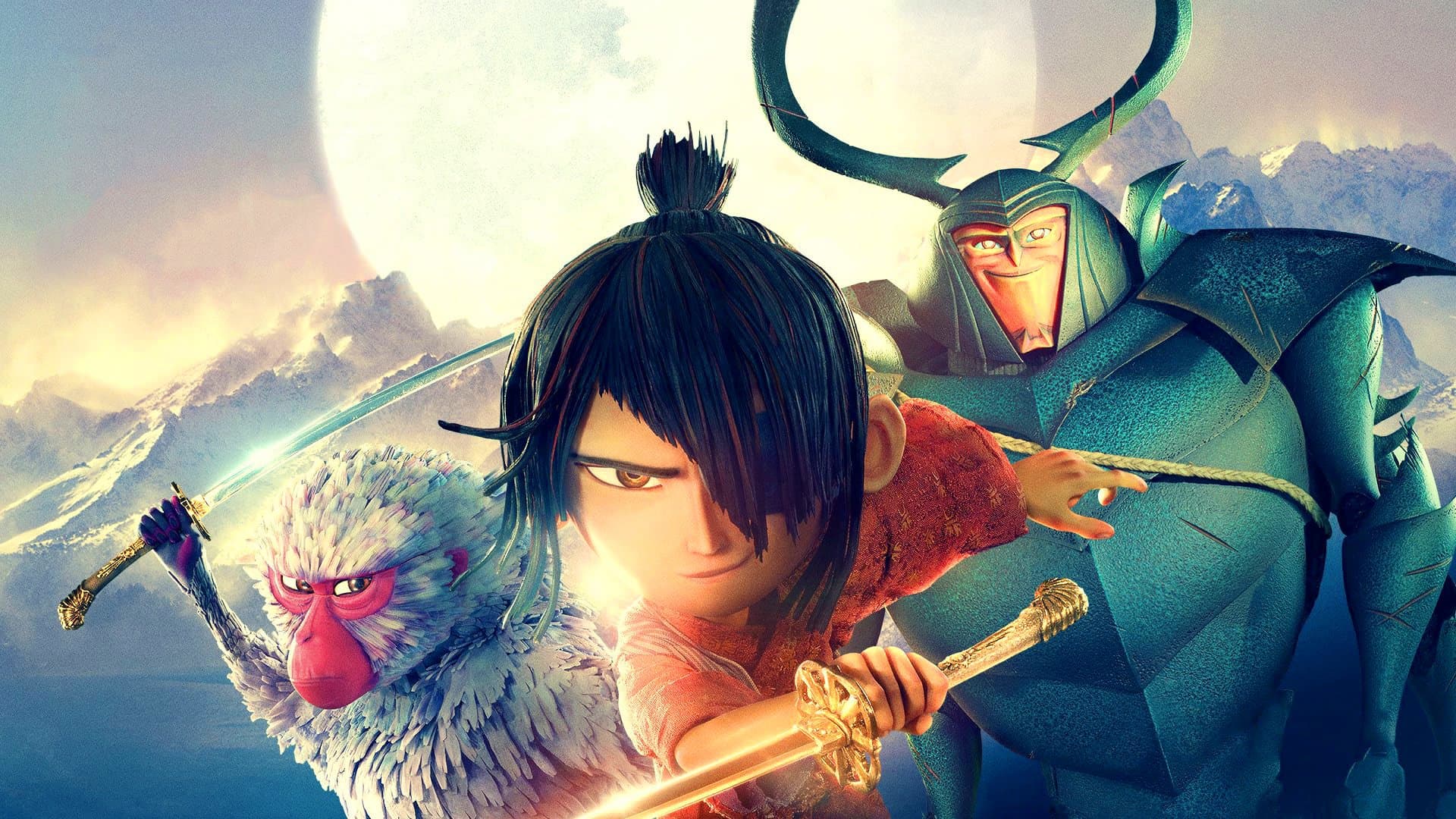
Kubo and the Two Strings is a fantasy adventure film with a dark and poetic atmosphere, threaded through with constant emotional tension and frankly frightening sequences. A young boy gifted with magical power must embark on a quest for a legendary suit of armour to face the celestial forces threatening his life. Despite its appearance as an animated tale, the film is primarily aimed at children aged 10 and above and their parents, rather than younger children.
Violence
Violence is present repeatedly and at times reaches a notable intensity for an animated film. The battles involve swords, bladed chains and arrows, and certain injuries are shown with visible blood. One character is stabbed in the back and dies, another succumbs to his wounds, and Kubo's mother is struck on the head with visible blood right from the film's opening. A giant skeleton with glowing eye sockets attempts to crush and devour the characters. This violence is not gratuitous: it serves a narrative about loss, sacrifice and courage, and each death carries real emotional weight. This does not diminish its visual impact, but gives it a narrative purpose that deserves to be explained to children.
Parental and Family Portrayals
Family representation lies at the heart of the film and constitutes its strongest emotional stakes. Kubo's mother suffers from a form of dementia or dissociative state that renders her absent most of the time, placing the child in a position of responsibility and emotional solitude that is difficult to watch. The father is dead before the story begins. This parentification of the child, combined with grief and loss, can resonate painfully with certain children, particularly those who have experienced fragile family situations. The film treats these themes with sincerity and without indulgence, but without softening them either.
Underlying Values
The film constructs a solid reflection on the choice between immortality and humanity, showing that renouncing one's emotions and connections in order to gain power is a form of inner death. Kubo's grandfather embodies a cold nihilism that the film explicitly criticises: Kubo responds by asserting that beauty and love exist precisely because everything is ephemeral. Forgiveness is offered as an answer to vengeance, not out of naivety but as an act of conscious strength. These values are carried with consistency and constitute rich material for discussion between parents and children.
Social Themes
The film is rooted in Japanese aesthetics and mythology, drawing upon Noh theatre, animated origami and beliefs about ancestors and the memory of the dead. The question of cultural transmission and the role of stories in keeping those who have left us alive is central. This is not a documentary treatment, but a sincere invitation to reflect on what narratives do for the living.
Strengths
The film is a work of rare visual and narrative ambition in family animation cinema. Japanese aesthetics are treated with care and consistency, without superficial exoticism. The narrative weaves together grief, memory, identity and transmission with remarkable economy of means: little expository dialogue, many symbols and images that work in depth. The figure of the storyteller as guardian of the dead is treated with an emotional intelligence that touches both children and adults alike. The film offers a complete, demanding and memorable cinematic experience that leaves a lasting impression.
Age recommendation and discussion points
The film is not recommended before age 9 due to violence, frightening creatures and the emotional weight of grief and parental absence. From age 10 onwards, it can be watched with ease, ideally in the presence of an adult for sensitive children. Two angles of discussion are worth opening after viewing: why does Kubo choose forgiveness over vengeance, and what does it truly cost him? And also: how do the stories we tell about those we have lost keep them present in our lives?
Synopsis
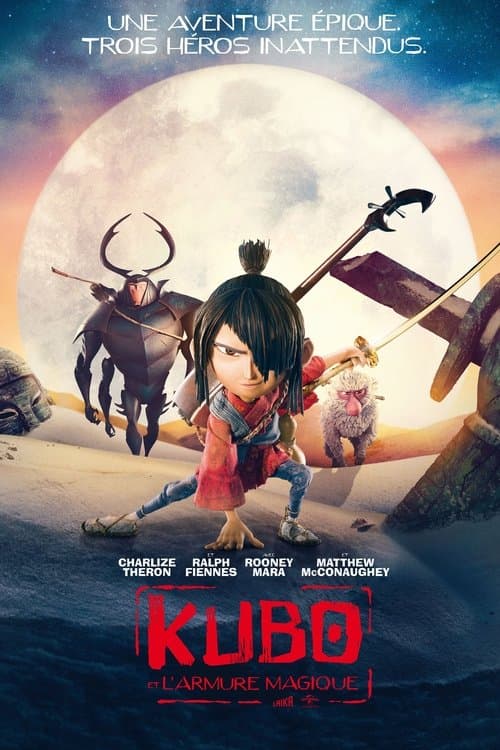
Kubo mesmerizes the people in his village with his magical gift for spinning wild tales with origami. When he accidentally summons an evil spirit seeking vengeance, Kubo is forced to go on a quest to solve the mystery of his fallen samurai father and his mystical weaponry, as well as discover his own magical powers.
About this title
- Format
- Feature film
- Year
- 2016
- Runtime
- 1h 41m
- Countries
- United States of America, United Kingdom
- Original language
- EN
- Directed by
- Travis Knight
- Main cast
- Art Parkinson, Charlize Theron, Brenda Vaccaro, Cary-Hiroyuki Tagawa, Meyrick Murphy, George Takei, Rooney Mara, Ralph Fiennes, Matthew McConaughey, Minae Noji
- Studios
- LAIKA
Content barometer
- Violence3/5Notable
- Fear4/5Intense
- Sexuality0/5None
- Language0/5None
- Narrative complexity2/5Moderate
- Adult themes0/5None
Values conveyed
- Courage
- Forgiveness
- resilience
- family
- friendship