
Kotaro Lives Alone
コタローは1人暮らし
Does this age rating seem accurate to you?
Detailed parental analysis
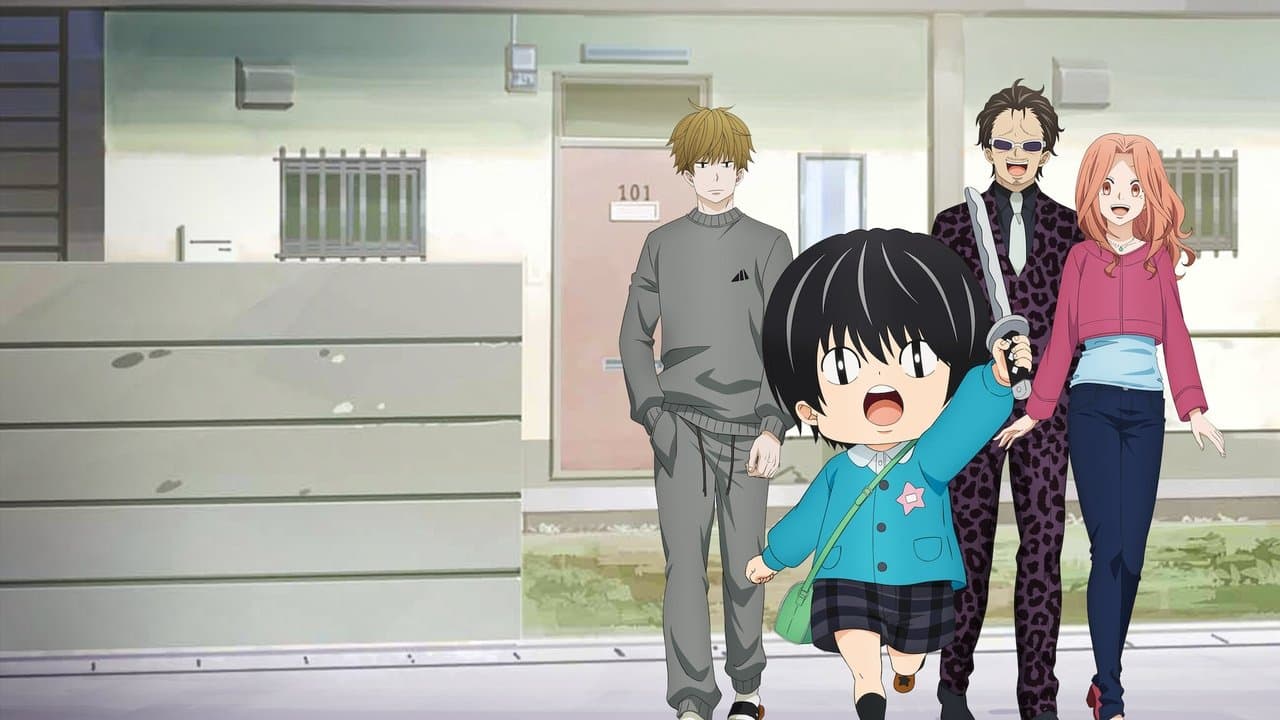
Kotaro Lives Alone is a Japanese animated series with a disconcerting tone that initially presents itself as a gentle and touching comedy before revealing considerable dramatic depth on child abuse and abandonment. The plot follows Kotaro, a four-year-old boy living alone in an apartment, as he forms bonds with his adult neighbours, each carrying their own wounds. The intended audience is clearly adult, despite the misleading appearance of a narrative centred on a young child.
Parental and Family Portrayals
This is the heart of the narrative and its most difficult subject. Kotaro's father is shown in flashbacks as a violent man who shouts, destroys the home and physically strikes the mother and child. The mother, meanwhile, is absent in a way that becomes clearer as the episodes progress. These depictions are not softened: they serve to explain why a four-year-old boy finds himself alone, and they give the narrative its true gravity. The series does not demonise without nuance, but neither does it minimise the reality of abuse. For a child or pre-adolescent, these scenes can be unsettling, even traumatic if they echo a personal experience.
Underlying Values
The series patiently constructs a vision of chosen family as a legitimate and restorative substitute for the failing biological family. Kotaro's neighbours gradually form an informal care network, without this ever being presented as an ideal or painless solution. Collective solidarity is shown as a concrete act, sometimes clumsy, always necessary. The narrative does not resort to easy moralising: it shows that healing is slow, that the adults around Kotaro have their own fragilities, and that caring for a vulnerable child engages each person differently.
Violence
Physical violence is present in the form of flashbacks showing scenes of domestic and parental abuse, with a father who strikes and destroys. These sequences are not graphic in the gore sense, but they are emotionally intense and unambiguous about what they represent. By contrast, Kotaro himself regularly brandishes a plastic sword to intimidate adults, which is a recurring comic device with no narrative danger. The real violence of the narrative is therefore that of the past, invoked to explain the present, and it is treated with a clear narrative intention rather than as spectacle.
Social Themes
The series directly addresses the question of child protection and parental neglect, showing how a child can fall through the gaps of institutional systems and survive thanks to the vigilance of his immediate surroundings. Without ever becoming a documentary or explicit advocacy, it raises the question of collective responsibility in the face of a child in danger. This is a particularly rich angle of discussion to open with an adolescent.
Substances
Several adult characters drink alcohol regularly, and some scenes show them intoxicated. The consumption is presented as a character trait or escape mechanism for adults in difficulty, without being either glorified or explicitly condemned. It is an element of realism in the portrayal of secondary characters, but it deserves to be flagged for parents of young children.
Sex and Nudity
A few bathing scenes contain partial nudity, notably male buttocks and a scene where a female character is visible in a bath, her breasts covered by foam. These moments are treated without erotic intent and fall within the register of ordinary domestic comedy. They do not constitute a significant narrative issue.
Strengths
The series achieves something rare: maintaining constant tension between the register of light comedy and that of social drama without one betraying the other. The writing is sufficiently refined that humour never minimises the gravity of Kotaro's situation, and sadness never makes the narrative unbearable. The character of Kotaro himself is constructed with remarkable psychological precision: his formal language, his rituals, his skewed reactions are all ways of showing how a child builds survival mechanisms in the face of a failing adult world. The series also possesses genuine emotional intelligence in the way it treats secondary characters, each carrying a wound of their own that resonates with the child's without the parallel ever being heavily underlined.
Age recommendation and discussion points
The series is not suitable for children despite its young protagonist: the themes of abuse, abandonment and parental neglect are treated with a honesty that can be taxing, and the gap between the light appearance and dramatic reality can disorient a young viewer. It is suitable from age 14 for an accompanied adolescent, and rather from age 16 for serene and autonomous viewing. Two angles of discussion are particularly worth pursuing after viewing: why does Kotaro pretend to be strong and self-reliant when he needs help, and what could or should the adults around him have done differently to protect him sooner.
Synopsis
A lonely little boy moves into a ramshackle apartment building all on his own and makes friends with the broke manga artist who lives next door.
About this title
- Format
- TV series
- Year
- 2022
- Runtime
- 27m
- Countries
- Japan
- Original language
- JA
- Main cast
- Rie Kugimiya, Toshiki Masuda, Junichi Suwabe, Saori Hayami
- Studios
- LIDENFILMS
Content barometer
- Violence3/5Notable
- Fear3/5Notable tension
- Sexuality1/5Allusions
- Language1/5Mild
- Narrative complexity2/5Moderate
- Adult themes2/5Present
Values conveyed
- Acceptance of difference
- Compassion
- friendship
- kindness
- resilience
- empathy