
Klaus
Does this age rating seem accurate to you?
Detailed parental analysis
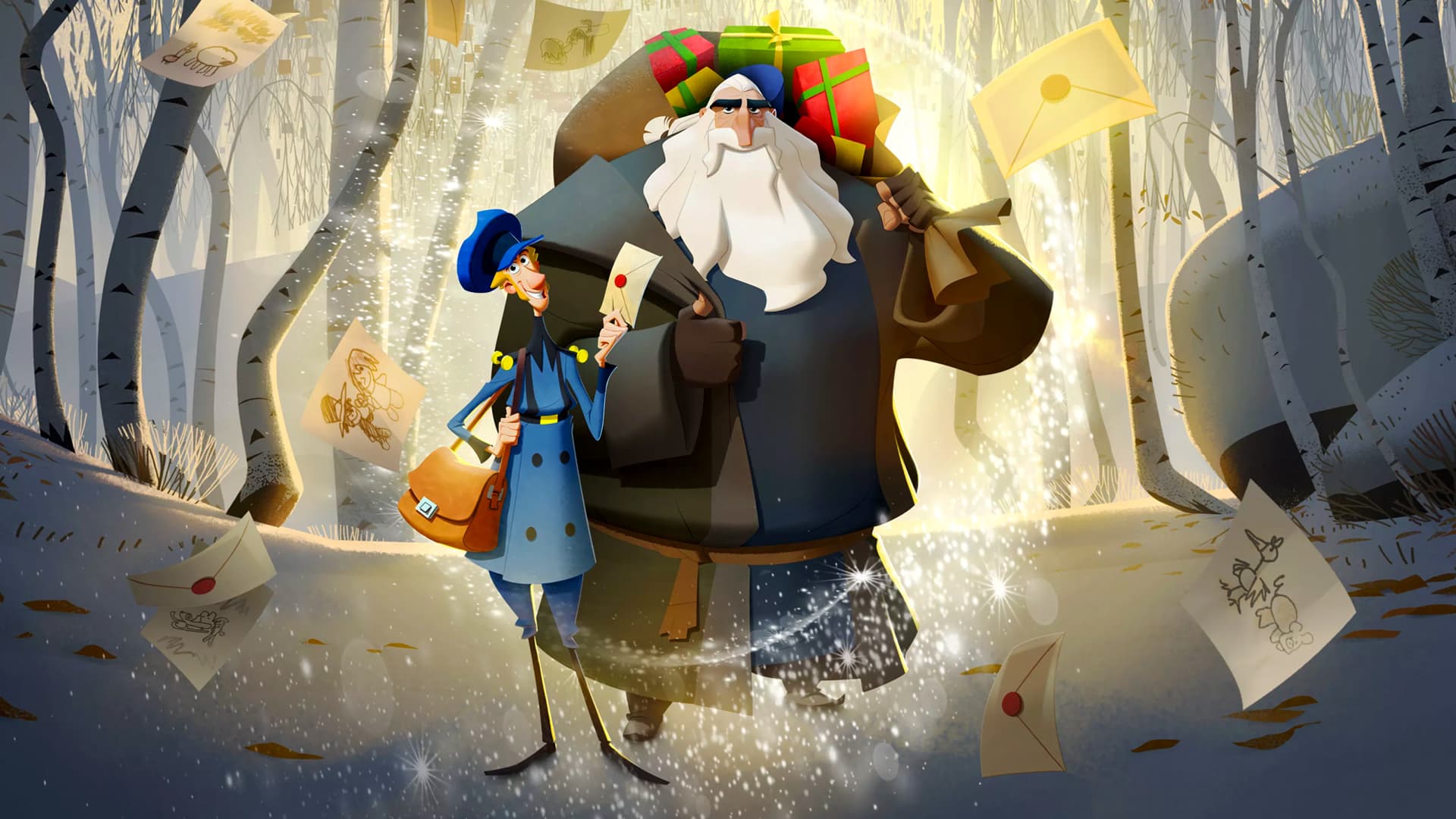
Klaus is an animated film with an initially austere and deliberately cold atmosphere that gradually warms to become a touching family tale. The plot follows Jesper, a lazy and arrogant young postman exiled to a frozen polar town, who will forge an unexpected friendship with a mysterious solitary carpenter and transform his community. The film is aimed at a family audience from school age onwards, with an emotional depth that resonates more powerfully with children aged 7 and above as well as adults.
Underlying Values
The narrative is built on a strong central idea: one act of generosity triggers another, creating a chain reaction that transforms an entire community. This narrative mechanism is not merely decorative; it is the engine of the film and gives rise to concrete reflection on how individual behaviours shape the collective. Jesper's arc, moving from a calculating young man seeking only to return home to someone who gives without expecting anything in return, is handled with consistency and credibility. The film clearly contrasts two logics: that of hereditary resentment, shown as absurd and destructive, and that of generosity, presented as liberating. The material wealth that Jesper initially covets is progressively devalued in favour of authentic emotional bonds.
Violence
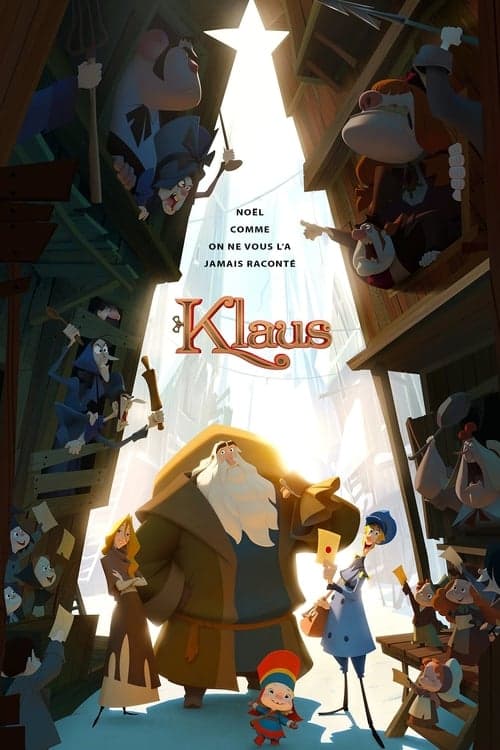
The violence between the two rival families is treated in a slapstick manner, with visible weapons such as pitchforks, hammers and knives, but no blood or realistic injury. The tone remains deliberately cartoonish and never seeks to glorify the confrontations. On the contrary, the film depicts them as ridiculous and socially devastating: the entire town is paralysed by this ancestral quarrel whose origin no one remembers. This framing is pedagogically effective because it shows the concrete consequences of violence on the community without making it a spectacle. Scenes involving aggressive dogs and some dark set elements such as a noose in the village square may surprise younger viewers without being traumatising.
Parental and Family Portrayals
The paternal figure of Jesper is central: his authoritarian and disillusioned father places him in a situation of deliberate failure to force him to grow up. This relationship is tense but not abusive, and the film resolves it satisfactorily. Klaus, for his part, represents a form of benevolent adoptive fatherhood, awakening in Jesper what no biological father had been able to stir. Klaus's grief for his deceased wife constitutes one of the deepest emotional layers of the film, addressing loss, sorrow and infertility without excessive candour but with genuine sensitivity. This subject can naturally open discussions with children about grief and the memory of loved ones.
Social Themes
The film organically incorporates a Sámi community represented with care, including characters speaking their native language and playing an active and positive role in the story. Their presence illustrates the value of including outsiders and minorities in the life of a community, without this being heavily underlined. The dynamic of the isolated, inward-looking town ravaged by its own conflicts functions as a readable metaphor for sterile communitarianism, and its evolution towards openness constitutes the social arc of the film.
Language
The language remains very measured: a few mild insults such as 'idiot' or 'failure', an isolated religious exclamation. Nothing that warrants particular attention, but parents of very young children may note that the register is not always sweetened.
Strengths
Klaus offers an original narrative construction for a Christmas animated film: it takes time to establish a cold and depressing universe before transforming it, which makes the emotional shift all the more effective. Jesper's character benefits from a redemption arc rarely written so well in the genre, with credible stages and an assumed selfish initial motivation. The writing avoids easy sentimentality and treats heavy themes such as grief, guilt and the meaning of existence with genuine economy of means. The way the film builds the legend of Father Christmas from concrete human acts rather than arbitrary magic gives it internal coherence and a philosophical scope accessible to children. It is a film that rewards attentive viewing and leaves a lasting emotional imprint.
Age recommendation and discussion points
The film is not recommended for children under 6 years old due to its initially dark atmosphere, a few scenes of stylised violence and the emotional intensity of certain passages. From age 7 or 8, it can be watched calmly and with benefit. Two angles of discussion to prioritise after viewing: why does Jesper really change his behaviour, and what triggers this change? And also: how can a single person transform an entire group around them, and does this seem possible in their own life?
Synopsis
A selfish postman and a reclusive toymaker form an unlikely friendship, delivering joy to a cold, dark town that desperately needs it.
About this title
- Format
- Feature film
- Year
- 2019
- Runtime
- 1h 38m
- Countries
- Spain
- Original language
- EN
- Directed by
- Sergio Pablos
- Main cast
- Jason Schwartzman, J.K. Simmons, Rashida Jones, Joan Cusack, Norm Macdonald, Will Sasso, Sergio Pablos, Mila Brener, Neda Margrethe Labba, Sydney Brower
- Studios
- Atresmedia, The SPA Studios
Content barometer
- Violence2/5Moderate
- Fear2/5A few scenes
- Sexuality0/5None
- Language1/5Mild
- Narrative complexity1/5Accessible
- Adult themes0/5None
Values conveyed
- Acceptance of difference
- Compassion
- Forgiveness
- friendship
- kindness
- cooperation
- generosity