Kirikou and the Sorceress
Kirikou and the Sorceress
Your feedback improves this guide
Your feedback highlights guides that need a second look and keeps the rating trustworthy.
Does this age rating seem accurate to you?
Sign in to vote
Watch-outs
What this film brings
Content barometer
Violence
2/5
Moderate
Fear
3/5
Notable tension
Sexuality
1/5
Allusions
Language
0/5
None
Narrative complexity
0/5
Simple
Adult themes
0/5
None
Expert review
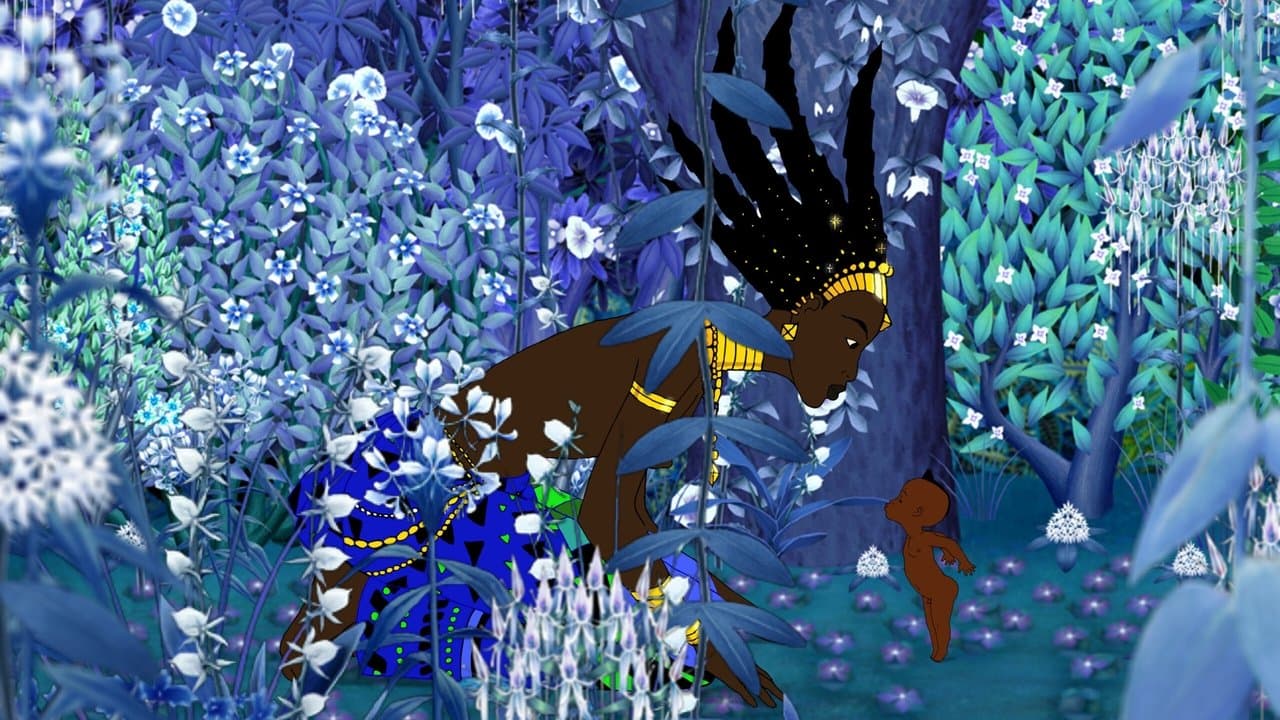
Kirikou and the Sorceress is a French animated film inspired by West African folk tales, with a poetic and initiatory tone, carried by a warm visual style and an enchanting musical score. The story contains several sensitive elements: the sorceress Karaba is a genuinely threatening figure who dries up the village spring, extorts the women, burns a house, and sends animated fetishes to kidnap children, which may unsettle younger viewers. These threatening and tense scenes recur throughout the film, interspersed with adventure and humor, but the overall atmosphere remains notably dark for an animated film aimed at a young audience. Additionally, the characters are depicted nude in keeping with West African artistic traditions, treated with complete naturalness and without any sexual connotation, but worth mentioning to parents. Parents are advised to watch the film alongside children under 8 in order to reassure them during scenes involving the fetishes, the attempted kidnappings, and the oppressive threat hanging over the village.
Synopsis
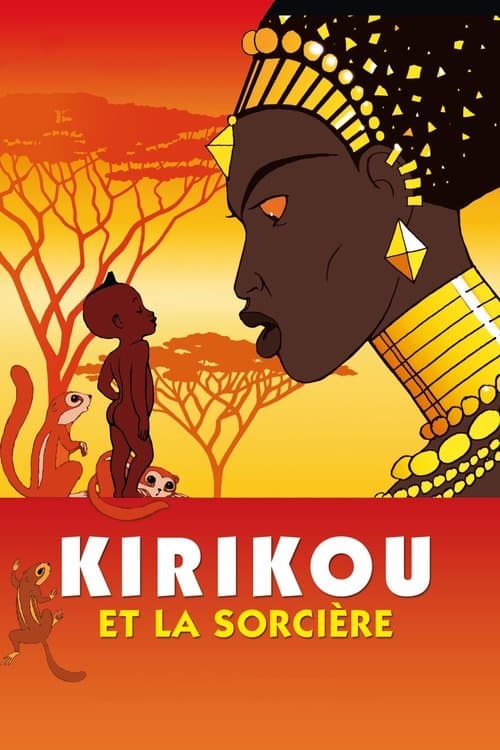
Drawn from elements of West African folk tales, it depicts how a newborn boy, Kirikou, saves his village from the evil witch Karaba.
Difficult scenes
From the very beginning of the film, the sorceress Karaba sends animated fetishes, unsettling wooden statuettes that move in a jerky, mechanical way and obey her commands blindly. These creatures inspect the villagers' homes and, when they discover a piece of jewelry hidden by a woman, they set her house on fire in front of the entire helpless community. This scene combines direct threat, collective punishment, and the destruction of a home, which may be distressing for young children. On two separate occasions, the sorceress attempts to kidnap the village children playing near the river: first using an enchanted canoe that mysteriously draws children toward it, then through a large malevolent tree whose branches come to life to grab a child. These scenes, though foiled by Kirikou, place young characters in direct danger and may provoke fear or anxiety in viewers of a similar age. Kirikou ventures into the underground channels of the spring and discovers a large aquatic creature drinking all the water. He kills it to restore the flow, but nearly drowns in the sudden rush of water. The creature, while not highly detailed graphically, is imposing, and the imminent drowning of the hero creates a moment of real tension. Throughout the film, it is repeatedly stated that the sorceress has eaten the men of the village. Although this remains at the level of narrative rumor and is never depicted on screen, the idea of an adult figure devouring human beings may linger in the imagination of very young children and warrants a reassuring conversation with parents. The nudity of the characters, both adults and children, is omnipresent in the film and treated with complete naturalism, consistent with the African aesthetic championed by director Michel Ocelot. It is entirely free of sexualization, but some parents may wish to discuss it with their children before or after viewing.
Where to watch
No verified platform for the US market yet. We keep this section updated as availability changes.
About this title
- Format
- Feature film
- Year
- 1998
- Runtime
- 1h 10m
- Countries
- France, Belgium, Luxembourg
- Original language
- FR
- Directed by
- Michel Ocelot
- Main cast
- Doudou Gueye Thiaw, Maimouna N'Diaye, Awa Sène Sarr, Robert Liensol, William Nadylam, Sebastien Hebrant, Thilombo Lubambu, Rémi Bichet, Marie Augustine Diatta, Moustapha Diop
- Studios
- Les Armateurs, Monipoly Productions, France 3 Cinéma, RTBF
Content barometer
Violence
2/5
Moderate
Fear
3/5
Notable tension
Sexuality
1/5
Allusions
Language
0/5
None
Narrative complexity
0/5
Simple
Adult themes
0/5
None
Expert review
Kirikou and the Sorceress is a French animated film inspired by West African folk tales, with a poetic and initiatory tone, carried by a warm visual style and an enchanting musical score. The story contains several sensitive elements: the sorceress Karaba is a genuinely threatening figure who dries up the village spring, extorts the women, burns a house, and sends animated fetishes to kidnap children, which may unsettle younger viewers. These threatening and tense scenes recur throughout the film, interspersed with adventure and humor, but the overall atmosphere remains notably dark for an animated film aimed at a young audience. Additionally, the characters are depicted nude in keeping with West African artistic traditions, treated with complete naturalness and without any sexual connotation, but worth mentioning to parents. Parents are advised to watch the film alongside children under 8 in order to reassure them during scenes involving the fetishes, the attempted kidnappings, and the oppressive threat hanging over the village.
Synopsis
Drawn from elements of West African folk tales, it depicts how a newborn boy, Kirikou, saves his village from the evil witch Karaba.
Difficult scenes
From the very beginning of the film, the sorceress Karaba sends animated fetishes, unsettling wooden statuettes that move in a jerky, mechanical way and obey her commands blindly. These creatures inspect the villagers' homes and, when they discover a piece of jewelry hidden by a woman, they set her house on fire in front of the entire helpless community. This scene combines direct threat, collective punishment, and the destruction of a home, which may be distressing for young children. On two separate occasions, the sorceress attempts to kidnap the village children playing near the river: first using an enchanted canoe that mysteriously draws children toward it, then through a large malevolent tree whose branches come to life to grab a child. These scenes, though foiled by Kirikou, place young characters in direct danger and may provoke fear or anxiety in viewers of a similar age. Kirikou ventures into the underground channels of the spring and discovers a large aquatic creature drinking all the water. He kills it to restore the flow, but nearly drowns in the sudden rush of water. The creature, while not highly detailed graphically, is imposing, and the imminent drowning of the hero creates a moment of real tension. Throughout the film, it is repeatedly stated that the sorceress has eaten the men of the village. Although this remains at the level of narrative rumor and is never depicted on screen, the idea of an adult figure devouring human beings may linger in the imagination of very young children and warrants a reassuring conversation with parents. The nudity of the characters, both adults and children, is omnipresent in the film and treated with complete naturalism, consistent with the African aesthetic championed by director Michel Ocelot. It is entirely free of sexualization, but some parents may wish to discuss it with their children before or after viewing.