Kirikou and the Sorceress
Does this age rating seem accurate to you?
Detailed parental analysis
Kirikou and the Sorceress is an African animated film with a warm and luminous atmosphere, threaded through with moments of genuine tension and profound emotion. An extraordinary infant decides, from the moment of his birth, to free his village from the grip of a feared sorceress by seeking to understand the origin of her malevolence. The film is primarily addressed to children of school age and upwards, but its narrative richness and its refusal of moral simplicity make it a work that adults watch with equal pleasure.
Underlying Values
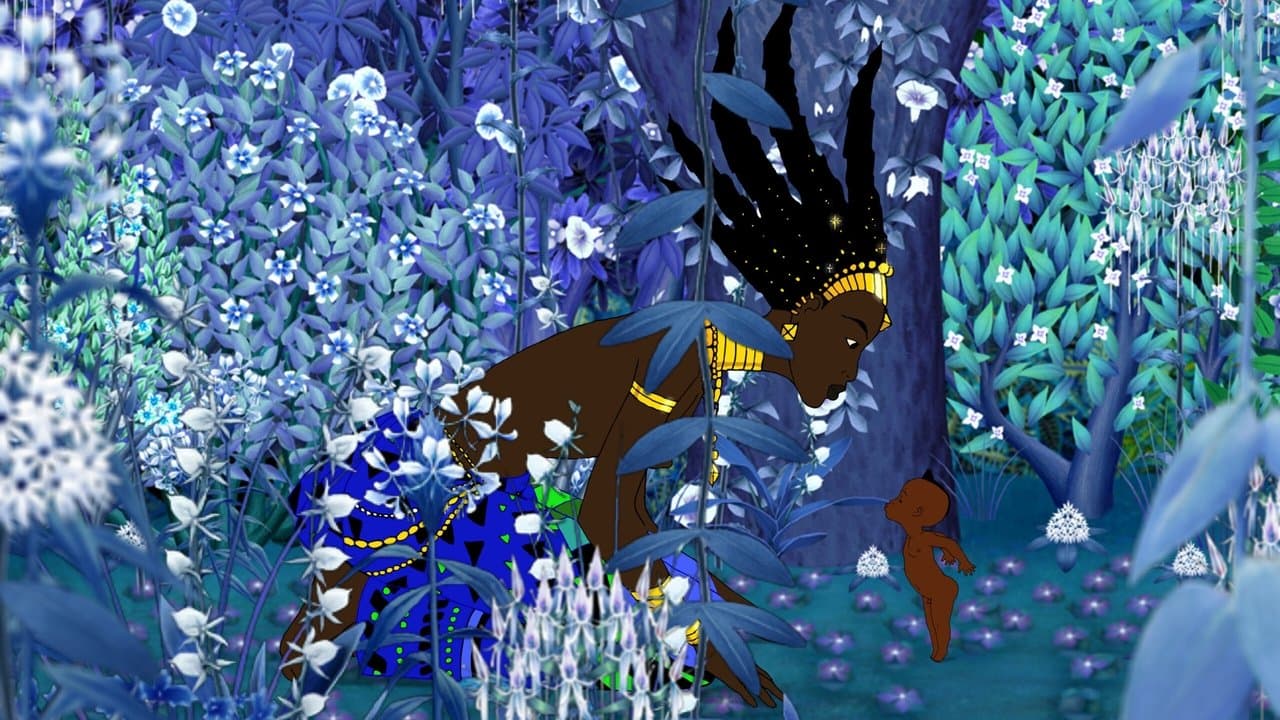
The moral structure of the film is its most remarkable and most worthy asset for discussion. The sorceress Karaba is not evil by nature: genuine physical suffering, inflicted by a man, lies at the origin of everything she has made the village endure. The narrative thus refuses the figure of absolute evil and proposes instead a causal chain: cruelty has an origin, and understanding that origin is the only path to reconciliation. Kirikou chooses empathy and investigation where adults choose flight or armed confrontation, and it is this choice that resolves the conflict. This message is strong and unsimplistic: it does not exonerate Karaba from her acts, but it refuses to stop at condemnation. It is a particularly rich angle of discussion to open with a child.
Sex and Nudity
Nudity is present throughout the film, presented with total naturalness in keeping with West African cultural representations: the breasts of adult women are visible, Kirikou's male nudity, bodies depicted without voyeurism or moral commentary. Nothing in these images is sexualised or intended to provoke. For a French child, adult nudity may be more surprising than for a child familiar with these representations. It is useful to discuss it briefly before viewing, not out of prudishness but to defuse the question should it arise.
Violence
Violence is present but not graphic. Karaba's fetishes attack the men of the village, a house is set on fire, villagers disappear or die. A woman shrieks her despair at the destruction of her home. Kirikou himself is believed dead in a scene where the villagers sing his death, which can be a difficult moment for very young children. The whole remains in the register of a fairy tale, with real dangers but never shown with complacency. The violence serves the narrative and underscores the stakes without dwelling on them.
Parental and Family Portrayals
Kirikou's father is absent, held prisoner by Karaba. His mother is present, loving, but overwhelmed and often powerless in the face of events. The grandfather, who lives apart in the forbidden mountain, plays the role of a figure of wisdom, of mentor, and it is he who transmits to Kirikou the key to the mystery. This fragmented but not dysfunctional family configuration says something interesting about intergenerational transmission and about curiosity as a family value.
Social Themes
The film anchors its narrative in a West African cosmology and aesthetic without ever treating them as folklore for an external gaze. The rites, the songs, the structure of the village, the relationship to nature and the supernatural are shown as coherent and worthy, not as exotic. It is a serious cultural entry point that few Western animated films offer to a young audience.
Strengths
The film constructs in less than seventy minutes a narrative of thematic density rare for its target audience. The writing never condescends: Kirikou thinks, questions, doubts, and his intelligence is never presented as a sleight of hand but as a form of intellectual courage. The music of Youssou N'Dour contributes to cultural and emotional immersion with constant effectiveness. The resolution of the narrative, founded on understanding rather than victory, is of a narrative maturity that many films for adults fail to reach. The film also transmits, without claiming to do so, an African aesthetic and oral tradition with a fidelity and respect uncommon in animation intended for young people.
Age recommendation and discussion points
The film is suitable from age 6 onwards, with parental presence recommended for the youngest due to some scenes of genuine tension and adult nudity which may call for natural explanation. From age 8 onwards, it can be watched without reservation. Two angles of discussion to explore after viewing: why does Kirikou seek to understand Karaba rather than destroy her, and what difference does this make to the end of the story? And also: can a person who has done harm change, and on what conditions?
Synopsis
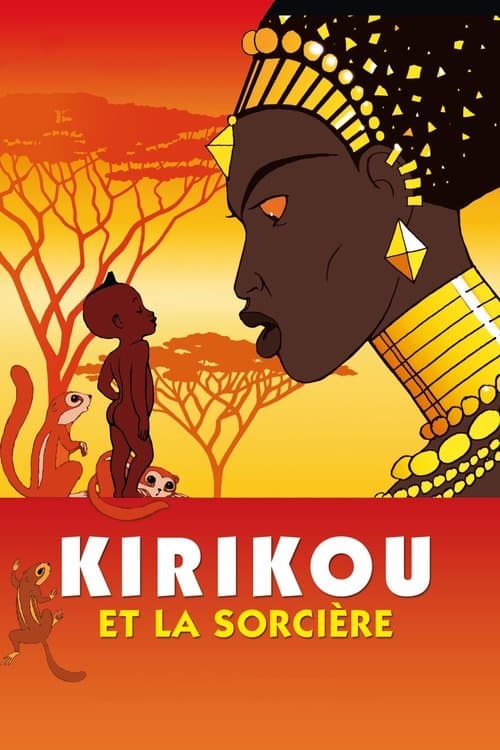
Drawn from elements of West African folk tales, it depicts how a newborn boy, Kirikou, saves his village from the evil witch Karaba.
Where to watch
Availability checked on Apr 27, 2026
About this title
- Format
- Feature film
- Year
- 1998
- Runtime
- 1h 10m
- Countries
- France, Belgium, Luxembourg
- Original language
- FR
- Directed by
- Michel Ocelot
- Main cast
- Doudou Gueye Thiaw, Maimouna N'Diaye, Awa Sène Sarr, Robert Liensol, William Nadylam, Sebastien Hebrant, Thilombo Lubambu, Rémi Bichet, Marie Augustine Diatta, Moustapha Diop
- Studios
- Les Armateurs, Monipoly Productions, France 3 Cinéma, RTBF
Content barometer
- Violence2/5Moderate
- Fear3/5Notable tension
- Sexuality1/5Allusions
- Language0/5None
- Narrative complexity0/5Simple
- Adult themes0/5None
Watch-outs
Values conveyed
- Courage
- Acceptance of difference
- Compassion
- Autonomy
- Forgiveness
- curiosity
- solidarity
- empathy
- perseverance
- cultural identity