Kipo and the Age of Wonderbeasts
Does this age rating seem accurate to you?
Detailed parental analysis
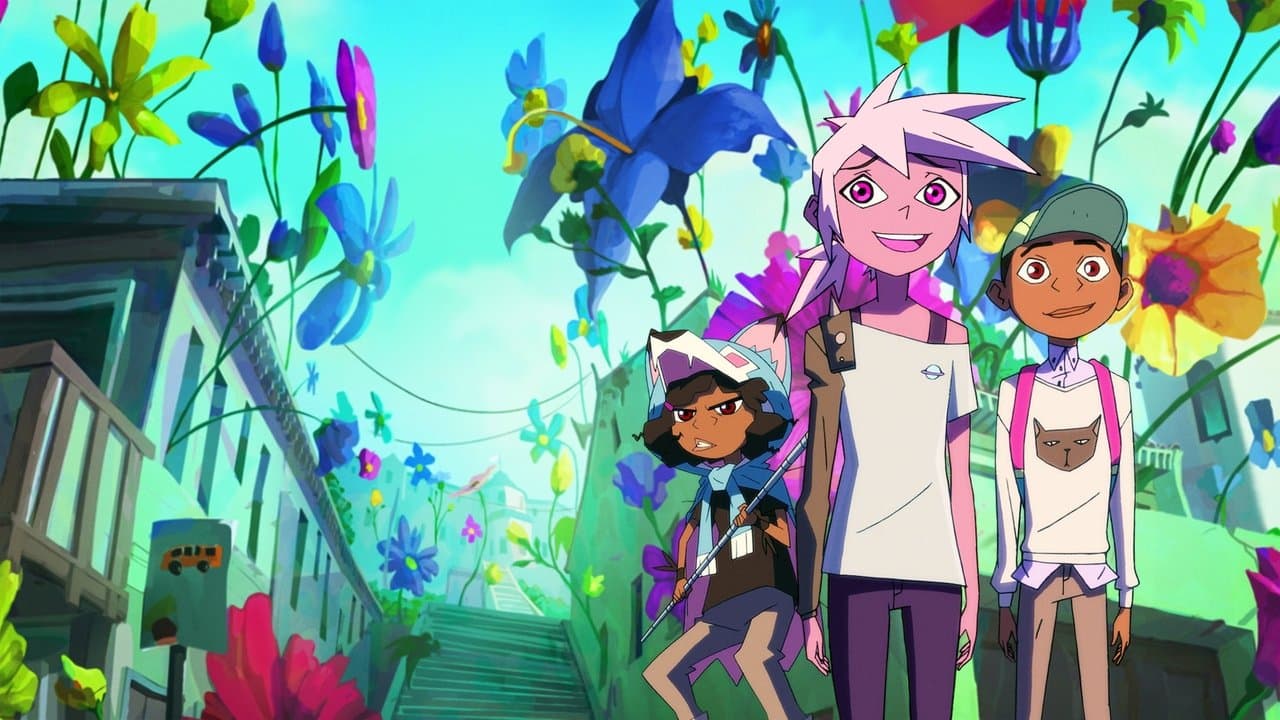
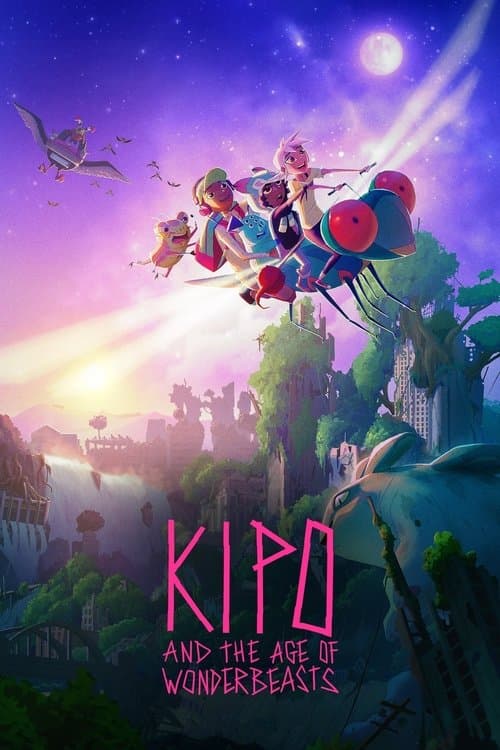
Kipo and the Age of Wonderbeasts is an animated adventure and science-fiction series with a vividly colourful and resolutely optimistic atmosphere, driven by sustained narrative energy. The plot follows a young girl who emerges from an underground habitat to discover a surface inhabited by giant mutant animals, and attempts to reunite with her family whilst making unlikely allies along the way. The series is aimed primarily at preteens and teenagers, but its tone and themes afford it a depth that will engage adults as well. The third season marks a significant step up in dramatic intensity compared to the first two.
Violence
Combat is frequent and dynamic: bladed weapons, clubs, axes, a lance fashioned from a deadly scorpion barb, repeated blows and impacts. The series avoids gore and blood, but does not obscure the consequences of violence on characters, which lends it a more realistic grounding than is typical of the genre. Peril is a constant narrative thread: hunts, explosions, chases and narrow escapes succeed one another relentlessly. The third season crosses an additional threshold with the deaths of several significant characters, the death of an antagonist treated as a tragic figure, and a main villain who kills her own brother. Violence nevertheless remains embedded within clear narrative logic and is never aestheticised for spectacle.
Underlying Values
The narrative is built on a central conviction rarely undermined: conflicts are better resolved through listening, empathy and persuasion than through force. The protagonist consistently resolves confrontations through a combination of determination, emotional intelligence and creativity, making her a coherent and uncommon narrative model for the genre. The notion of family is deconstructed and reconstructed around choice and affective bonds rather than blood, a theme made explicit throughout the seasons. Forgiveness is presented not as weakness but as an active and difficult act, notably towards characters who have caused harm. Institutional authority is not systematically questioned, but the series distrusts rigid ideologies and leaders who sacrifice individuals for the sake of an abstract principle.
Parental and Family Portrayals
Parental figures play a structuring role in the protagonist's narrative arc. The absence of her biological father and mother is the initial engine of the protagonist's journey, and both parents prove to be complex characters with their own moral trajectories. The third season pushes this axis to its most difficult extremes: a maternal figure is transformed into a creature against her will, an image both terrifying and profoundly sad. The series also explores the relationship between a child and a parent who has made poor choices, without resorting to simplistic resolution, offering rich material for discussion with a child.
Social Themes
Forced cohabitation between communities with radically different lifestyles and cultures is the social driver of the entire series. The logic of segregation between underground humans and mutant surface dwellers, and attempts by certain characters to end it through force rather than dialogue, echoes readable political dynamics without ever becoming didactic. The third season introduces a character who uses toxic gases as a weapon of domination, whose ideological motivation is the restoration of purity, a register worthy of being named and contextualised with teenagers old enough to process it.
Language
Language remains within very reasonable limits. There are a few mildly aggressive expressions and gentle insults typical of American adventure animation, with no notable swearing or vulgarity. Nothing warranting strong flagging, but younger children may pick up on certain turns of phrase to imitate.
Strengths
The series distinguishes itself through the coherence of its narrative architecture across three seasons: each character arc is developed with genuine continuity, and antagonists benefit from writing that grants them psychology rather than mere hostile function. The writing of the protagonist is particularly refined: her optimism is never naive but tested, challenged and reclaimed. Music holds an inventive and functional place within the plot itself, a rare screenwriting device in genre animation. Emotionally, the series does not underestimate young viewers' capacity to process loss, grief and betrayal, affording it an unusual density for its format.
Age recommendation and discussion points
The series is suitable from age 10 for the first two seasons, with the third season better suited from age 12 owing to the death of significant characters and darker scenes. Two discussion points are worth exploring after viewing: why Kipo almost always chooses dialogue over combat, and what that truly costs, and how the series addresses the idea that a parent or loved one can make very poor choices without ceasing to be loved.
Synopsis
A sheltered girl gets a crash course in survival when a mutant attack sends her to the surface, far from the safety of her underground home.
Where to watch
Availability checked on Apr 27, 2026
About this title
- Format
- TV series
- Year
- 2020
- Runtime
- 24m
- Countries
- United States of America
- Original language
- EN
- Directed by
- Bill Wolkoff, Radford Sechrist
- Main cast
- Karen Fukuhara, Sydney Mikayla, Coy Stewart, Deon Cole, Dee Bradley Baker, Grey DeLisle, Amy Landecker, Dan Stevens, Sterling K. Brown, Jake Green
- Studios
- DreamWorks Animation Television
Content barometer
- Violence3/5Notable
- Fear3/5Notable tension
- Sexuality0/5None
- Language1/5Mild
- Narrative complexity1/5Accessible
- Adult themes0/5None
Values conveyed
- Perseverance
- Compassion
- Forgiveness
- friendship
- courage
- empathy
- cooperation