
King Kong
Does this age rating seem accurate to you?
Detailed parental analysis
King Kong is a film of fantastic adventure with a dark and oppressive atmosphere, blending exploration, primitive horror and tragic romanticism. The plot follows an expedition that brings back from a mysterious island a gigantic creature, with devastating consequences for all. The film is in theory addressed to a broad family audience, but its content and representations make it today a work more suited to pre-teens and adults.
Violence
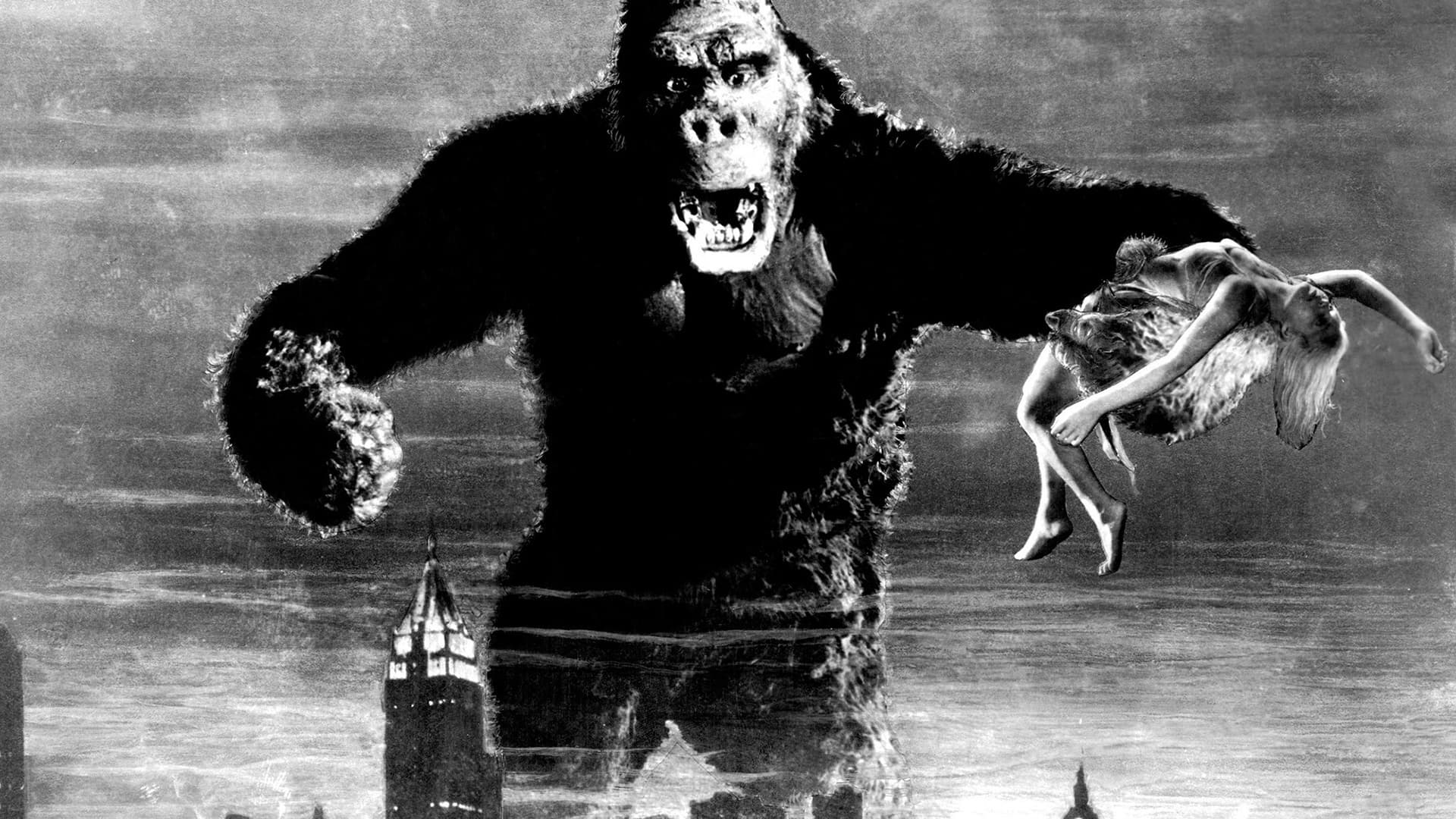
Violence is omnipresent and constitutes the spectacular heart of the film. The battles between Kong and prehistoric creatures are prolonged, with visible blood and explicit kills. Several human characters die in brutal fashion, thrown into ravines or crushed, with audible cries of distress. A woman is accidentally killed in a fall from the top of a building. For its time, these sequences were disturbing enough to be partially censored, and they retain a real impact on young viewers today.
Discrimination
The treatment of the island's indigenous populations is one of the most problematic aspects of the film for contemporary viewing. The inhabitants are presented as threatening primitives, disfigured, without intelligible language or cultural depth, in an assumed colonial schema that opposes civilised white man to the non-human savage. This representation is never questioned by the narrative: it serves as exotic backdrop and moral foil. The main female character, Ann Darrow, is meanwhile confined to a role of passive victim throughout virtually the entire film, with no capacity to act upon her own destiny. These elements merit direct discussion with children and teenagers, precisely because the film presents them as self-evident.
Underlying Values
The character of producer Carl Denham functions as a moral warning about greed and exploitation: his quest for glory and profit is directly responsible for all the catastrophes that follow. This criticism is legible and can become a good entry point for discussing responsibility. In counterpoint, the male hero embodies selfless courage, motivated by love rather than ambition. The structure of the narrative implicitly valorises protective virility and sacrifice, without ever questioning the passivity it imposes on the woman being saved.
Sex and Nudity
Kong partially undresses his unconscious captive, leaving her in underclothes, and manipulates her body with a curiosity that mingles fascination and possession. The scene carries a suggestive dimension difficult to ignore, even if it does not venture into the explicit. It was partially censored upon release and remains uncomfortable to watch with young children.
Social Themes
King Kong can be read as a colonial allegory: a Western expedition plunders a foreign culture to bring back a trophy intended for spectacle and profit. This reading is not borne by the film itself, which does not question the legitimacy of the enterprise, but it is accessible to teenagers capable of stepping back. It offers an interesting angle of discussion on the way certain representations of the past reveal the moral blind spots of an era.
Strengths
King Kong is a foundational work of genre cinema, and its importance in the history of adventure and fantasy film is indisputable. The narrative tension is well constructed, the dramatic escalation works, and the figure of Kong itself possesses a genuine emotional ambivalence: the creature inspires both terror and a form of tragic pity that gives the film its depth. For a teenager or adult curious about film history, it constitutes a precious document on the imagination and representations of an era, and naturally opens onto broader cultural and aesthetic questions.
Age recommendation and discussion points
The film is not recommended before age 10 due to sustained violence, scenes of brutal death and an overall anxiety-inducing atmosphere. A relaxed viewing is recommended from age 12 onwards, accompanied by conversation. The two angles to address after the film: why the expedition's director in the film is presented as the true person responsible for the tragedies, and what the treatment of the indigenous people and the female character reveals about the way certain cultures were represented in cinema.
Synopsis
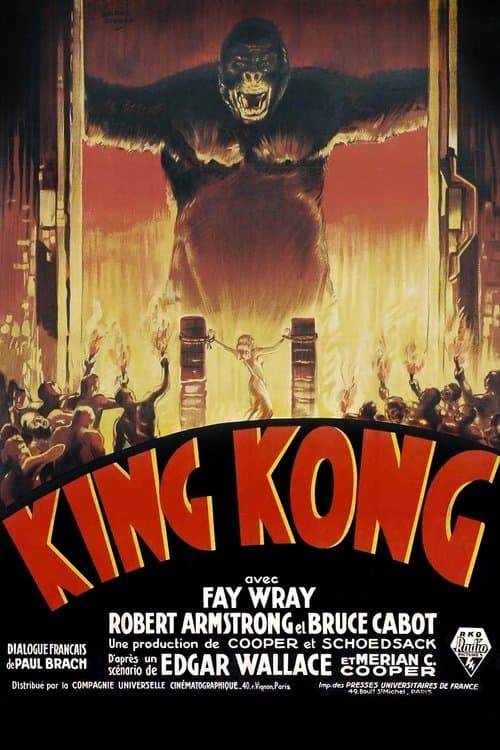
Adventurous filmmaker Carl Denham sets out to produce a motion picture unlike anything the world has seen before. Alongside his leading lady Ann Darrow and his first mate Jack Driscoll, they arrive on an island and discover a legendary creature said to be neither beast nor man. Denham captures the monster to be displayed on Broadway as King Kong, the eighth wonder of the world.
Where to watch
Availability checked on Apr 27, 2026
About this title
- Format
- Feature film
- Year
- 1933
- Runtime
- 1h 44m
- Countries
- United States of America
- Original language
- EN
- Directed by
- Merian C. Cooper, Ernest B. Schoedsack
- Main cast
- Robert Armstrong, Fay Wray, Bruce Cabot, Frank Reicher, Victor Wong, James Flavin, Sam Hardy, Noble Johnson, Steve Clemente, Roscoe Ates
- Studios
- RKO Radio Pictures