
Kiki's Delivery Service
魔女の宅急便
Does this age rating seem accurate to you?
Detailed parental analysis
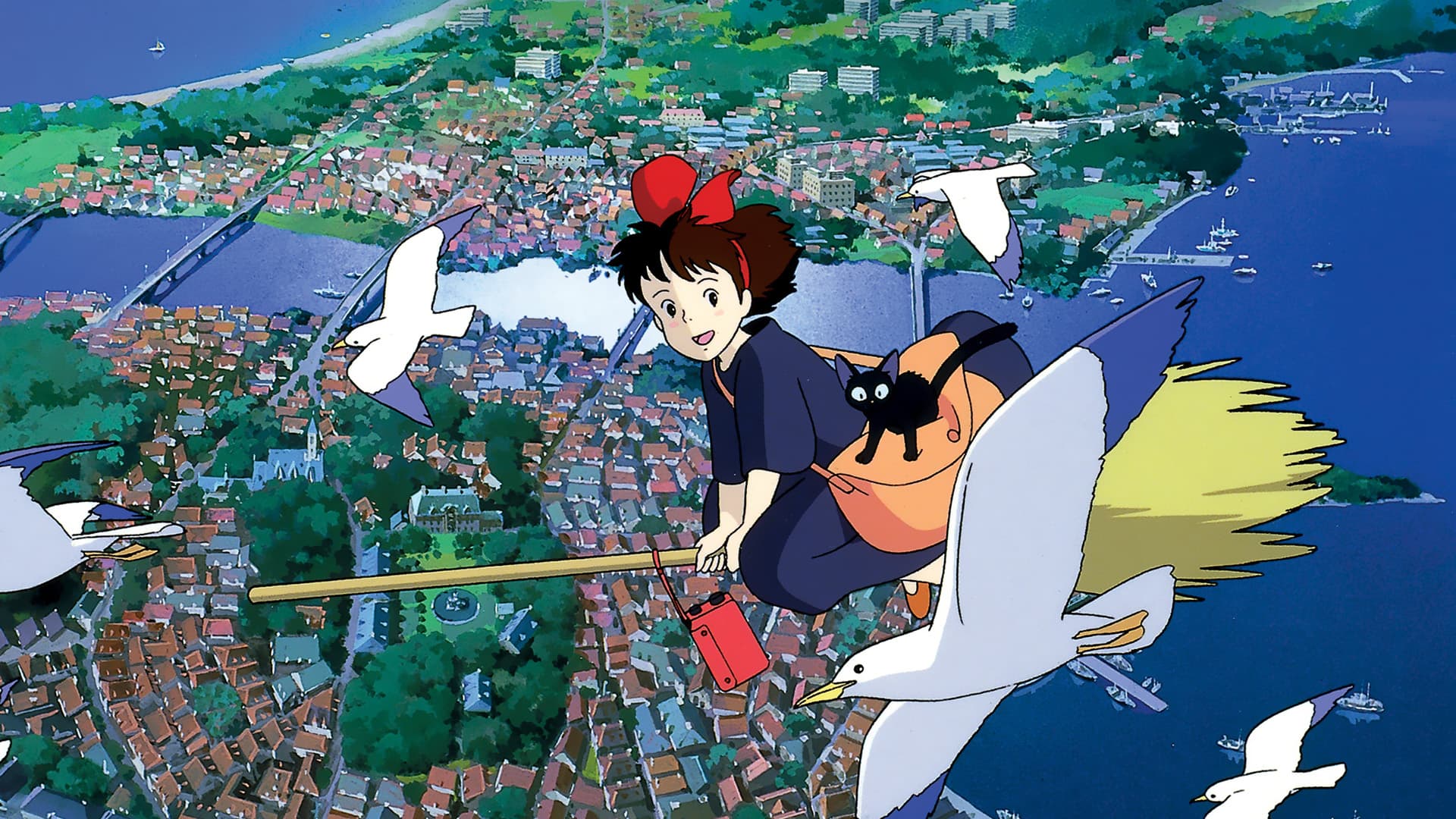
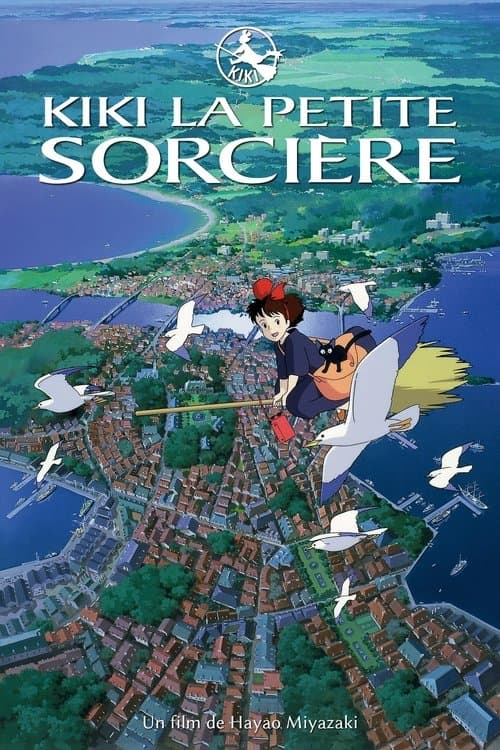
Kiki's Delivery Service is a hand-drawn animation film with a gentle, contemplative and slightly melancholic atmosphere, produced by Studio Ghibli. A thirteen-year-old witch leaves her family to undertake a year of solitary apprenticeship in a large unfamiliar city, where she seeks to find her place by offering a broomstick delivery service. The film is aimed primarily at children from five or six years old, but its emotional resonance around self-confidence and creative doubt also speaks to pre-adolescents.
Underlying Values
This is the true heart of the film. Kiki's magic is never an extraordinary power to master against an adversary; it functions as a metaphor for personal talent, fragile and intimately tied to the character's inner state. When Kiki loses confidence in herself, her magic disappears, and the narrative treats this with a honesty rare for a work aimed at children. Healing comes not through training or sudden revelation, but through rest, friendship and reconnection to what gives meaning. The film values quiet effort, daily generosity and autonomy without ever opposing achievement and vulnerability. This is a valuable angle for discussion with a child or pre-adolescent: can you be good at something and lose it temporarily, and what do you do then?
Violence
The film contains several sequences of physical tension without ever descending into violence in the strict sense. A scene where Kiki is attacked by aggressive crows may startle younger viewers with its sudden intensity. The flying scenes in the storm, dodging traffic and falling through trees are realistic in their consequences and can generate genuine fear in sensitive children. The final sequence involving a runaway airship represents the peak of tension in the film: a character is in genuine danger of death, the crowd screams, chaos is palpable. These moments are narratively justified and do not last long, but it is useful to warn a five or six-year-old child before viewing rather than leaving them taken by surprise.
Parental and Family Portrayals
Separation from parents is voluntary, ritualised and presented as a normal passage towards adulthood. Kiki's parents are warm, present in her earliest moments, and let her go with love and trust. Their absence in the rest of the film is neither dramatised nor traumatic: it is the very condition of the coming-of-age narrative. This is a rare parental model in animated cinema, one that trusts the child without abandoning them.
Strengths
Kiki's Delivery Service is a work of emotional subtlety uncommon in animated cinema for children. Its ability to represent loss of confidence, creative doubt and what adults might call a mild depressive episode, without dramatising or moralising, makes it a film of disarming honesty. The slow and contemplative pace may surprise children accustomed to animation with rapid editing, but it establishes a presence in the world and an attention to the details of everyday life that hold real formative value. Kiki is a credible heroine: neither perfect, nor invincible, nor saved by others. The soundtrack contributes greatly to the film's gentle and slightly nostalgic atmosphere overall.
Age recommendation and discussion points
The film is suitable from five or six years old for the great majority of children, with a note for more sensitive viewers who might be taken aback by the action sequences. For a pre-adolescent, it carries particularly strong resonance around themes of self-confidence and self-doubt. After viewing, two angles are worth discussion: why does Kiki lose her magic, and what returns it to her, and what does this say about how we get through moments when we no longer feel capable of anything?
Synopsis
A young witch, on her mandatory year of independent life, finds fitting into a new community difficult while she supports herself by running an air courier service.
About this title
- Format
- Feature film
- Year
- 1989
- Runtime
- 1h 42m
- Countries
- Japan
- Original language
- JA
- Studios
- Studio Ghibli, Nibariki, Tokuma Shoten, Nippon Television Network Corporation
Content barometer
- Violence2/5Moderate
- Fear2/5A few scenes
- Sexuality0/5None
- Language0/5None
- Narrative complexity2/5Moderate
- Adult themes0/5None
Values conveyed
- Courage
- Friendship
- Perseverance
- Autonomy
- independence
- kindness