
Jurassic Fight Club
Does this age rating seem accurate to you?
Detailed parental analysis
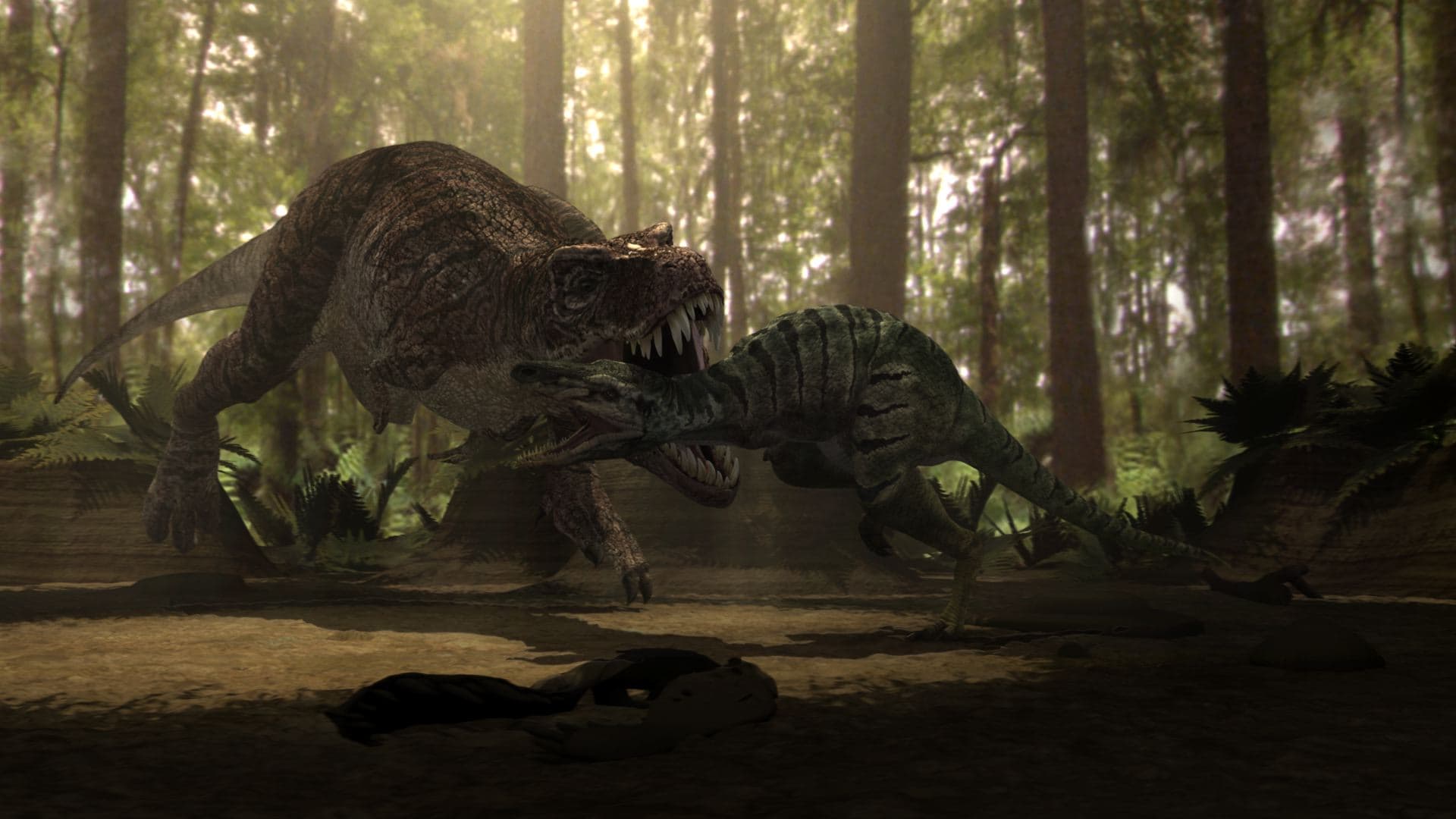
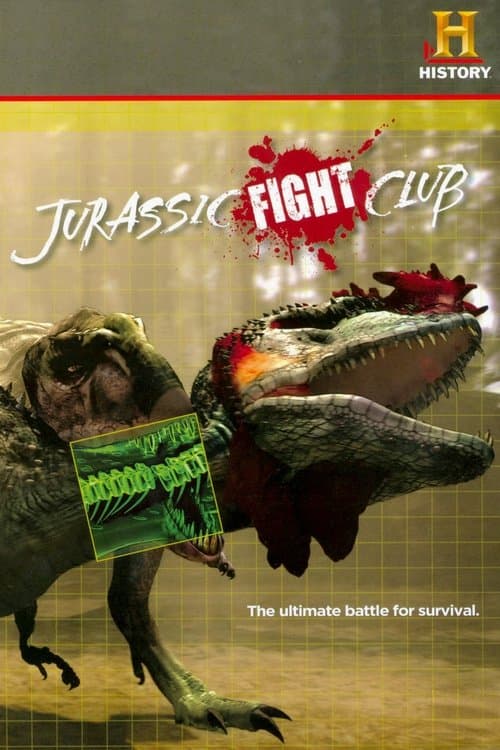
Jurassic Fight Club is a documentary series with a sensationalist tone and decidedly violent atmosphere, broadcast on History Channel in 2008. Each episode reconstructs, using computer-generated imagery and commentary from palaeontologists, a deadly confrontation between prehistoric species based on real fossils. The series targets adolescent and adult audiences attracted to dinosaurs, but its spectacular treatment makes it poorly suited to children.
Violence
The series constructs a vision of the natural world entirely founded on lethal competition and survival of the strongest. Dinosaurs are presented as killing machines driven by bloodlust, rather than as animals whose behaviours obey logics of survival, reproduction or social life. This interpretive framework, repeated episode after episode, anchors in the young viewer a distorted representation of ecology and evolution: nature as an arena, the living world as predator or prey. No space is left for other forms of animal behaviour, which constitutes a significant structural bias worth pointing out to children with an interest in natural sciences.
Underlying Values
The series perpetuates the stereotype of the 'prehistoric monster' by depicting feathered dinosaurs, such as dromaeosaurs, without their plumage despite solid scientific documentation, and by attributing them deliberately frightening behaviours disconnected from fossil evidence. This is less discrimination in the social sense than a systematic distortion of reality in service of an archetype of the primitive and bestial predator. This bias deserves to be flagged to a child or adolescent with a genuine interest in palaeontology, as the series can give them an enduring false image of what science today knows about these animals.
Discrimination
The series presents itself as a scientific document using forensic methods to reconstruct prehistoric fights. Yet it asserts as facts matters that amount to speculation, notably the hypothesis of venom in Tyrannosaurus rex or gestural communication among raptors. This confusion between conjecture and established fact, repeated within a framework dressed up as expertise, constitutes a real educational issue: it habituates the young viewer to accepting spectacular claims without critical thought. This is a useful point of discussion with an adolescent about the way popular science media can misrepresent scientific method.
Social Themes
The series succeeds in making dinosaurs tangible and dramatically present through its digital reconstructions, and it manages to anchor its narratives in real fossil discoveries, which constitutes an honest starting point. The forensic structure, which works backwards from a fossil site to reconstruct an event, is pedagogically interesting in principle. For an adolescent already passionate about palaeontology, the series can function as a gateway to more rigorous subjects, provided that viewing is accompanied by a critical eye towards the reliability of what is presented as established.
Strengths
The series succeeds in making dinosaurs tangible and dramatically present through its digital reconstructions, and it manages to anchor its narratives in real fossil discoveries, which constitutes an honest starting point. The forensic structure, which works backwards from a fossil site to reconstruct an event, is pedagogically interesting in principle. For an adolescent already passionate about palaeontology, the series can function as a gateway to more rigorous subjects, provided that viewing is accompanied by a critical eye towards the reliability of what is presented as established.
Age recommendation and discussion points
The series is not suited to children under ten years old owing to repeated graphic violence and an unsettling atmosphere. For pre-adolescents and adolescents from around ten or twelve years old, it can be watched with parental accompaniment. Two angles of discussion merit being addressed after viewing: why does the series choose to show dinosaurs only killing one another, and what does this tell us about the way science is narrated to us on television? The question of the boundary between scientific fact and dramatised reconstruction is particularly rich to explore.
Synopsis
Imagines prehistoric life in this entertainment series about dinosaur battles. Computer-generated dinosaurs engage in conflicts choreographed using paleontological evidence from 70-million-year-old crime scenes. Jurassic Fight Club was hosted by George Blasing, a self-taught paleontologist.
About this title
- Format
- TV series
- Year
- 2008
- Runtime
- 45m
- Countries
- United States of America
- Original language
- EN
- Directed by
- George Blasing, Kreg Lauterbach
- Main cast
- Erik Thompson, George Blasing