
Josee, the Tiger and the Fish
ジョゼと虎と魚たち
Does this age rating seem accurate to you?
Detailed parental analysis
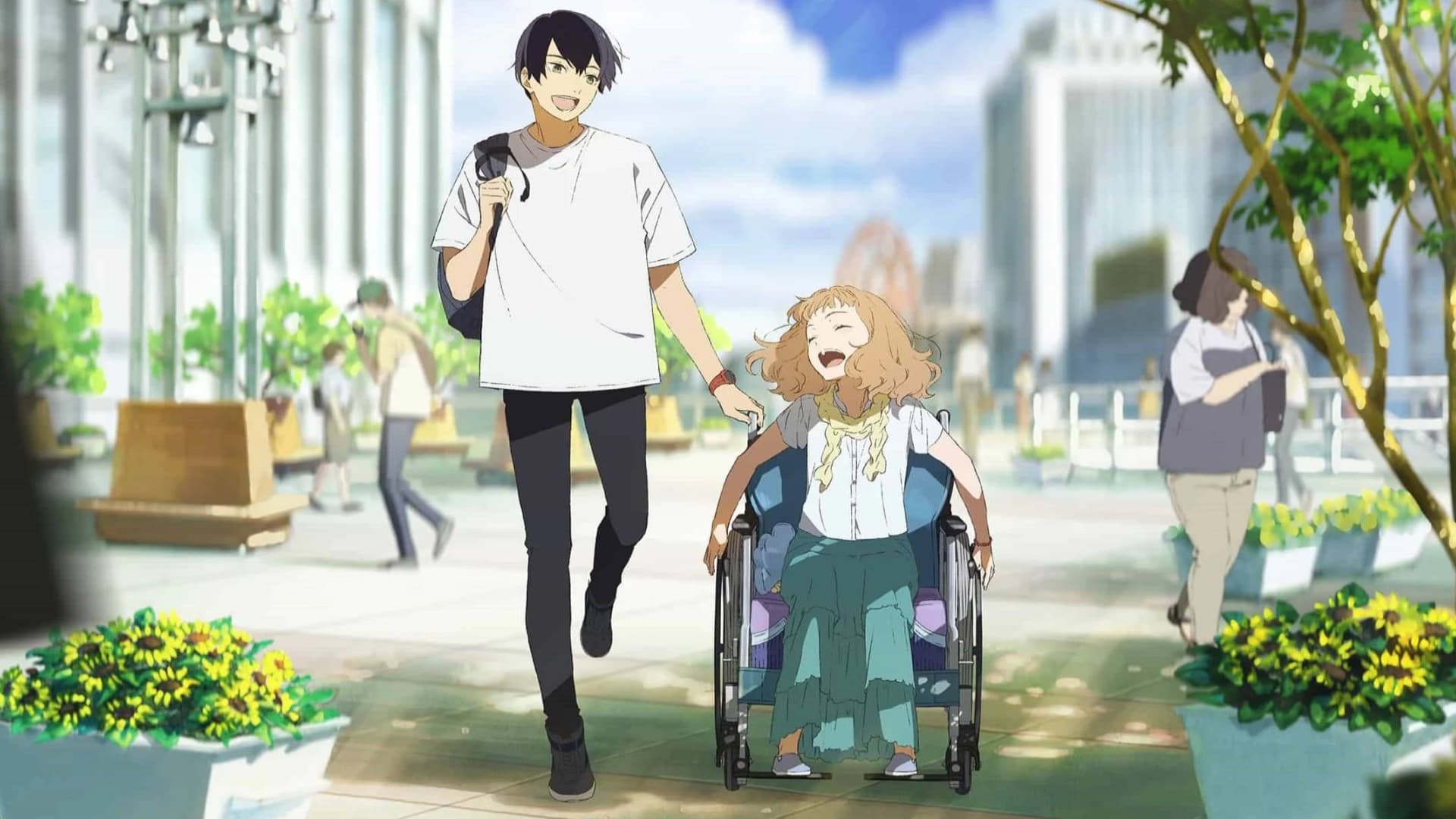
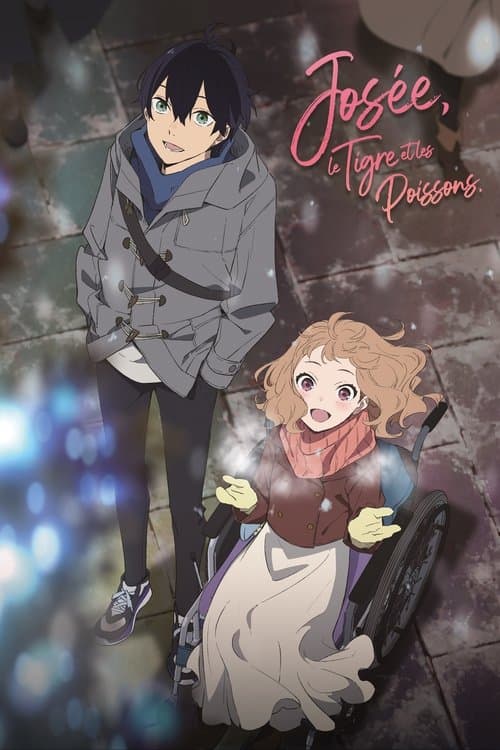
Josée, the Tiger and the Fish is a Japanese animated film with a bittersweet atmosphere, blending tenderness, humour and melancholy within a contemporary setting. The story follows the encounter between a student and a young woman in a wheelchair, solitary and wary, whose relationship will gradually transform both their lives. The film is primarily aimed at a teenage and young adult audience, drawn to narratives of emancipation and romance.
Underlying Values
The film builds its narrative around solid and coherent values: perseverance in the face of obstacles, courage to confront one's fears, hard-won independence and compassion in relating to others. Josée's arc is particularly well crafted: her evolution from mistrust towards openness illustrates that autonomy does not oppose vulnerability. The character of Tsuneo embodies constant patience and kindness, never responding to violence with violence, which gives the film a rare moral tone. One point worth discussing with a teenager: the relationship begins in a dynamic of dependence and one-sided rudeness, and it is worth exploring what it means to help someone who rejects help, and where the boundary lies between patience and acceptance of mistreatment.
Violence
The violence present in the film is mild and carries either comic or characterological weight: Josée throws objects at Tsuneo and bites him several times, and Josée's grandmother resorts to a grotesque physical threat against Tsuneo. These scenes are treated in a burlesque register rather than a threatening one. Tsuneo is also hit by a car and hospitalised for several weeks, an event treated with gravity but without graphic violence. Overall, the film remains very accessible and does not generate lasting anxious tension.
Parental and Family Portrayals
The parental figure is almost absent for Josée, who is raised by her grandmother in near total isolation from the outside world. This configuration is not presented as a model but as a constraint that Josée must overcome to emancipate herself. The grandmother is an ambiguous character: protective yet confining, loving yet mistrustful of the world. This is an interesting angle to explore with a teenager regarding the difference between protection and overprotection.
Substances
Adult characters consume beer in bars and during meals. The consumption is mundane, social, without particular valorising staging or highlighted negative consequences. It is not a central subject of the film, but the presence is real and recurring in scenes of everyday life.
Strengths
The film distinguishes itself through the subtlety with which it treats disability: Josée is neither an inspiring character in the condescending sense of the term, nor a victim. She is complex, funny, hurtful, creative and profoundly human. The writing avoids the easy tropes of the romantic genre by allowing both characters to evolve at their own pace, with shadows and credible contradictions. The narration knows how to alternate lightness and emotion without forcing effects, and the film offers an honest representation of what it means to build a relationship with someone who has learned to protect themselves from the world. For a teenager, this is a narrative that speaks of emancipation, trust and the difficulty of letting others in, with an emotional intelligence uncommon in the genre.
Age recommendation and discussion points
The film is accessible from age 10 for mature children, but finds its natural audience from age 12 onwards, the age at which relational and emotional stakes take on their full meaning. Two angles of discussion are worth opening after viewing: first, how to recognise the difference between helping someone and allowing oneself to be mistreated by them, and how far patience is a virtue or a weakness; secondly, what independence means for someone whose body imposes real constraints, and how Josée redefines freedom in her own way.
Synopsis
With dreams of diving abroad, Tsuneo gets a job assisting Josee, an artist whose imagination takes her far beyond her wheelchair. But when the tide turns against them, they push each other to places they never thought possible, and inspire a love fit for a storybook.
About this title
- Format
- Feature film
- Year
- 2020
- Runtime
- 1h 38m
- Countries
- Japan
- Original language
- JA
- Studios
- BONES, KADOKAWA, Shochiku, jeki, TOY'S FACTORY, KDDI, Movie Walker, TBS Radio
Content barometer
- Violence1/5Mild
- Fear1/5Mild
- Sexuality1/5Allusions
- Language1/5Mild
- Narrative complexity3/5Complex
- Adult themes1/5Mild
Watch-outs
Values conveyed
- Courage
- Acceptance of difference
- Perseverance
- Compassion
- Autonomy
- resilience
- empathy
- love
- independence