
Jayce and the Wheeled Warriors
Does this age rating seem accurate to you?
Detailed parental analysis
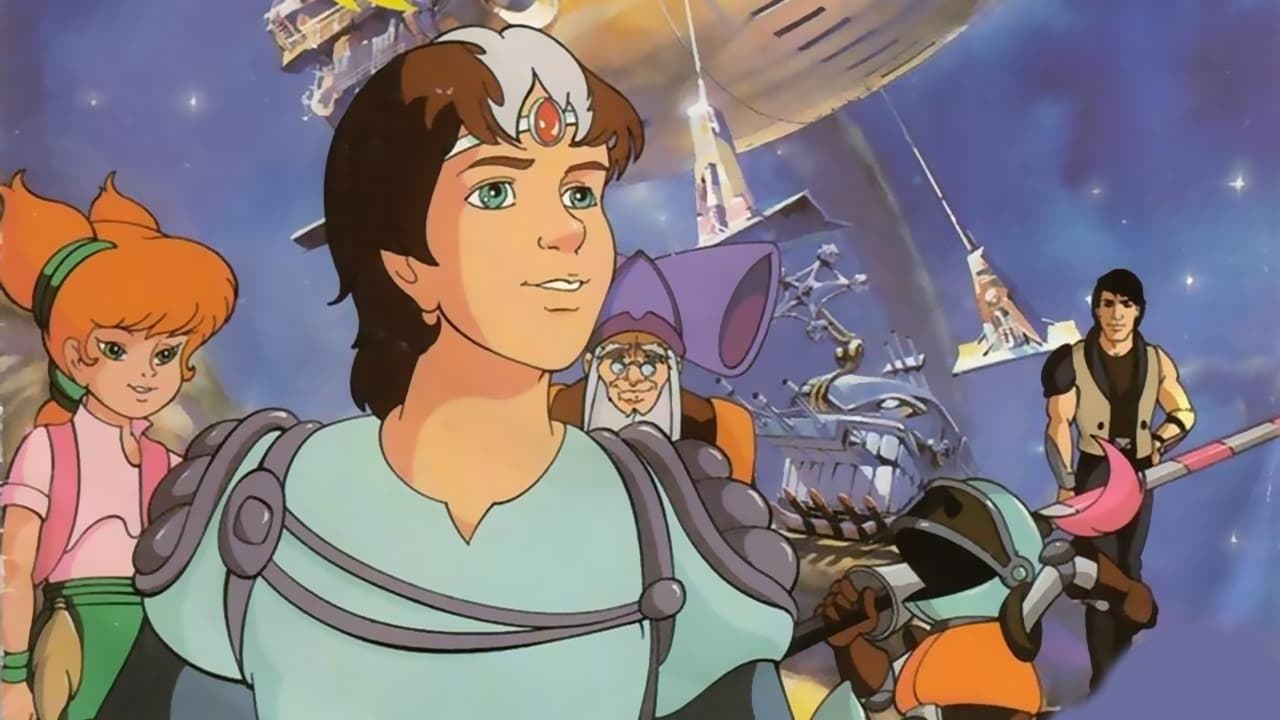
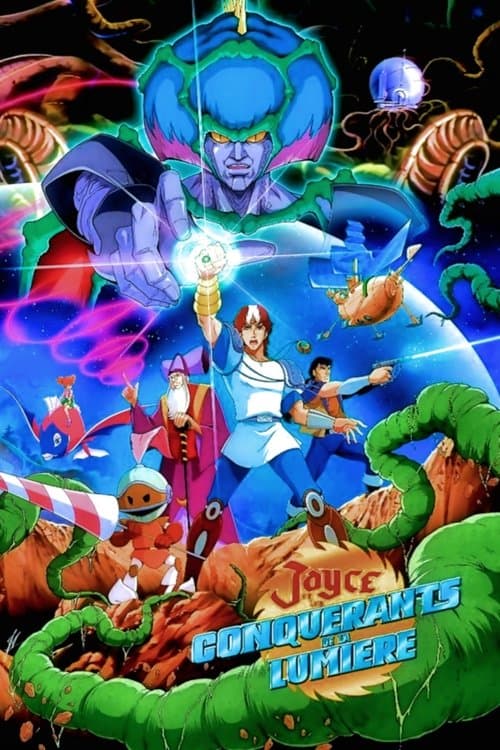
Jayce and the Wheeled Warriors is a space adventure animated series with an atmosphere that shifts between epic and unsettling, carried by a theme tune that has remained etched in the memory of an entire generation. The plot follows Jayce, a young hero who travels the galaxy with a motley crew to find his father and put an end to the threat of the Monstroplants, monstrous plant-like creatures commanded by the formidable Diskor. The series targets school-age children and upwards, but certain visual and narrative elements warrant attention before introducing it to younger viewers.
Violence
The series constructs a model of leadership founded on transmission and responsibility rather than brute force: Jayce becomes team leader not through domination but because he receives an inheritance and accepts it. Altruism is structural, the protection of others consistently taking precedence over the hero's personal quest. Teamwork is valued consistently throughout the episodes, with each crew member bringing an irreplaceable skill. However, the series ends without resolution: Jayce never finds his father, the Monstroplants are never defeated. This lack of closure, frustrating for parents who grew up with the series, can also become a useful point of discussion with a child about the difference between a story and real life, where quests do not always end neatly.
Underlying Values
The series constructs a model of leadership founded on transmission and responsibility rather than brute force: Jayce becomes team leader not through domination but because he receives an inheritance and accepts it. Altruism is structural, the protection of others consistently taking precedence over the hero's personal quest. Teamwork is valued consistently throughout the episodes, with each crew member bringing an irreplaceable skill. However, the series ends without resolution: Jayce never finds his father, the Monstroplants are never defeated. This lack of closure, frustrating for parents who grew up with the series, can also become a useful point of discussion with a child about the difference between a story and real life, where quests do not always end neatly.
Parental and Family Portrayals
The paternal figure lies at the heart of the narrative without ever being present within it: Jayce's father is absent, sought after, idealised, and this quest structures the entire series without ever reaching completion. This motif of a child in search of an inaccessible father is sufficiently central to merit particular attention depending on the family situation of the child watching. The series does not treat this absence in a dramatic or psychologically in-depth manner, but it is omnipresent in the background.
Social Themes
The Monstroplants represent a threat of plant colonisation that invades planets and destroys ecosystems. Without being an explicitly ecological argument, this imagery of a corrupted and conquering nature that suffocates inhabited worlds resonates as a metaphor for invasion and environmental destruction. The context of a small group's resistance against an invading force also carries an implicit political dimension, accessible to an older child.
Strengths
The series has built a strong and coherent visual identity, with a design of vehicles and enemy creatures inventive enough to leave a lasting mark on the imagination. The theme tune, which has remained famous, illustrates the series' capacity to create an immediate emotional atmosphere. On the narrative level, the structure of an endless quest gives the series an unusual depth for the genre: unlike most productions of the era, it does not resolve its stakes, which gives it a more adult and more honest tone about the duration of real struggles. Jayce's crew, composed of characters with very different profiles, offers varied and credible models of mutual support.
Age recommendation and discussion points
The series is suitable from age 8 onwards, with particular attention for children sensitive to monstrous imagery or situations of confinement. Two angles of discussion are worth pursuing after viewing: why does Jayce choose to protect others rather than sacrifice everything to find his father, and how does the child feel about the fact that the series ends without victory or reunion.
Synopsis
The Lightning League drives white and silver vehicles with assorted weaponry, and are led by a teenager named Jayce. The villains are organic green vegetable-based creatures called the Monster Minds, who tend to take the shape of black and green vehicles. They travel via large green organic vines which can grow in and across interstellar space, and sprout seeds that rapidly grow into further Monster Minds. They are led by Saw Boss.
About this title
- Format
- TV series
- Year
- 1985
- Runtime
- 20m
- Countries
- Canada, France
- Original language
- FR
- Directed by
- J. Michael Straczynski, Jean Chalopin
- Main cast
- Darrin Baker, Charles Jolliffe, Valerie Politis, Len Carlson, Gilles Tamiz, Giulio Kukurugya, John Stocker, Dan Hennessey
- Studios
- DIC, ICC TV Productions
Content barometer
- Violence3/5Notable
- Fear3/5Notable tension
- Sexuality0/5None
- Language0/5None
- Narrative complexity1/5Accessible
- Adult themes0/5None
Watch-outs
Values conveyed
- Courage
- Perseverance
- Loyalty
- Autonomy
- friendship
- teamwork