James and the Giant Peach
Does this age rating seem accurate to you?
Detailed parental analysis
James and the Giant Peach is a fantastical adventure film with a resolutely strange tone, oscillating between childlike wonder and dark imagery that draws as much from unsettling fairy tales as from absurd humour. A maltreated orphan boy discovers a giant peach and embarks on an extraordinary journey in the company of talking insects. The film targets children from a certain age upwards and pre-adolescents, but its unsettling atmosphere makes it considerably less accessible to younger viewers than its appearance as an animated tale might suggest.
Parental and Family Portrayals
Family structure lies at the heart of the film and constitutes its most weighty element. James's parents are killed before his eyes in the opening minutes, in a direct and brutal sequence. The aunts who take him in are not mere comic antagonists: they mistreat him verbally and physically on a repeated basis, calling him 'good for nothing' and 'little worm', and threatening him with beatings. The film does not diminish the severity of this situation and James visibly bears the physical and psychological marks of this poor treatment. For a young viewer, this reality can resonate strongly, and it deserves to be named clearly after viewing.
Violence
Violence takes several forms in this film and its intensity exceeds what the animated tale packaging prepares you for. The rhinoceros attack that kills the parents is visually striking. Later, a giant mechanical shark attacks the characters with assumed brutality, decapitated fish heads appear on platters, and a scene in a ghost ship shows pirate skeletons subjecting a character to explicit burlesque torture. These sequences are treated with a stylisation that integrates them into the fantastical world, without rendering them gratuitous: they serve narrative tension and contribute to the dark fairy tale atmosphere. They are nonetheless liable to upset sensitive or young children.
Underlying Values
The narrative is structurally sound in terms of values conveyed. James's courage is not instinctive bravery but a difficult learning process: he must learn to name his fear rather than flee from it, and the final resolution rests on this act of inner affirmation. The autonomy gained from maltreating adults is presented as legitimate and necessary, which sends a strong message to children confronted with abusive figures of authority. The solidarity of the insect group around James concretely illustrates that family is constructed also through choice and not solely through blood.
Substances
Tobacco is present in visible and repeated fashion: the aunts smoke, and several insect characters draw on cigars. Beverages evoking beer and wine also appear. These elements are not dramatised but their normalisation in a film intended for children merits noting, particularly for the aunts whose smoking accompanies their portrait as negative figures without the film explicitly making it a criticism.
Language
The verbal register of the aunts is aggressive and humiliating in sustained fashion: 'idiot', 'useless little worm', 'good for nothing' recur regularly. These insults form part of the maltreatment dynamic already flagged and are not trivialised by the film, which places them clearly in the mouths of antagonistic characters. There is no coarse language as such, but verbal violence is real and can mark younger viewers.
Strengths
The film is a coherent and inventive adaptation of Roald Dahl's novel, faithfully restoring its corrosive humour, assumed darkness and paradoxical tenderness. The visual world is singular and memorable, blending stop-motion animation and live-action footage with an aesthetic cohesion rare for its time. The writing of secondary characters, each bearing their own flaws and desires, avoids flat archetypes and gives the journey genuine emotional depth. From a pedagogical standpoint, the film addresses with uncommon honesty for a children's tale the themes of grief, maltreatment and inner fear, without resolving them through magic but through an act of will by the character.
Age recommendation and discussion points
The film is not recommended before the age of 7 in absolute terms, and achieves its full potential around 8 to 10 years old, with parental accompaniment for the more sensitive. Two concrete angles to explore after viewing: ask the child what he thinks of the aunts and why certain adults may prove cruel to children, and discuss the final scene by asking him what truly made James courageous, since physical strength plays no part in it.
Synopsis
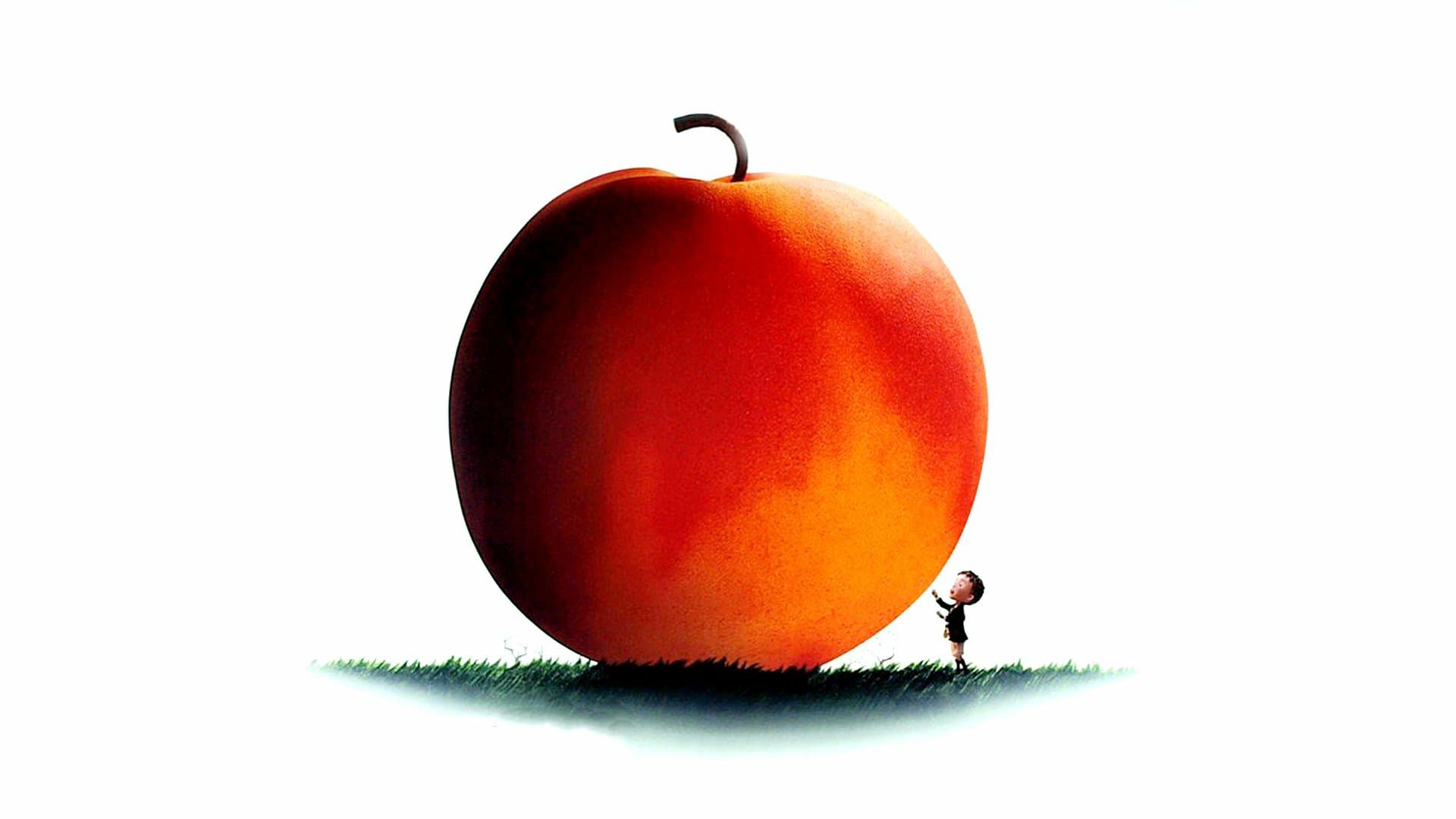
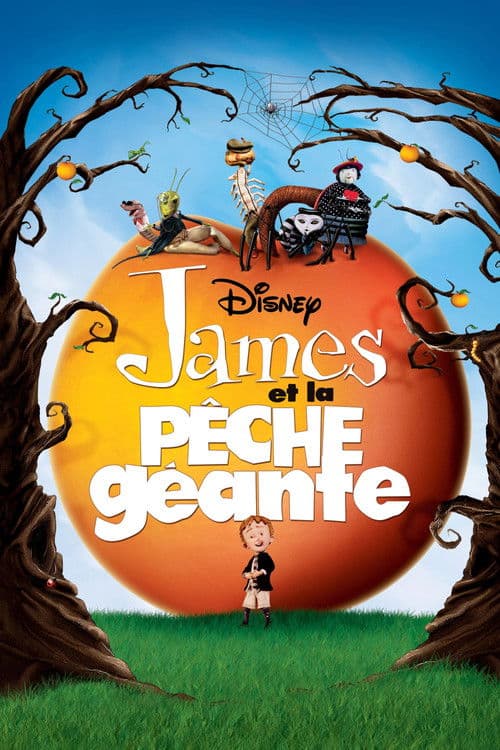
When the young orphan boy James spills a magic bag of crocodile tongues, he finds himself in possession of a giant peach that flies him away to strange lands.
About this title
- Format
- Feature film
- Year
- 1996
- Runtime
- 1h 20m
- Countries
- United States of America
- Original language
- EN
- Directed by
- Henry Selick
- Main cast
- Paul Terry, Miriam Margolyes, Joanna Lumley, Pete Postlethwaite, Simon Callow, Richard Dreyfuss, Jane Leeves, Susan Sarandon, David Thewlis, Steven Culp
- Studios
- Allied Filmmakers, Walt Disney Pictures
Content barometer
- Violence3/5Notable
- Fear4/5Intense
- Sexuality0/5None
- Language2/5Moderate
- Narrative complexity1/5Accessible
- Adult themes2/5Present
Watch-outs
- Grief
- Death / grief
- Abuse
Values conveyed
- Courage
- Friendship
- Autonomy
- resilience
- imagination