
It Takes Two
Does this age rating seem accurate to you?
Detailed parental analysis
Dad, I've Got a Mum for You is a light and cheerful family comedy, carried along by a warm atmosphere and humour accessible to children. The plot follows two girls who are as alike as two peas in a pod and decide to orchestrate everything to reunite their respective parents, a widowed father and a single woman wishing to adopt. The film targets young children and families, with no ambition beyond entertainment.
Discrimination
The film addresses head-on an institutional stereotype: a social worker refuses to authorise adoption by a single woman on the grounds that a child needs both a father and a mother. The narrative does not validate this position; it criticises it by showing its absurdity and injustice, which makes it a useful starting point for discussing with a child the different forms of family. By contrast, the romantic rival is constructed as a caricature of a materialistic woman, identified by her luxury brands and her contempt for children, which constitutes a more conventional stereotype that the film itself never really questions.
Parental and Family Portrayals
The father is widowed and loving but passive, easily manipulated by those around him and by the two girls. The maternal figure is absent by definition for one of the heroines, an orphan awaiting adoption, which gives the film a genuine sensitivity to the question of loss and the desire for family. The potential substitute mother is presented as warm and competent, which nuances the message about the ideal family without ever making it complex.
Underlying Values
The film values the autonomy and resourcefulness of the two girls, who take their destiny into their own hands without waiting for adults to act. This representation of childhood as a driving force is consistent and positive. However, the narrative rests on a logic of benevolent manipulation: the children deceive the adults for their own good, and this works without real moral consequence. This is an angle worth discussing with a child, as the film never questions whether the end justifies the means.
Violence
Violence remains within the register of weightless physical comedy. A slap is given during a wedding scene, a character falls from a horse and is slightly injured, and an adult threatens two children without following through. These elements are treated in a burlesque manner and generate neither fear nor lasting discomfort in a young viewer.
Language
The language is generally clean, with only a few slightly informal expressions and one isolated obscenity. Nothing that exceeds the bounds of mainstream family comedy.
Strengths
The film works on a simple but well-oiled narrative mechanism, and the two girls carry the story with convincing energy. The situational comedy is effective for a young audience, and the film manages to address the question of adoption and single-parent families with a lightness that does not exclude genuine sensitivity. It is honest entertainment, without particular artistic pretension, but which offers material for conversation on concrete subjects.
Age recommendation and discussion points
The film is suitable from age 6 without reservation. Two angles deserve to be addressed after viewing: first, the question of whether one can deceive someone for their own good, since the heroines manipulate the adults without the film ever calling this into question; secondly, the social worker's remark about the necessity of having both a father and a mother, which naturally opens a discussion about the diversity of family forms.
Synopsis
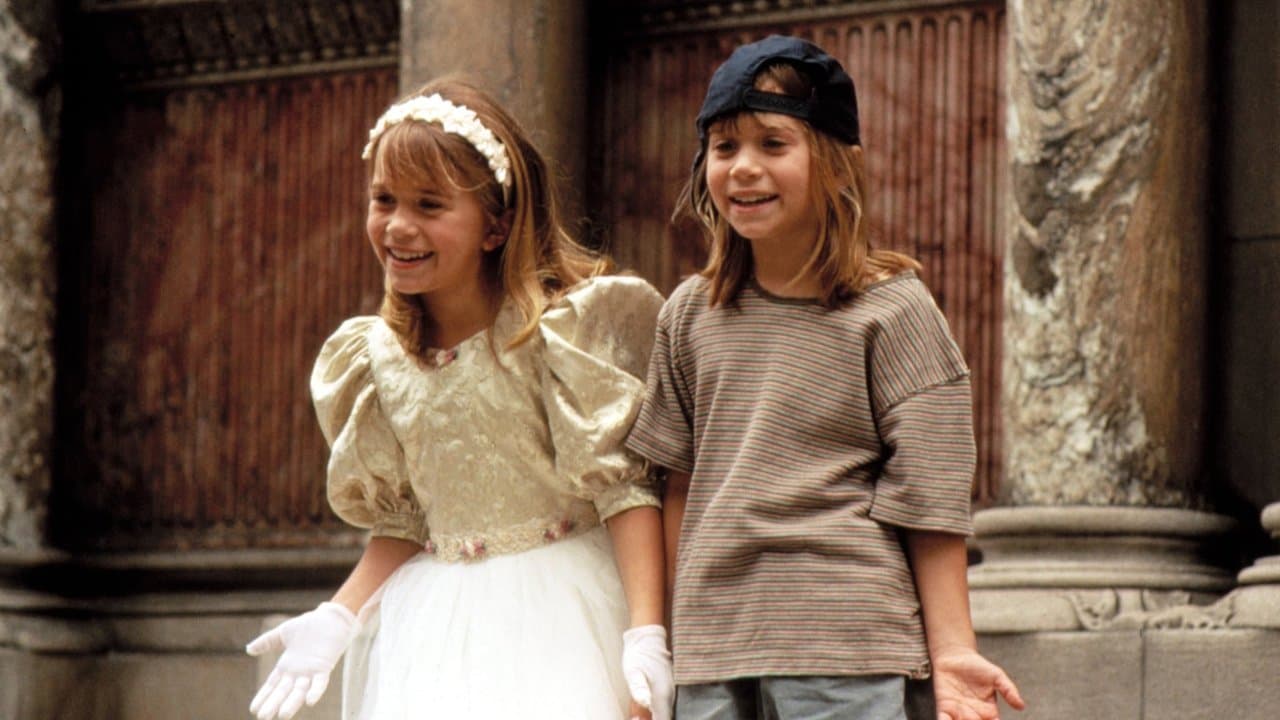
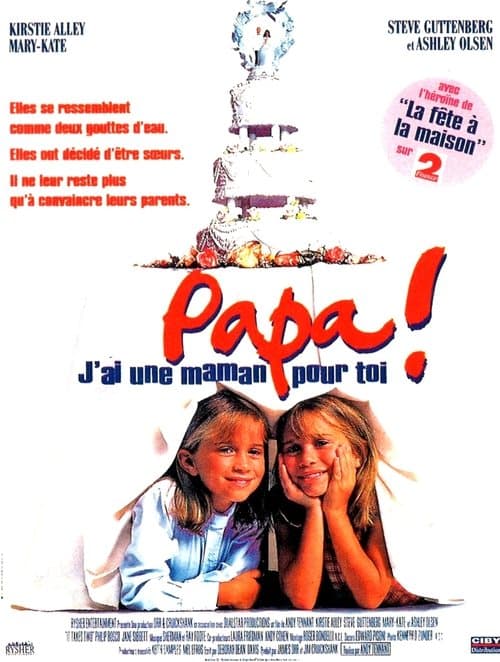
Identical 9-year-olds from very different backgrounds: orphaned Amanda and wealthy Alyssa meet at summer camp and decide to switch places -- and play matchmaker between Alyssa's dad, Roger, and the kind social worker who cares for Amanda.
Where to watch
Availability checked on May 06, 2026
About this title
- Format
- Feature film
- Year
- 1995
- Runtime
- 1h 41m
- Countries
- United States of America
- Original language
- EN
- Directed by
- Andy Tennant
- Main cast
- Kirstie Alley, Steve Guttenberg, Ashley Olsen, Mary-Kate Olsen, Jane Sibbett, Philip Bosco, Michelle Grisom, Desmond Robertson, Tiny Mills, Shanelle Henry
- Studios
- Dualstar Productions, Orr & Cruickshank, Rysher Entertainment
Content barometer
- Violence1/5Mild
- Fear0/5None
- Sexuality0/5None
- Language1/5Mild
- Narrative complexity2/5Moderate
- Adult themes0/5None
Watch-outs
- Gender stereotypes