
Interstellar
Does this age rating seem accurate to you?
Detailed parental analysis
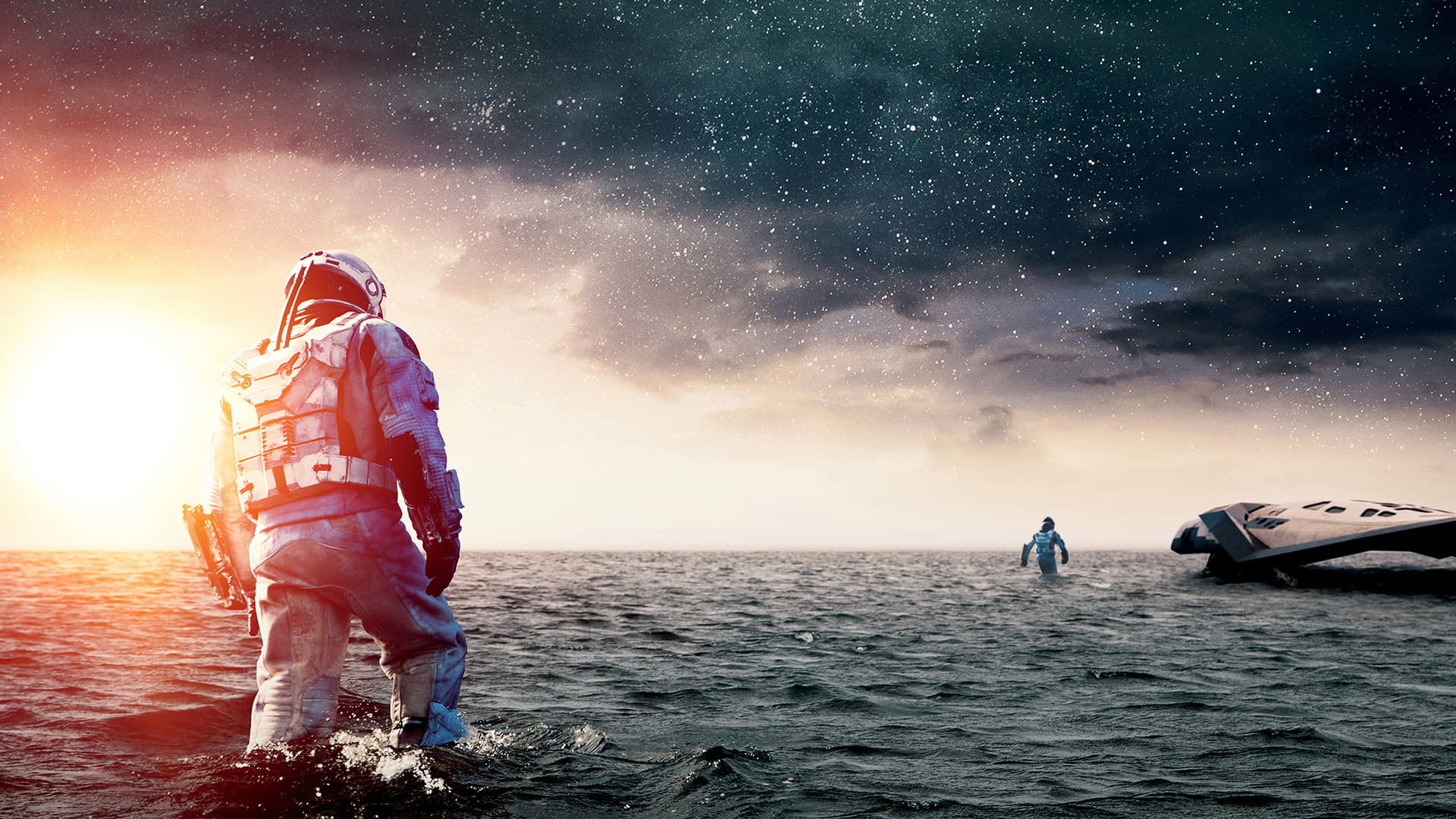
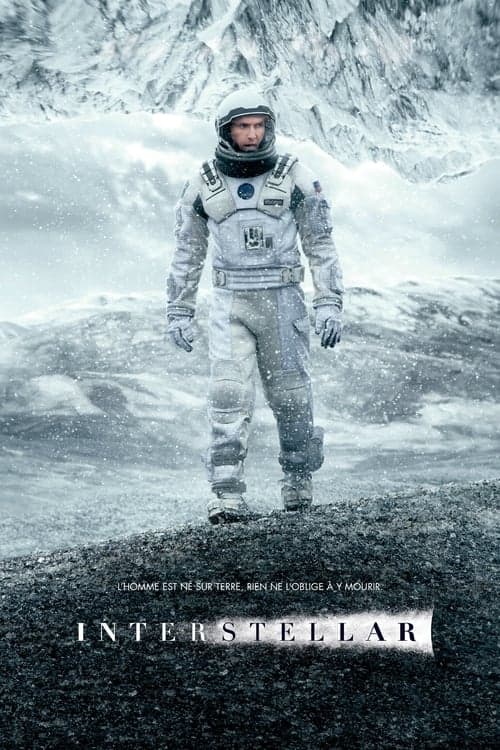
Interstellar is a contemplative and emotionally demanding science-fiction film, with an atmosphere that is both grandiose and oppressive. The plot follows a former pilot who leaves his family for a last-chance space mission, intended to find a new habitable planet for humanity. The film is primarily aimed at mature teenage and adult audiences, capable of sustaining a lengthy runtime, genuine scientific complexity and sustained emotional intensity.
Parental and Family Portrayals
The father-daughter relationship is the true heart of the film, and it is treated with rare depth. The father is a loving character who chooses to leave, abandoning his children for a mission from which he may never return. This voluntary absence, even justified by an immense collective stakes, is shown in all its pain: the daughter experiences the abandonment as a betrayal, and the film does not minimise this wound. The scene in which the father watches years of video messages from his aged family is one of the most emotionally devastating in the film. For a child or adolescent sensitive to themes of separation and parental abandonment, this dimension can be particularly distressing. It is also, precisely, what makes it such rich material for discussion.
Underlying Values
The film strongly valorises exploration, individual sacrifice in service of collective survival and the transcendence of human limits through science and courage. Love, particularly filial love, is presented as a physical force capable of transcending time and space, which constitutes a bold narrative premise but also one that is debatable on rational grounds. A tension runs through the narrative between two worldviews: one that advocates adaptation and resignation, and one that drives exploration and risk-taking. The film clearly favours the latter, without truly interrogating the human cost of this choice for those who remain.
Social Themes
The film opens on a dying Earth, ravaged by dust storms and a global food crisis that has reduced humanity to an agricultural civilisation in survival mode. This ecological dystopia is presented as backdrop rather than central subject, but it gives the film an obvious contemporary resonance. The question of what humanity owes its children, and the responsibility of present generations towards the future of the planet, runs through the narrative from beginning to end.
Violence
Violence is present but restrained. A scene of physical combat between astronauts on a frozen planet is intense without being graphic. Characters die, by explosion or asphyxiation, without bloodshed. Situations of extreme survival, dust storms, colossal waves, the void of space, generate strong and sustained tension. Violence is never gratuitous or aestheticised for its own sake: it serves the drama and the sense of genuine danger.
Language
Strong language is present but limited: two instances of the strongest word in English, a few additional expletives. It is not a structuring element of the film, but it is worth noting for parents most attentive to this criterion.
Strengths
Interstellar is a work of formal and narrative ambition uncommon in mainstream cinema. The visual representation of black holes and the relativity of time is grounded in serious scientific consultation, making it a legitimate entry point into theoretical physics for a curious adolescent. The soundtrack, though sometimes loud enough to obscure dialogue, contributes to an immersive sensory experience. The film achieves the remarkable feat of making emotionally tangible a concept as abstract as time dilation: seeing a father age more slowly than his children is not an equation, it is a rupture. The writing holds together the rigour of science-fiction narrative and the depth of a family drama, without sacrificing one for the other.
Age recommendation and discussion points
The film is not recommended for children under 10, who lack the emotional and cognitive resources to absorb its density. From 12 or 13 years old for a mature adolescent, and preferably 14 years old for fully serene viewing. Two angles of discussion emerge after viewing: first, can one justify abandoning one's family to save humanity, and who decides on this sacrifice? Second, what does the film say about our relationship with time, with ageing and with what we leave to those we love?
Synopsis
The adventures of a group of explorers who make use of a newly discovered wormhole to surpass the limitations on human space travel and conquer the vast distances involved in an interstellar voyage.
About this title
- Format
- Feature film
- Year
- 2014
- Runtime
- 2h 49m
- Countries
- United Kingdom, United States of America
- Original language
- EN
- Directed by
- Christopher Nolan
- Main cast
- Matthew McConaughey, Anne Hathaway, Michael Caine, Jessica Chastain, Casey Affleck, Wes Bentley, Topher Grace, Mackenzie Foy, Ellen Burstyn, John Lithgow
- Studios
- Legendary Pictures, Syncopy, Lynda Obst Productions
Content barometer
- Violence2/5Moderate
- Fear3/5Notable tension
- Sexuality0/5None
- Language2/5Moderate
- Narrative complexity3/5Complex
- Adult themes0/5None