Intelligent Trees
Intelligente Bäume
Does this age rating seem accurate to you?
Detailed parental analysis
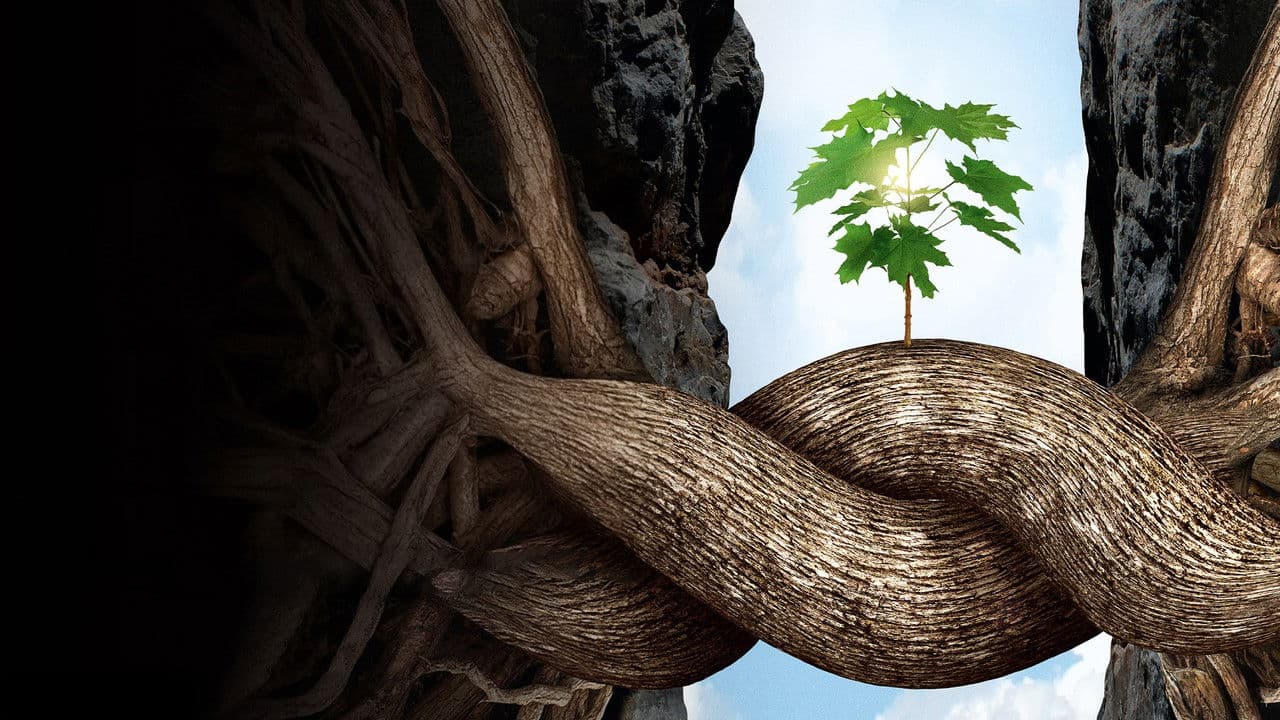
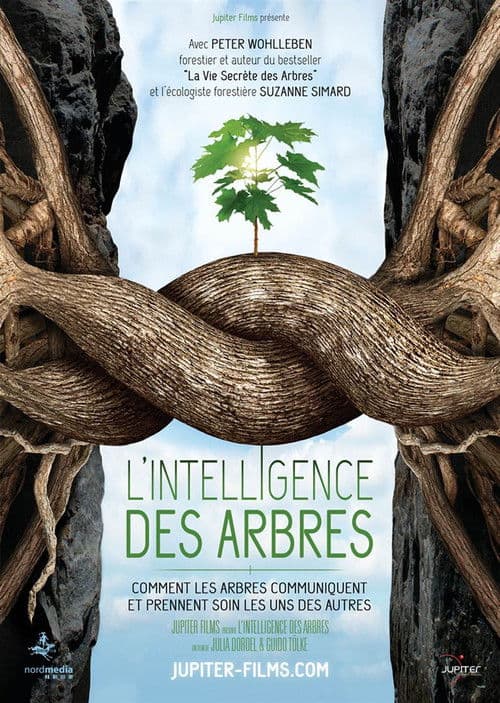
The Intelligence of Trees is a contemplative and educational documentary that immerses the viewer in the underground and aerial life of forests, exploring networks of communication between trees via fungi and chemical signals. The film follows researchers who argue that trees cooperate, help one another and communicate in complex ways, in direct opposition to intensive forestry industry practices. It is aimed primarily at curious adults or teenagers, with its scientific density and slow pace making it poorly suited to young children.
Social Themes
Ecology is at the heart of the film, and criticism of the forestry industry is explicit and visually reinforced. Sequences show giant machines felling trees and massive tyres compressing forest soil, images that may affect children sensitive to nature. The film directly opposes two models: industrial monoculture, presented as destructive and blind, and diverse natural forest, presented as an intelligent and solidary ecosystem. This opposition is constructed with conviction but without economic or social nuance: forest workers and the constraints of the timber industry are absent from the picture. This is an angle worth flagging to prevent a child or teenager from retaining only a binary view of the subject.
Underlying Values
The film structures its argument around cooperation, intergenerational solidarity and respect for living things in their duration. Mother trees that nourish their young saplings serve as a recurring metaphor for a worldview founded on care and transmission rather than competition and yield. Criticism of productivism is constant, never explicitly formulated as such: it operates through visual and emotional contrast between living forests and exploited forests. These values are coherent and well conveyed, but they are presented without internal contradiction, which gives the film a campaigning tone that more critically minded teenagers may identify and question.
Strengths
The film has the genuine merit of introducing fascinating scientific concepts little known to the general public, notably the mycorrhizal networks that link trees to one another beneath the soil surface. These discoveries, carried by researchers who speak with sincere conviction, open a window onto plant biology that schools rarely address. For a curious teenager, it is a concrete and stimulating entry point into questions of biology, ecology and the philosophy of living things. The limitation is that the direction remains televisual and uninventive, with a succession of face-to-camera interviews that slows the pace and makes viewing demanding. The film is worth more for what it teaches than for how it shows it.
Age recommendation and discussion points
The film is suitable from age 10 with accompaniment, and fully from age 12 for independent viewing followed by discussion. Two angles of conversation are worth opening: first, the question of whether trees truly feel emotions or whether scientists use these words to make their discoveries more accessible; second, what it means concretely to respect nature, beyond the emotion the film provokes.
Synopsis
Trees talk, know family ties and care for their young? Is this too fantastic to be true? German forester Peter Wohlleben and scientist Suzanne Simard have been observing and investigating the communication between trees over decades. And their findings are most astounding.
About this title
- Format
- Feature film
- Year
- 2017
- Runtime
- 45m
- Countries
- Canada, Germany
- Original language
- DE
- Directed by
- Julia Dordel, Guido Tölke
- Main cast
- Suzanne Simard, Peter Wohlleben, Denise M'Baye, Teresa (Sm'hayetsk) Ryan, Monika A. Gorzelak, Amanda Asay, Julia Amerongen Maddison
Content barometer
- Violence1/5Mild
- Fear1/5Mild
- Sexuality0/5None
- Language0/5None
- Narrative complexity1/5Accessible
- Adult themes0/5None
Watch-outs
Values conveyed
- Acceptance of difference
- Perseverance
- ecology
- cooperation
- curiosity
- science