
Inside Out
Does this age rating seem accurate to you?
Detailed parental analysis
Inside Out is a Pixar animation film with an atmosphere that is both luminous and melancholic, unfolding largely inside the mind of an eleven-year-old girl named Riley, whose personified emotions attempt to help her navigate a difficult house move. The plot follows Joy and Sadness, lost in the recesses of Riley's memory, who must find their way back whilst the child's inner world gradually collapses. The film is primarily aimed at children from six or seven years old, but its conceptual richness makes it a work that parents and teenagers often appreciate equally, if not more.
Underlying Values
Riley's parents are portrayed with uneven care. The mother is perceived as emotionally available and attentive to her daughter's inner state, whilst the father is frequently distracted, lost in thoughts related to work, and often out of touch with what Riley is experiencing. The film even takes the stereotype quite far by depicting each parent's emotions as a monolithic and typified group: caution and communication on the maternal side, sporting pride and surface cheerfulness on the paternal side. This is a caricatural shortcut that can fuel a productive conversation about gender representation in parental roles. Despite this, the film shows parents who listen and respond when Riley truly speaks to them, which makes the family dynamic broadly positive.
Parental and Family Portrayals
The film attributes to each parent a group of emotions whose behaviours reproduce fairly marked gender stereotypes: the father is dominated by Anger and Fear, the mother by Sadness and affective Joy. This construction is not innocent: it implicitly associates emotional sensitivity with the feminine and primary reaction or detachment with the masculine. This is not the heart of the film's message, but the visual architecture renders it sufficiently visible for it to be worth discussing.
Discrimination
The film contains no violence in the strict sense, but several sequences can be distressing for young children: islands of personality collapse into a dark void, a train derails and plunges into a ravine, and characters fall into an apparently bottomless memory dump. A nightmare sequence features a giant clown pursuing the characters, potentially unsettling for sensitive children. These elements fit within a coherent narrative logic and are never gratuitous, but the visual effect can affect the very young.
Violence
Inside Out is one of the most conceptually ambitious animated films of recent decades. It succeeds in making complex notions such as emotional memory, abstract thought, the unconscious and identity construction accessible to a seven-year-old child, without ever simplifying to the point of betrayal or complicating to the point of exclusion. The disappearance of Bing Bong, Riley's imaginary friend, is one of the most skilfully written sequences in the film: it represents the loss of childhood with a restraint that touches adults without frightening children. The narrative intelligence lies in its ability to make the story work simultaneously on two levels, the inner world and real life, in a perfectly legible way. The film constitutes a rare tool for conversation about emotional life, usable from primary school onwards.
Strengths
Inside Out is one of the most conceptually ambitious animated films of recent decades. It succeeds in making complex notions such as emotional memory, abstract thought, the unconscious and identity construction accessible to a seven-year-old child, without ever simplifying to the point of betrayal or complicating to the point of exclusion. The disappearance of Bing Bong, Riley's imaginary friend, is one of the most skilfully written sequences in the film: it represents the loss of childhood with a restraint that touches adults without frightening children. The narrative intelligence lies in its ability to make the story work simultaneously on two levels, the inner world and real life, in a perfectly legible way. The film constitutes a rare tool for conversation about emotional life, usable from primary school onwards.
Age recommendation and discussion points
The film is suitable from six or seven years old for accompanied viewing, with full emotional and conceptual accessibility from around eight or nine years. Below five years old, the concepts remain too abstract and certain visual sequences may cause unnecessary worry. Two natural angles for discussion after viewing: ask the child which emotion they think most often 'directs' their head, and explore together why Riley was wrong to want to hide her sadness from her parents.
Synopsis
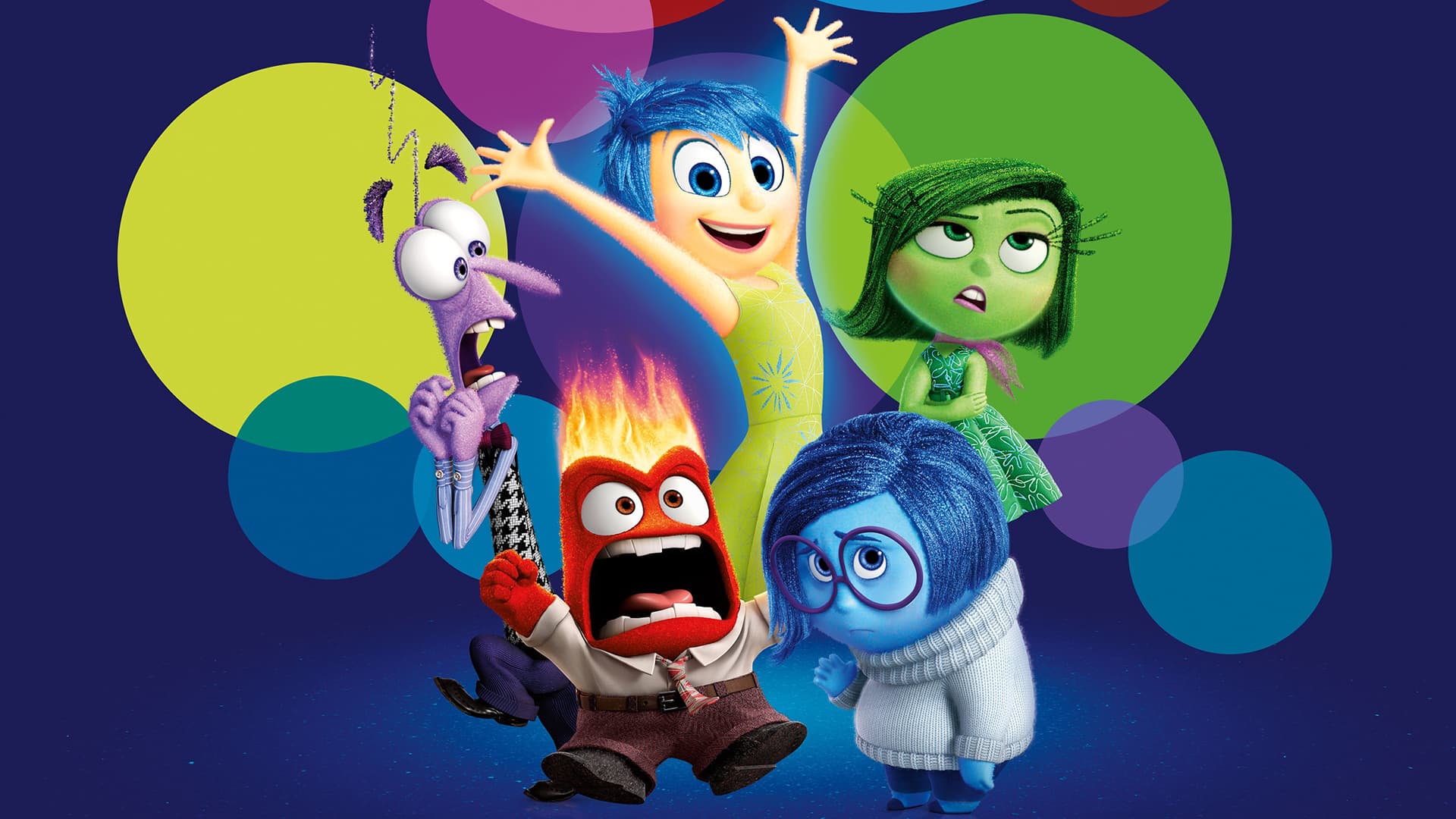
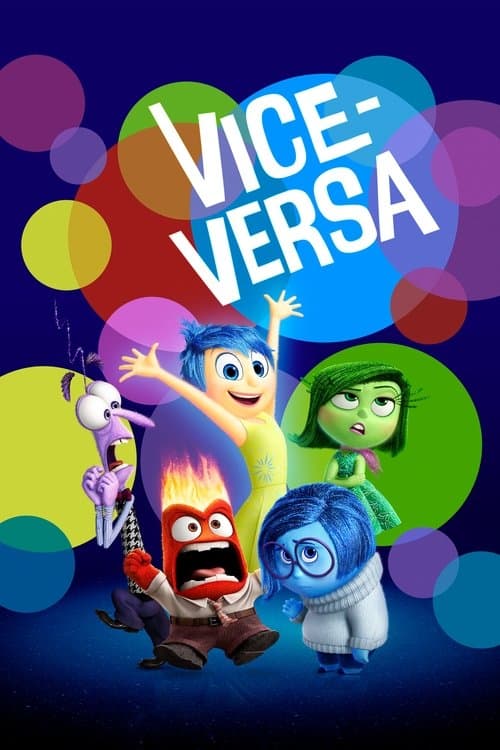
When 11-year-old Riley moves to a new city, her Emotions team up to help her through the transition. Joy, Fear, Anger, Disgust and Sadness work together, but when Joy and Sadness get lost, they must journey through unfamiliar places to get back home.
About this title
- Format
- Feature film
- Year
- 2015
- Runtime
- 1h 34m
- Countries
- United States of America
- Original language
- EN
- Studios
- Pixar
Content barometer
- Violence1/5Mild
- Fear2/5A few scenes
- Sexuality0/5None
- Language0/5None
- Narrative complexity3/5Complex
- Adult themes0/5None
Values conveyed
- Acceptance of difference
- Compassion
- Autonomy
- family
- empathy
- resilience
- emotional expression