Inside Job
Does this age rating seem accurate to you?
Detailed parental analysis
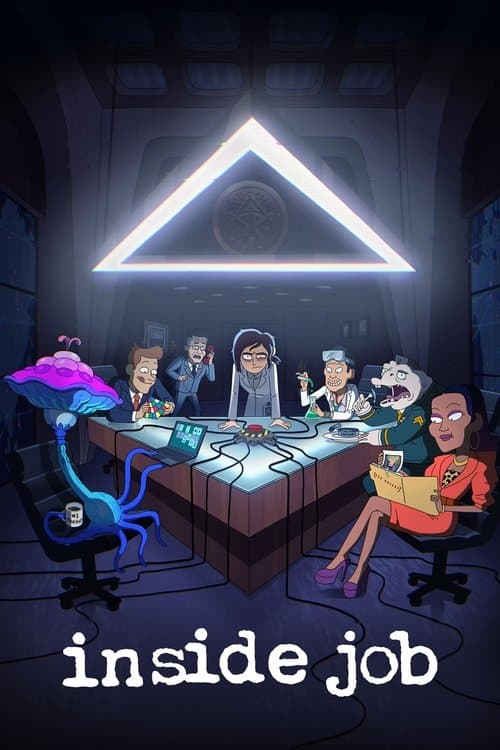
Inside Job is an adult animated series with a sharp satirical tone, blending absurd comedy and critique of power. The plot follows a brilliant young scientist integrated into a secret organisation managing global conspiracies from the shadows of the American government. The tone is deliberately cynical, with black humour and political caricature woven throughout. The intended audience is clearly adult or older teenager.
Language
Crude language is one of the series' most consistent stylistic markers. Strong profanities, notably fuck, shit and bitch, recur frequently and are integral to the comedic register. This is not isolated aggressive language but a systematic writing choice that anchors the series in American adult comedy conventions. For a teenager, the question is less about shock value than about the normalisation of a register inappropriate for all contexts.
Substances
Drug and alcohol consumption is recurrent and scripted, not incidental. A main character is depicted as an addict on a regular basis, without the series explicitly condemning this or framing it as a straightforward redemption arc. Cannabis consumption is implicit and normalised in several scenes. This humorous treatment of addiction may warrant a conversation with a teenager about the difference between what the narrative presents and what reality implies in terms of consequences.
Violence
Violence is present in a fantastical and gory form, with scenes involving stylised injuries and deaths. It sits within a parodic register typical of adult animation and is not presented as realistic. Firearms and other weapons appear in these sequences. The intensity remains within the bounds of the genre, but the frequency and bloody character of certain scenes clearly distinguish it from family entertainment.
Underlying Values
The series constructs a structured critique of corporate power and shadow government, framing institutional dysfunction as absurd norm rather than scandalous exception. This satirical perspective is intellectually stimulating but rests on near-total cynicism: institutions are corrupt by definition, the individuals serving them are ridiculous or malevolent, and sincerity is almost always mocked. This is a relevant reading angle for a politically curious teenager, provided it is accompanied by discussion of what this cynicism omits or caricatures.
Sex and Nudity
Sexual jokes and references to sexuality are frequent and constitute a notable part of the series' humour. The register remains suggestive rather than explicitly graphic, but the allusions are direct and numerous. This is not shocking content for an adult, but the density of these references contributes to the series' distinctly adult profile.
Discrimination
The main character, a brilliant female scientist who is socially awkward, offers a notable representation of a female technical expert in a male-dominated world. The series does not make this choice a didactic argument, which makes it all the more effective. The treatment is not free from caricatures related to geek culture and asocial profiles, but these remain broadly good-natured.
Social Themes
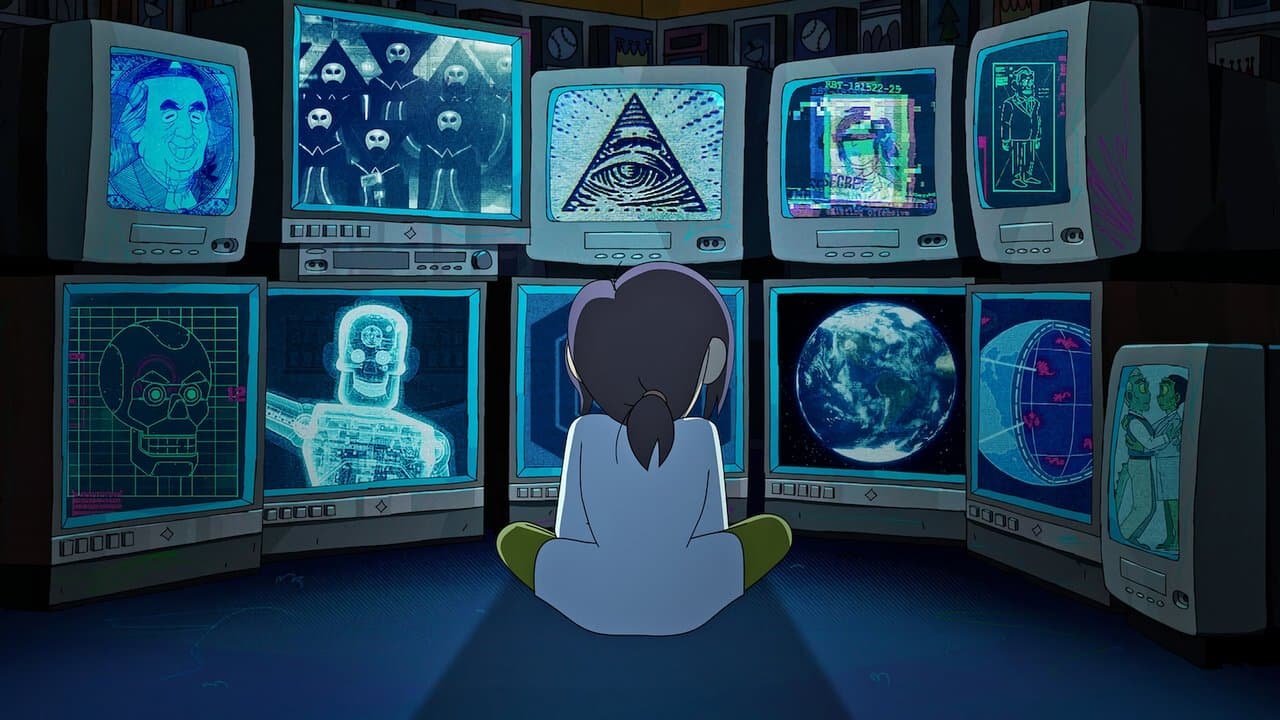
The series addresses politics, power and corruption directly through the lens of parodied conspiracism. It does not take conspiracy theories seriously but uses them as satirical material to point out real abuses of opaque power. This is a possible entry point for discussion with a teenager about the difference between grounded political critique and conspiratorial thinking.
Strengths
The series is written with genuine intelligence of the satirical genre: it succeeds in building engaging characters in a deliberately absurd universe, which is one of comedy's most difficult exercises. The dialogue writing is fast, dense and often biting. The critique of power, though caricatural, rests on observations precise enough to have resonance beyond pure entertainment. The main character offers a rare representation of an asocial and brilliant woman treated with empathy rather than condescension.
Age recommendation and discussion points
The series is not recommended for viewers under 14 due to the accumulation of adult content, and is best appreciated from age 16 onwards, when the critical distance necessary for its cynical humour is generally in place. Two angles of discussion are worth opening after viewing: firstly, what the systematically cynical view of institutions reveals about our collective relationship to politics, and secondly, how humour can serve to normalise behaviours, such as addiction, without necessarily endorsing them.
Synopsis
For employees of the Deep State, conspiracies aren't just theories — they're fact. And keeping them a secret is a full-time job.
Where to watch
Availability checked on Apr 03, 2026
About this title
- Format
- TV series
- Year
- 2021
- Runtime
- 28m
- Countries
- United States of America
- Original language
- EN
- Directed by
- Shion Takeuchi, Scott Thomas, Alisha Brophy
- Main cast
- Lizzy Caplan, Clark Duke, Christian Slater, Brett Gelman, John DiMaggio, Tisha Campbell, Bobby Lee, Andy Daly, Chris Diamantopoulos
- Studios
- Taco Gucci, Netflix Animation Studios
Content barometer
- Violence3/5Notable
- Fear1/5Mild
- Sexuality3/5Moderate
- Language5/5Very strong
- Narrative complexity1/5Accessible
- Adult themes4/5Strong
Watch-outs
- Drugs
- Alcohol
- Strong language
- Violence
- Gender stereotypes
Values conveyed
- teamwork
- ingenuity
- loyalty