
IF
Does this age rating seem accurate to you?
Detailed parental analysis
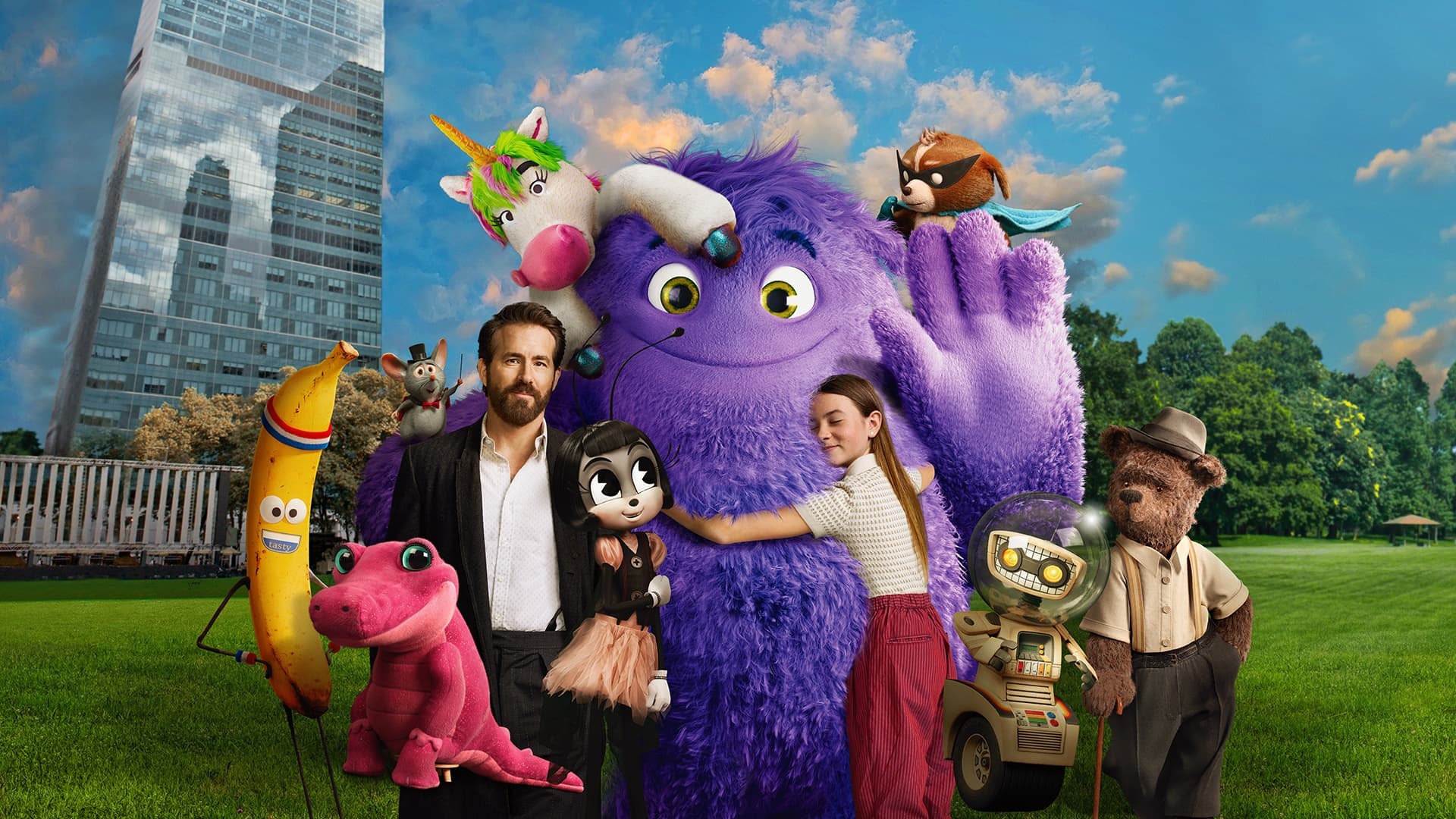
Blue & Compagnie is a family film with a bittersweet atmosphere, oscillating between absurd humour and genuine emotional weight. A young girl capable of seeing the imaginary friends abandoned by their now-adult children attempts to help them find new homes, whilst her father undergoes serious hospitalisation. The film is officially aimed at a family audience, but its thematic heart, centred on grief, anxiety and the loss of childhood, makes it an experience designed more for nostalgic adults than for young children.
Underlying Values
The narrative rests on a well-constructed central idea: imagination is not an infantile refuge one must shed, but a real tool for resilience in the face of anxiety and grief. Bea, the protagonist, moves from a state of fearful withdrawal to an active stance by engaging in a pro-social mission, which grounds the message in something concrete rather than preachy. The film also values affective memory, the act of preserving a connection with what one loved as a child as a form of emotional health. By contrast, imaginary friends are presented as abandoned in a kind of retirement home, which introduces a motif of loneliness, rejection and obsolescence tied to the passage into adulthood. This theme deserves a conversation with the child: does growing up necessarily involve losing something?
Parental and Family Portrayals
Bea's mother's death from cancer is presented in montage, with visually restrained hospital scenes but narratively explicit: a scarf over her head, a medical room, progressive absence. This narrative choice is central to the film and likely constitutes the most difficult element for young viewers to process, particularly those who have already experienced a close bereavement. The father is hospitalised for heart surgery, presented as serious without being graphic. Parental figures are thus simultaneously absent and loving, which constructs genuine affective tension around the fear of loss rather than family dysfunction.
Social Themes
The film indirectly addresses the question of emotional ageing and forgetting as a social phenomenon: imaginary friends relegated to a collective residence metaphorically embody what society does with what is no longer useful or visible. This is an unusual angle in a family film, and sufficiently legible that a ten-year-old child might perceive something in it without the message being didactic.
Discrimination
Black characters present in the film occupy stereotyped secondary roles, kind nurse and receptionist, with no narrative development of their own. This is not heavy-handed caricature, but it is a blind spot in representation frequent enough in American family cinema to merit noting. There is no deliberately humorous or degrading stereotype, but the assignment of these characters to service roles remains a limitation of the writing.
Language
The language is very measured: two instances of slightly informal terms in the original version (the equivalent of 'darn' and 'goodness' in spirit), with no genuine vulgarity. This is not a concern for parents.
Strengths
The film achieves something difficult: speaking of anxiety, anticipatory grief and loss without ever falling into flat pathos or naive minimisation. The idea of making visible the neglected imaginary friends is a narrative find that allows one to address finitude and affective memory through an oblique angle, more tolerable for a child. The writing of Bea as an anxious character who finds a way out through action rather than speech is psychologically sound. The film has genuine emotional generosity, and several sequences achieve a sincerity that justifies the strong reaction it provokes in parents. It functions better as a conversation starter than as pure entertainment.
Age recommendation and discussion points
The film should be reserved for children of seven years and above, and will be fully accessible and beneficial from eight to nine years of age, when understanding grief and anxiety can be accompanied without being traumatic. For children who have recently experienced bereavement, prior preparation is advised. Two useful discussion angles after viewing: ask the child whether they too had an imaginary friend and what became of it, to open onto the question of what one keeps or loses whilst growing up; and talk about the fear Bea feels facing her father's illness, by asking how she copes with it and what the child would do in her place.
Synopsis
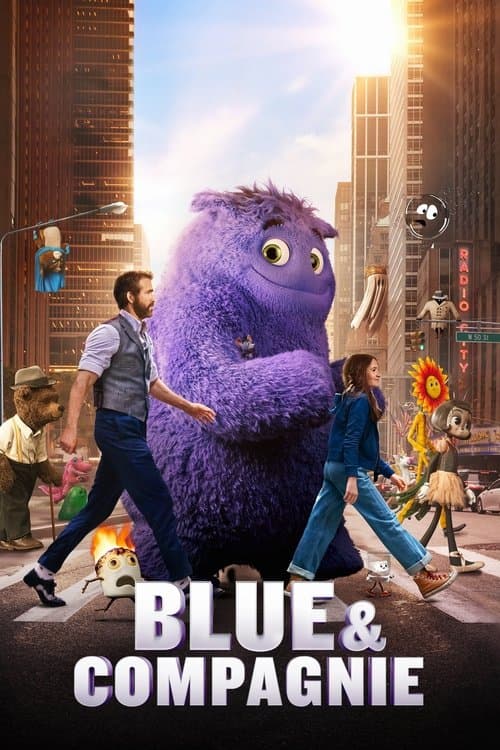
After discovering she can see everyone's imaginary friends, a girl embarks on a magical adventure to reconnect forgotten imaginary friends with their kids.
About this title
- Format
- Feature film
- Year
- 2024
- Runtime
- 1h 44m
- Countries
- United States of America
- Original language
- EN
- Directed by
- John Krasinski
- Main cast
- Cailey Fleming, Ryan Reynolds, John Krasinski, Fiona Shaw, Steve Carell, Phoebe Waller-Bridge, Louis Gossett Jr., Alan Kim, Liza Colón-Zayas, Bobby Moynihan
- Studios
- Paramount Pictures, Sunday Night Productions, Maximum Effort
Content barometer
- Violence0/5None
- Fear3/5Notable tension
- Sexuality0/5None
- Language1/5Mild
- Narrative complexity2/5Moderate
- Adult themes0/5None
Values conveyed
- Friendship
- Acceptance of difference
- Perseverance
- Compassion
- Autonomy
- grief and resilience
- power of imagination
- growing up
- mutual support
- family