

Ice Age: The Meltdown


Ice Age: The Meltdown
Your feedback improves this guide
Your feedback highlights guides that need a second look and keeps the rating trustworthy.
Does this age rating seem accurate to you?
Sign in to vote
Watch-outs
What this film brings
Content barometer
Violence
2/5
Moderate
Fear
3/5
Notable tension
Sexuality
0/5
None
Language
2/5
Moderate
Narrative complexity
1/5
Accessible
Adult themes
0/5
None
Detailed parental analysis
ⓘ- Violence
- Social Themes
- Underlying Values
- Language
- Parental and Family Portrayals
Ice Age 2 is a family animated comedy with a generally light tone, yet traversed by persistent environmental tension linked to an impending flood that threatens to submerge the entire valley. The film follows Manny the mammoth and his companions as they must cross increasingly dangerous territory to reach shelter before the ice gives way. It targets school-age children primarily, whilst offering a few gags intended for the adults watching alongside them.
Violence
The natural disaster is the driving force of the narrative: melting ice and rising waters constitute a collective threat to which the entire group must respond. Without the film explicitly formulating an ecological discourse, the image of an entire valley condemned to disappear beneath the waters establishes a resonance that today's children naturally perceive through the lens of climate change. It is a concrete educational entry point for post-viewing discussion.
Social Themes
The natural disaster is the driving force of the narrative: melting ice and rising waters constitute a collective threat to which the entire group must respond. Without the film explicitly formulating an ecological discourse, the image of an entire valley condemned to disappear beneath the waters establishes a resonance that today's children naturally perceive through the lens of climate change. It is a concrete educational entry point for post-viewing discussion.
Underlying Values
The film constructs its central arc around the notion of chosen family: individuals who have everything opposing them end up forming a cohesive group, and it is this unity that enables collective survival. Acceptance of one's own singularity, illustrated notably by Manny who believes himself to be the last of his species, is treated with genuine narrative tenderness. Perseverance in the face of adversity and the overcoming of personal fears are carried through consistently without ever becoming moralising.
Language
The film contains a slightly rougher level of language than its predecessor. One hears terms such as 'crap', 'ass', 'damn', and a character calls Manny a 'pervert' in a comedic context. A few recurring scatological jokes complete this register. It is not of exceptional severity, but it is sufficiently present for parents of children under 6 to notice it and decide with full knowledge of the facts.
Parental and Family Portrayals
The question of blended family and substitute parenthood is at the heart of Manny's arc, as he learns to envisage the possibility of forming a family despite his past losses. The group as a whole functions as a model of alternative family where solidarity replaces biological ties. This is treated with lightness but with genuine emotional coherence.
Strengths
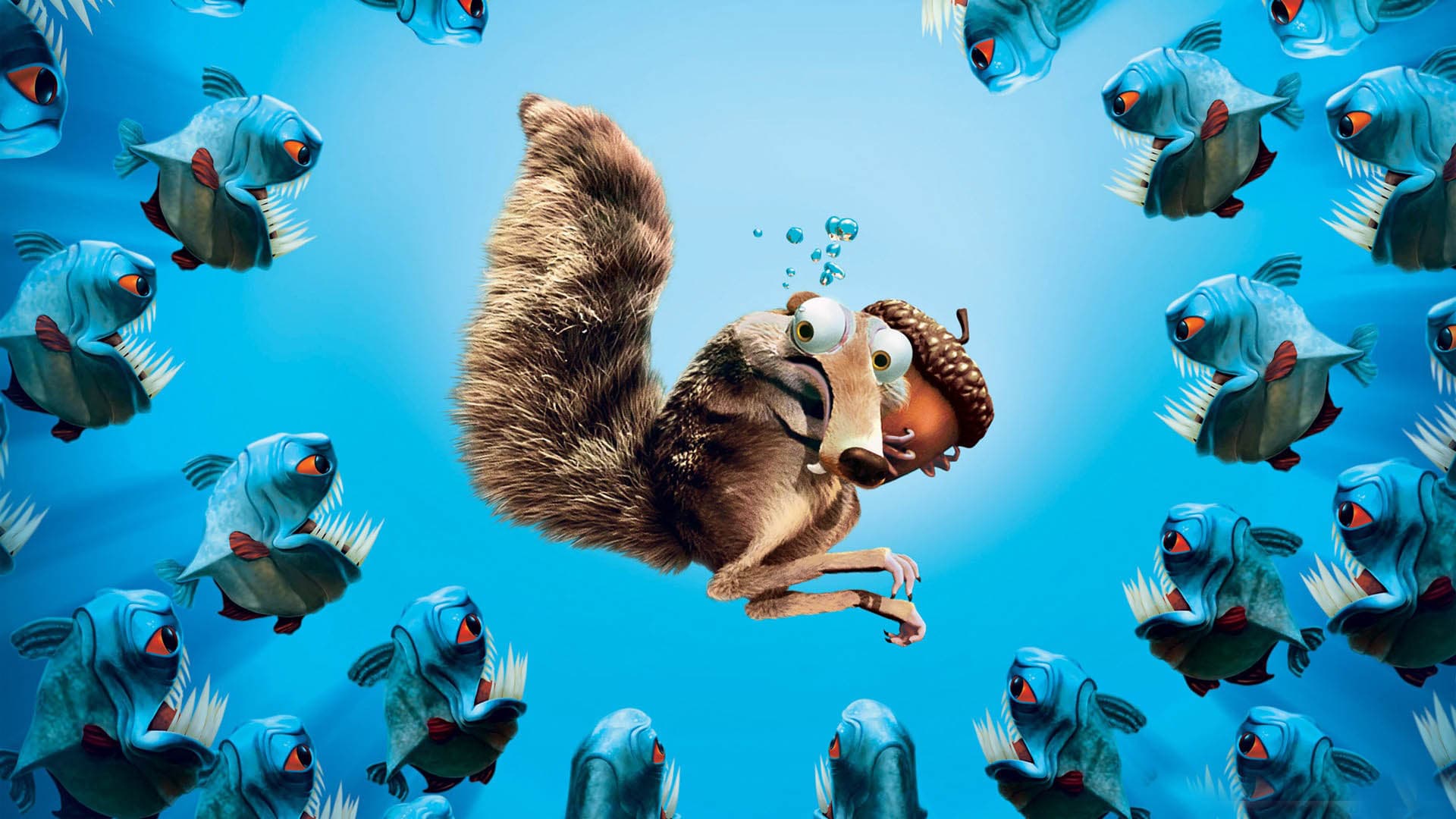
The film maintains its pace with efficiency and knows how to alternate between tense action sequences and comic breathing spaces without the whole appearing disjointed. Secondary characters, in particular Scrat whose red thread around the acorn functions as an autonomous burlesque counterpoint, bring genuine visual fantasy. Manny's emotional arc, confronted with the question of his identity and his place in the world, gives the film a discreet depth that transcends mere entertainment. It is not a great animated film, but it honestly fulfils its function and offers several anchoring points for substantive conversations with children.
Age recommendation and discussion points
The film is suitable from age 7 onwards for accompanied viewing, and is appropriate without major reservations from age 8 onwards. Two angles of discussion are worth exploring after viewing: what it means to 'form a family' when coming from very different backgrounds, and how to respond together to a threat that no one can face alone.
Synopsis
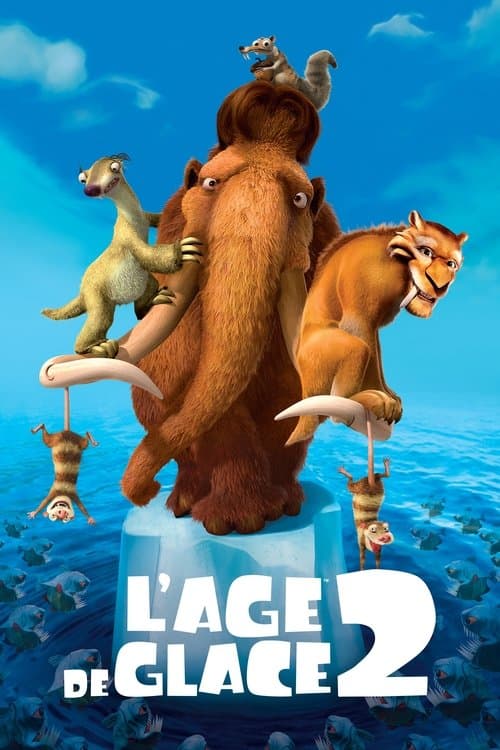
Diego, Manny and Sid return in this sequel to the hit animated movie Ice Age. This time around, the deep freeze is over, and the ice-covered earth is starting to melt, which will destroy the trio's cherished valley. The impending disaster prompts them to reunite and warn all the other beasts about the desperate situation.
Where to watch
No verified platform for the US market yet. We keep this section updated as availability changes.
Availability checked on Apr 01, 2026
About this title
- Format
- Feature film
- Year
- 2006
- Runtime
- 1h 31m
- Countries
- United States of America
- Original language
- EN
- Studios
- 20th Century Fox Animation, Blue Sky Studios, 20th Century Fox
Content barometer
Violence
2/5
Moderate
Fear
3/5
Notable tension
Sexuality
0/5
None
Language
2/5
Moderate
Narrative complexity
1/5
Accessible
Adult themes
0/5
None
Detailed parental analysis
ⓘ- Violence
- Social Themes
- Underlying Values
- Language
- Parental and Family Portrayals
Ice Age 2 is a family animated comedy with a generally light tone, yet traversed by persistent environmental tension linked to an impending flood that threatens to submerge the entire valley. The film follows Manny the mammoth and his companions as they must cross increasingly dangerous territory to reach shelter before the ice gives way. It targets school-age children primarily, whilst offering a few gags intended for the adults watching alongside them.
Violence
The natural disaster is the driving force of the narrative: melting ice and rising waters constitute a collective threat to which the entire group must respond. Without the film explicitly formulating an ecological discourse, the image of an entire valley condemned to disappear beneath the waters establishes a resonance that today's children naturally perceive through the lens of climate change. It is a concrete educational entry point for post-viewing discussion.
Social Themes
The natural disaster is the driving force of the narrative: melting ice and rising waters constitute a collective threat to which the entire group must respond. Without the film explicitly formulating an ecological discourse, the image of an entire valley condemned to disappear beneath the waters establishes a resonance that today's children naturally perceive through the lens of climate change. It is a concrete educational entry point for post-viewing discussion.
Underlying Values
The film constructs its central arc around the notion of chosen family: individuals who have everything opposing them end up forming a cohesive group, and it is this unity that enables collective survival. Acceptance of one's own singularity, illustrated notably by Manny who believes himself to be the last of his species, is treated with genuine narrative tenderness. Perseverance in the face of adversity and the overcoming of personal fears are carried through consistently without ever becoming moralising.
Language
The film contains a slightly rougher level of language than its predecessor. One hears terms such as 'crap', 'ass', 'damn', and a character calls Manny a 'pervert' in a comedic context. A few recurring scatological jokes complete this register. It is not of exceptional severity, but it is sufficiently present for parents of children under 6 to notice it and decide with full knowledge of the facts.
Parental and Family Portrayals
The question of blended family and substitute parenthood is at the heart of Manny's arc, as he learns to envisage the possibility of forming a family despite his past losses. The group as a whole functions as a model of alternative family where solidarity replaces biological ties. This is treated with lightness but with genuine emotional coherence.
Strengths
The film maintains its pace with efficiency and knows how to alternate between tense action sequences and comic breathing spaces without the whole appearing disjointed. Secondary characters, in particular Scrat whose red thread around the acorn functions as an autonomous burlesque counterpoint, bring genuine visual fantasy. Manny's emotional arc, confronted with the question of his identity and his place in the world, gives the film a discreet depth that transcends mere entertainment. It is not a great animated film, but it honestly fulfils its function and offers several anchoring points for substantive conversations with children.
Age recommendation and discussion points
The film is suitable from age 7 onwards for accompanied viewing, and is appropriate without major reservations from age 8 onwards. Two angles of discussion are worth exploring after viewing: what it means to 'form a family' when coming from very different backgrounds, and how to respond together to a threat that no one can face alone.
Synopsis
Diego, Manny and Sid return in this sequel to the hit animated movie Ice Age. This time around, the deep freeze is over, and the ice-covered earth is starting to melt, which will destroy the trio's cherished valley. The impending disaster prompts them to reunite and warn all the other beasts about the desperate situation.