
Hugo
Does this age rating seem accurate to you?
Detailed parental analysis
Hugo Cabret is an adventure and mystery film with a contemplative and melancholic atmosphere, carried by a carefully crafted visual aesthetic that evokes Paris in the 1930s. The plot follows a young orphan living in secret within the walls of a grand Parisian railway station, who attempts to unravel the mystery of an automaton left behind by his deceased father. The film primarily targets children aged 8-10 and adults nostalgic for early cinema, but its slow pace and runtime of over two hours may lose the youngest viewers.
Parental and Family Portrayals
The parental figure lies at the heart of the narrative: Hugo's father, loving and passionate, dies in a museum fire at the film's outset, leaving his son alone and without resources. The scene of his death, shown through flames engulfing a corridor, is visually restrained yet emotionally striking. The uncle who takes Hugo in is an alcoholic, emotionally absent, and eventually disappears, leaving the child entirely to fend for himself. This double parental absence is the dramatic engine of the film and may deeply affect children sensitive to questions of abandonment. The narrative does not comment on these adult failings in a moralising way, but presents them as a reality the character must navigate to find his own place.
Violence
Violence is present in the form of tension and fear rather than physical brutality. The most striking scenes are Hugo's nightmare in which he transforms into an automaton and is crushed by a train, the vertiginous sequence where he hangs from a giant clock suspended above the void, and a chase involving an aggressive Doberman through the station. A scene of a train derailing and ploughing into a crowded station, directly inspired by a real 19th-century accident, is spectacular and may startle viewers. The discovery of the uncle's drowned body at the bottom of the Seine is mentioned without being shown graphically. These elements serve narrative tension without ever descending into gore, but they are sufficiently intense to disturb younger or more sensitive children.
Underlying Values
The film is structured around a central and powerful idea: every human being has a purpose, a reason for being, just as every part of a machine has its function. This message is uplifting and accessible, but it merits discussion with a child, as it may suggest that a person without an identified role would be incomplete or useless. Furthermore, the film sincerely values perseverance, quiet courage, recognition of others' work, and intergenerational transmission. The friendship between Hugo and Isabelle is presented as a driver of mutual discovery, without hierarchy between the two characters.
Substances
Hugo's uncle is shown as an alcoholic character, regularly drinking from a hip flask and smoking cigarettes. His consumption is associated with his decline and his inability to care for the child, which gives it a negative narrative weight rather than any valorisation. The film does not glamorise these behaviours, but their repeated presence is worth noting for parents of young children.
Social Themes
The film discreetly addresses the condition of children without family in interwar Paris, through the constant threat of the orphanage that hangs over Hugo. The figure of the station inspector, who hunts down orphans to lock them away, embodies a form of cold and unempathetic authority, calling children 'vermin'. This representation of child precarity and institutional indifference may open a useful conversation about child protection.
Strengths
The film offers a remarkable introduction to the history of early cinema, particularly the work of Georges Méliès, presented with a precision and tenderness that inspires curiosity to learn more. The visual reconstruction of 1930s Paris is of rare richness for a film intended for young audiences. The narration, though slow, patiently builds an atmosphere of mystery and wonder that rewards patient viewers. On an emotional level, the film treats grief, solitude and the search for meaning with genuine delicacy, never condescending to its young audience. It is a film that speaks to children as people capable of experiencing complex emotions, which is in itself a pedagogical quality.
Age recommendation and discussion points
The film is recommended from age 8 onwards, with a preference for age 10 for fully serene viewing, particularly for children sensitive to themes of parental death and abandonment. Two angles of discussion are worth opening after viewing: asking the child what they think of the idea that every person has a 'role' to find, and what that means for someone who does not yet know what they want to do with their life; and returning to the figure of the alcoholic uncle to discuss what it means to care for a child and what happens when adults fail in that duty.
Synopsis
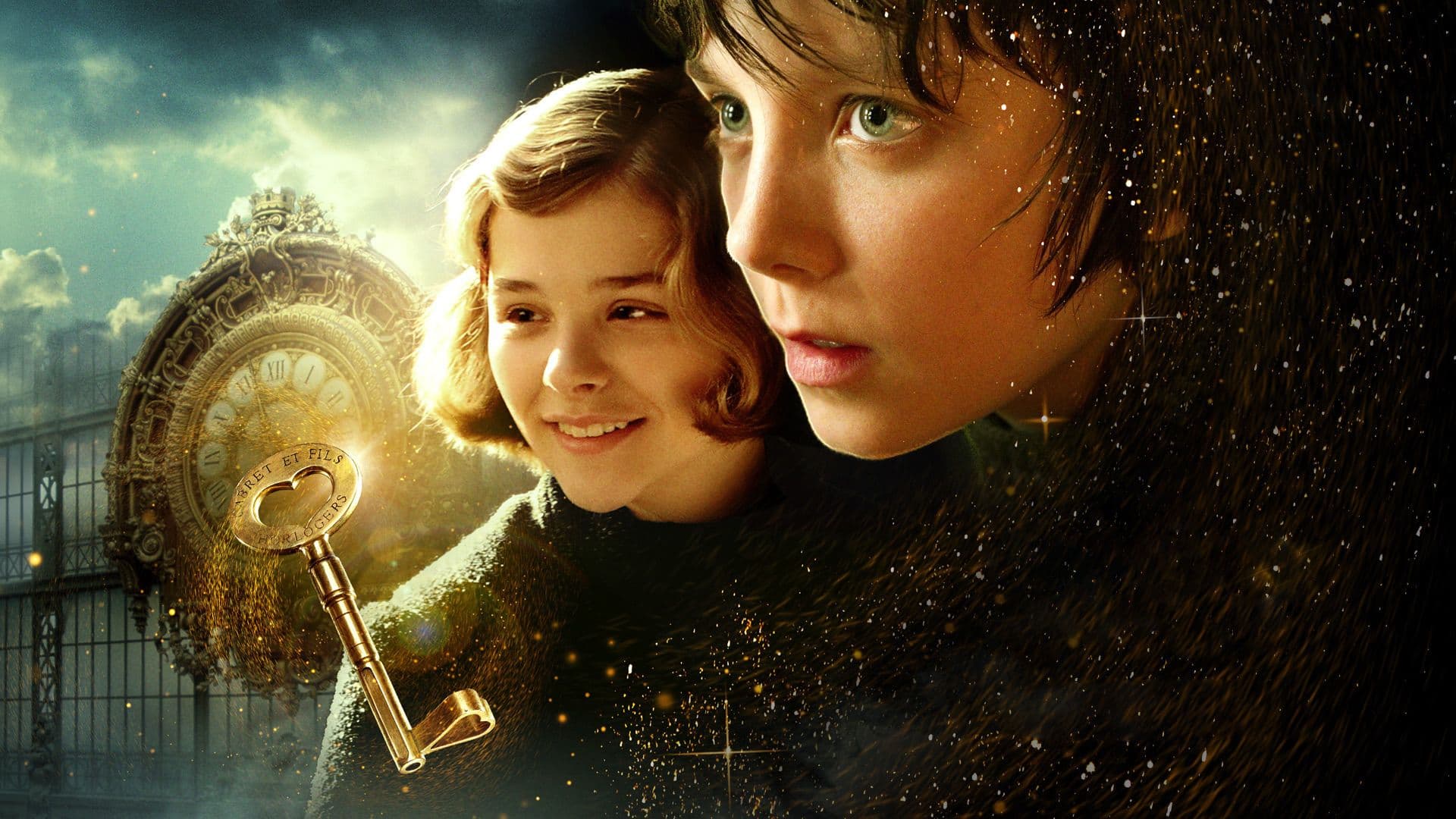
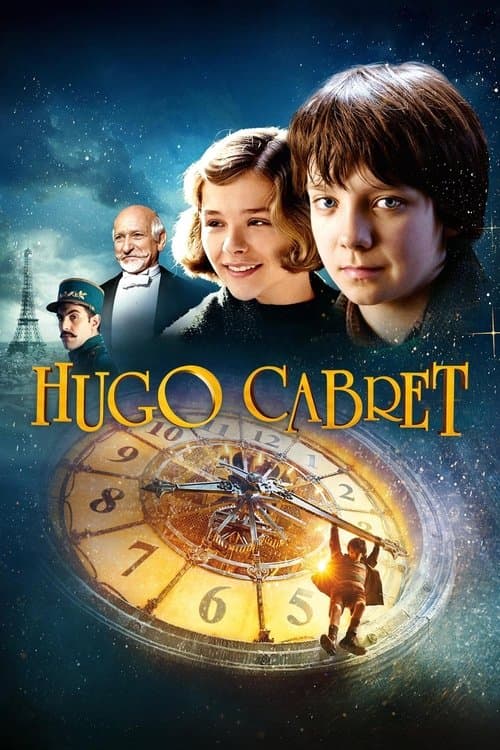
Orphaned and alone except for an uncle, Hugo Cabret lives in the walls of a train station in 1930s Paris. Hugo's job is to oil and maintain the station's clocks, but to him, his more important task is to protect a broken automaton and notebook left to him by his late father. Accompanied by the goddaughter of an embittered toy merchant, Hugo embarks on a quest to solve the mystery of the automaton and find a place he can call home.
Where to watch
Availability checked on Apr 29, 2026
About this title
- Format
- Feature film
- Year
- 2011
- Runtime
- 2h 6m
- Countries
- United Kingdom, United States of America
- Original language
- EN
- Directed by
- Martin Scorsese
- Main cast
- Asa Butterfield, Ben Kingsley, Chloë Grace Moretz, Sacha Baron Cohen, Ray Winstone, Emily Mortimer, Christopher Lee, Helen McCrory, Michael Stuhlbarg, Frances de la Tour
- Studios
- GK Films, Infinitum Nihil
Content barometer
- Violence2/5Moderate
- Fear3/5Notable tension
- Sexuality0/5None
- Language1/5Mild
- Narrative complexity3/5Complex
- Adult themes2/5Present
Values conveyed
- Courage
- Friendship
- Perseverance
- grief and resilience
- passion for cinema
- identity quest
- father-son transmission
- memory and artistic legacy
- solidarity