
Howl's Moving Castle
ハウルの動く城
Does this age rating seem accurate to you?
Detailed parental analysis
Howl's Moving Castle is a fantasy animated film from Studio Ghibli with an atmosphere that is both enchanting and melancholic, oscillating between the magic of a fairy tale and the gravity of a wartime narrative. A young milliner transformed into an old woman by a curse finds refuge in the itinerant castle of a temperamental sorcerer, and gradually comes to change the fate of those around her. The film is aimed primarily at children over ten years old, at teenagers and at adults, without being designed for very young children.
Underlying Values
The film structures its entire narrative around a central conviction: a person's worth does not lie in their appearance, age or power, but in their capacity to love and act for others. Sophie, forced into old age, paradoxically becomes freer, more assertive and more herself than when she was young. Ageing is treated not as a curse but as a form of liberation, which is a remarkable stance in a narrative landscape that ordinarily glorifies youth. The non-biological family, made up of damaged characters who learn to accept one another, is presented as a form of belonging as solid as blood ties. Forgiveness and kindness are concrete acts here, not abstract moral lessons.
Social Themes
War occupies an important and defining narrative place in the second part of the film. Bombing of cities, military air fleets and massive destruction are shown with a visual force that neither glorifies nor downplays the violence of armed conflict. The film constructs an explicit critique of war logic and blind obedience to orders, showing how individuals, including the most powerful, are crushed by mechanisms they did not choose. This anti-militarist stance is consistent throughout the narrative, not merely decorative. For a child or teenager, it offers a concrete and emotionally engaged entry point into reflection on what it means to obey, resist and protect.
Violence
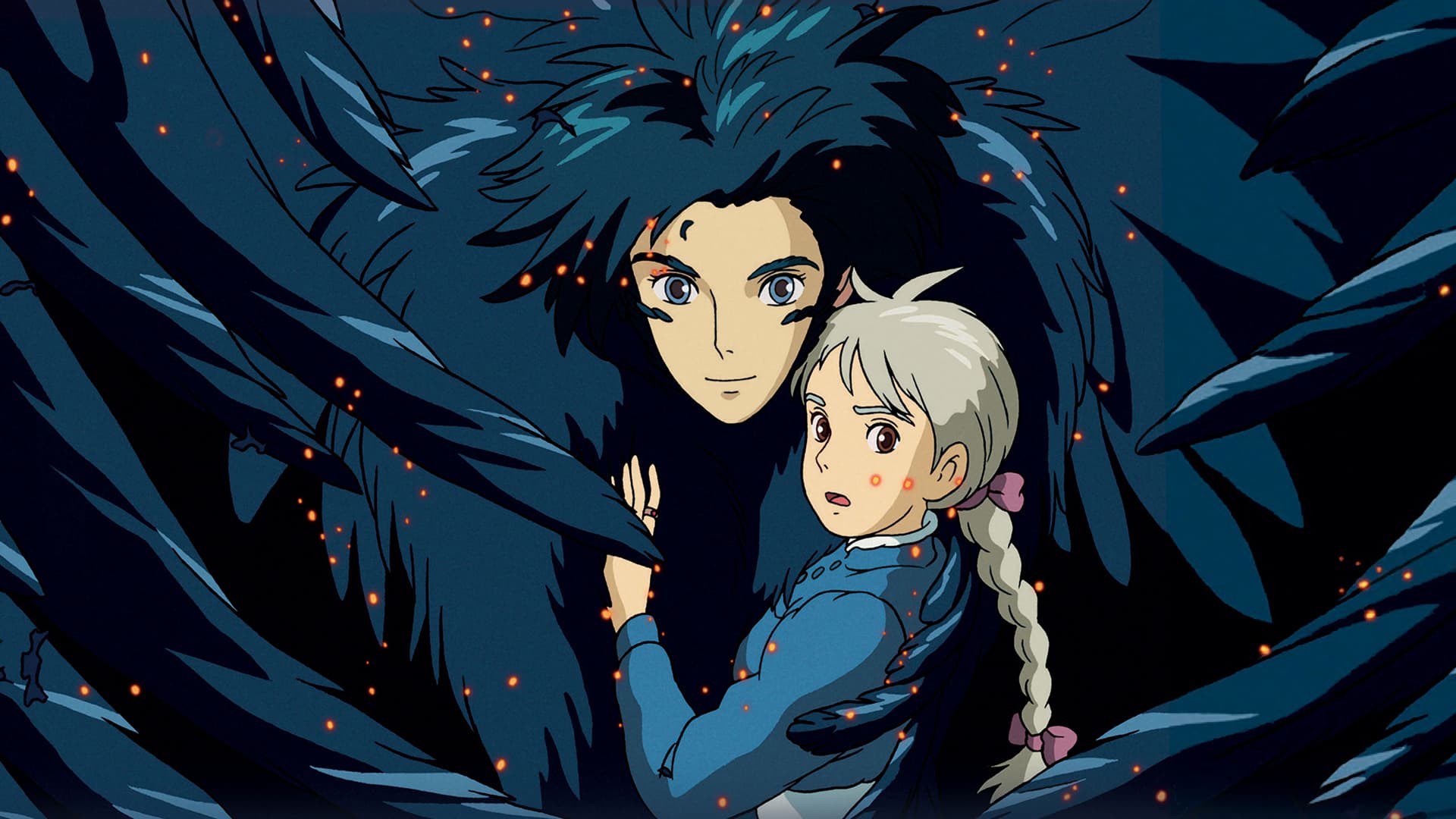
The violence in the film is essentially that of war: explosions, cities in flames, spectacular destruction, without visible corpses or explicit gore. Two sequences involving Howl are more disturbing on a different level: his transformation into a monstrous creature with visible traces of blood, and his partial physical collapse into a greenish substance during a crisis of intense despair. These images are not gratuitous; they visually express the inner dissolution of a character in suffering, but they can be frankly unsettling for sensitive children. The narrative purpose of these scenes is clear and they do not aestheticise violence for its own sake, which fundamentally distinguishes them from gratuitous treatment.
Parental and Family Portrayals
Traditional parental figures are almost entirely absent or dysfunctional in the film. Sophie's mother makes a brief and somewhat reassuring appearance. Howl himself functions as an emotionally immature adult, incapable of assuming his responsibilities, withdrawn into his appearance and anxieties. It is Sophie, though younger, who takes on the structuring role of the household. This reversal of roles is narratively interesting but may trouble children accustomed to a clear representation of adults as reliable custodial figures. The group formed around the castle constitutes a functional blended family, built on choice rather than obligation.
Substances
A character smokes a cigar occasionally, without this being valorised or commented upon. Beer is visible in the background in one scene. These elements are anecdotal and without narrative significance, but merit noting for parents particularly attentive to this type of representation.
Language
The language is broadly without notable roughness. The English version contains an almost-insult with a religious connotation; the original Japanese version an equivalent of 'shit'. Nothing striking for a teenage audience, and without real impact on the film.
Strengths
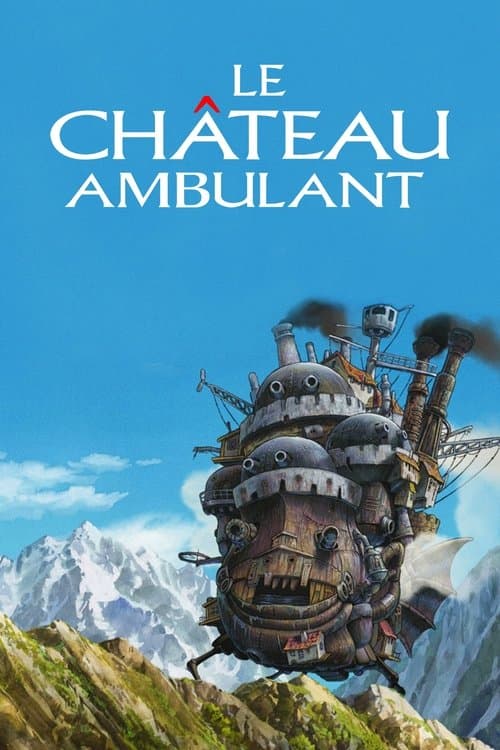
The film deploys a dense narrative writing that never condescends to its audience: the time ellipses, the dream logic and the psychological motivations of the characters demand sustained attention and reward multiple viewings. The representation of Howl's depression and inner collapse is treated with an emotional precision rare in animation aimed at a broad audience. Sophie constitutes a particularly well-constructed portrait of a female character: her evolution proceeds through action and decision, without her arc resting on romantic validation. The sonic and visual dimension of the castle itself, a true character of the film, contributes to a unique atmosphere that blends the comfort of home and the instability of the outside world. It is a film that gives teenagers narrative tools to think through identity, psychological suffering and collective responsibility without ever being didactic.
Age recommendation and discussion points
The film is not recommended for children under ten years old due to narrative complexity, images of war and a few visually unsettling sequences. From ten years old for mature children, without reservation from twelve years old. Two angles of discussion are essential after viewing: ask the child why Sophie seems happier and stronger once she is old, and explore with the teenager what the film says about those who obey orders to wage war without having chosen the reasons.
Synopsis
Sophie, a young milliner, is turned into an elderly woman by a witch who enters her shop and curses her. She encounters a wizard named Howl and gets caught up in his resistance to fighting for the king.
About this title
- Format
- Feature film
- Year
- 2004
- Runtime
- 1h 59m
- Countries
- Japan
- Original language
- JA
- Directed by
- Hayao Miyazaki
- Main cast
- Chieko Baisho, Takuya Kimura, Akihiro Miwa, Tatsuya Gashûin, Ryunosuke Kamiki, Mitsunori Isaki, Yo Oizumi, Akio Otsuka, Daijirō Harada, Haruko Katō
- Studios
- Studio Ghibli, Tokuma Shoten, Nippon Television Network Corporation, dentsu, Walt Disney Japan, d-rights, TOHO
Content barometer
- Violence3/5Notable
- Fear3/5Notable tension
- Sexuality0/5None
- Language1/5Mild
- Narrative complexity2/5Moderate
- Adult themes1/5Mild
Watch-outs
- Bullying
- Mockery
Values conveyed
- Acceptance of difference
- Compassion
- Forgiveness
- courage
- empathy
- loyalty
- self acceptance