House Hunting
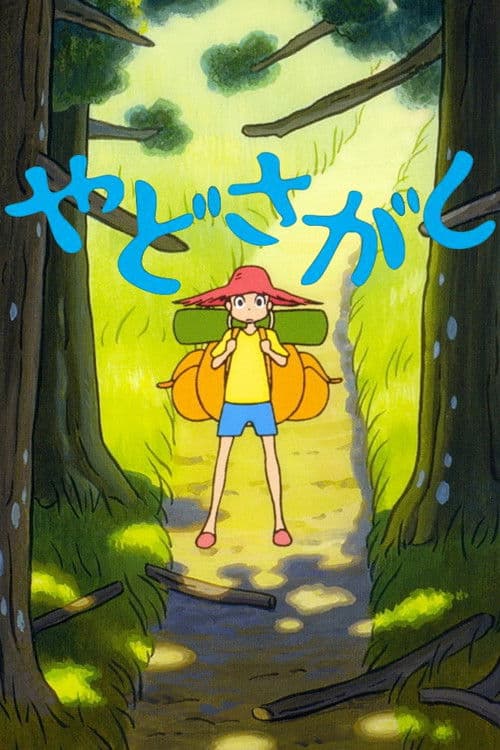
やどさがし
Does this age rating seem accurate to you?
Detailed parental analysis
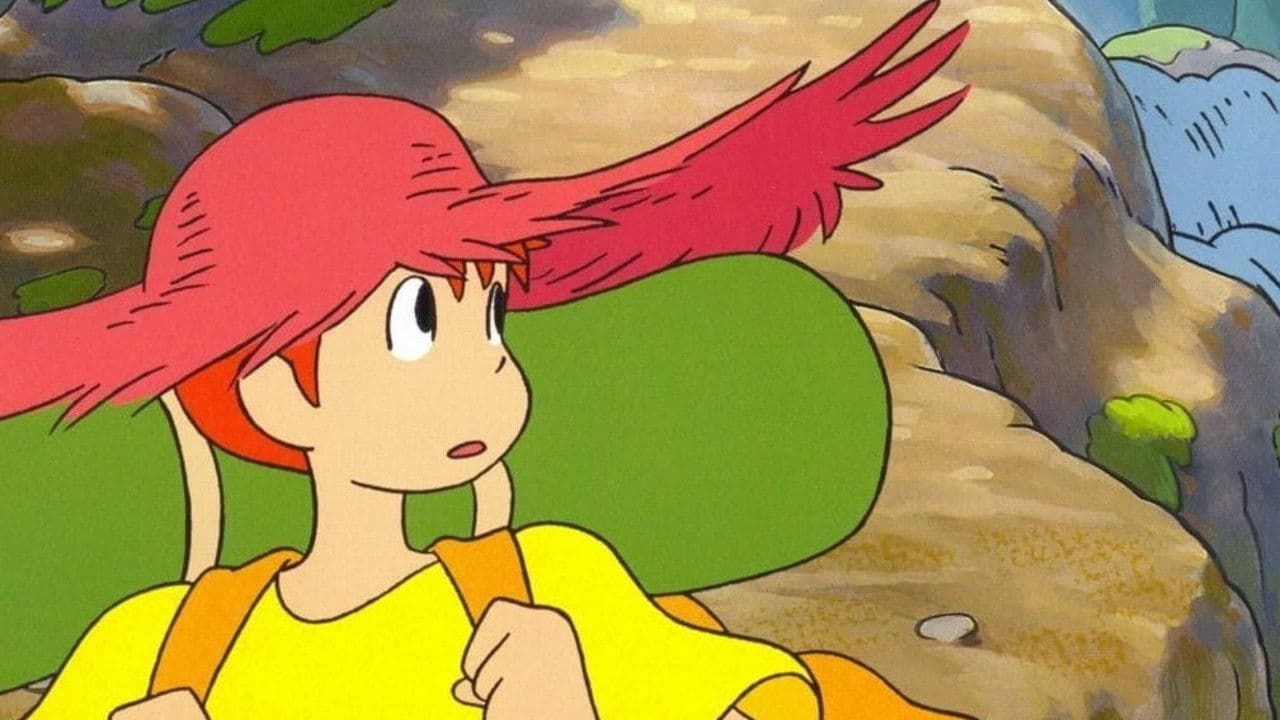
A contemplative animated short film steeped in warmth and a soothing atmosphere, this Studio Ghibli film follows a young girl who explores the mountains alone in search of a new home, encountering creatures and spirits drawn from Japanese folklore along the way. The story unfolds without a single word of dialogue, told entirely through images, gesture and a soundtrack composed entirely of human voices. The film is aimed at young children, but its cultural dimension and emotional sensitivity make it a valuable experience for the parents accompanying them.
Underlying Values
The film constructs with remarkable coherence a vision of the world founded on respect and exchange. At each encounter with a spirit or creature, the girl offers an object from her bag without ever expecting anything in return: the narrative presents the offering as a natural gesture, not as strategy. This Shinto logic of coexistence between the human world and the natural world runs through the entire film and constitutes its central message, never didactic, always shown. The autonomy and self-confidence of the protagonist are presented as positive virtues: travelling alone, without fear and without adult assistance, is here a strength and not a danger. This is an angle worth exploring with the child, as this representation of childhood independence runs counter to contemporary protective norms.
Social Themes
The relationship with nature and the spirits inhabiting it is the true subject of the film. The Shinto conception of the world, in which every place, every animal and every natural phenomenon is inhabited by a kami, a guardian spirit, is presented as a cultural reality and not as an exotic curiosity. For a Western child, this is a concrete introduction to a radically different way of conceiving the world, founded on attention to what is invisible yet present. It is not a lesson in religion, but an invitation to see nature differently.
Parental and Family Portrayals
Parents are absent from the screen for the entirety of the film. The girl leaves alone, returns alone, and no adult is shown as a reference point or safety net. This absence is not presented as a lack or a danger: it is the foundation of the adventure. For young children, this is a point worth clarifying: the film shows a situation that makes sense within its narrative universe, not a model of conduct to be imitated.
Strengths
The choice to tell a story without dialogue and with a soundtrack entirely composed of voices is a formal achievement that is matched by genuine narrative effectiveness: the child viewer reads emotions, intentions and relationships solely through the language of bodies and sounds, which calls for active and subtle attention. The creatures of Japanese folklore are rendered with affectionate precision that respects their original tradition without ever exoticising them excessively. In twelve minutes, the film succeeds in conveying a cosmology, an ethic of relationship and a sense of the marvellous without ever overreaching. It is a rare work in its capacity to offer a complete cinematic experience in such a short format.
Age recommendation and discussion points
The film is suitable from around four or five years old for children comfortable with the supernatural atmosphere and the absence of explicit dialogue, and makes for a serene viewing experience from that age. Two angles of discussion are worth opening after viewing: why does the girl offer her belongings to each creature she encounters, and what does she gain in return? And also: how do the Japanese imagine the spirits that inhabit trees, rivers or mountains, and do we imagine nature in the same way?
Synopsis
A girl goes exploring to find a new house. Along the way, she encounters many of Japan's guardian spirits.
About this title
- Format
- Short film
- Year
- 2006
- Runtime
- 12m
- Countries
- Japan
- Original language
- JA
- Directed by
- Hayao Miyazaki
- Main cast
- Tamori, Akiko Yano
- Studios
- Studio Ghibli
Content barometer
- Violence0/5None
- Fear1/5Mild
- Sexuality0/5None
- Language0/5None
- Narrative complexity0/5Simple
- Adult themes0/5None
Values conveyed
- Courage
- Acceptance of difference
- Autonomy
- curiosity
- nature
- independence
- wonder