Hola Frida!
Does this age rating seem accurate to you?
Detailed parental analysis
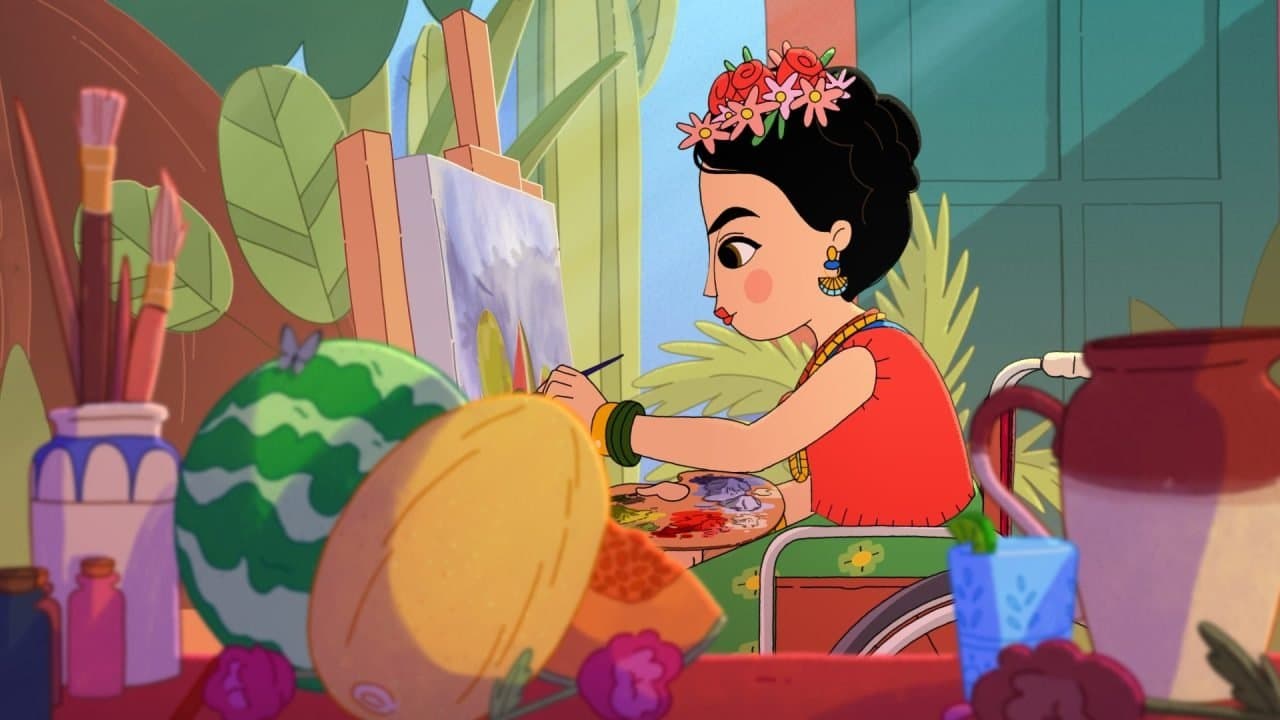
Hola Frida! is a children's animated film with a colourful and dreamlike atmosphere, tinged with more serious moments centring on illness and death. It traces the childhood of Frida Kahlo, marked by poliomyelitis, the scrutiny of others, and an exuberant imagination that allows her to overcome adversity. The film is primarily aimed at young school-age children, with a tone and pace designed for 6 to 10-year-olds.
Underlying Values
The narrative is structured around resilience in the face of physical and social suffering, and presents imagination and artistic creation as concrete tools for survival and reconstruction. The feminist dimension is genuine without being forced: Frida wants to become a doctor and rejects the dress codes imposed on girls, which is shown as a courageous and natural choice rather than a posture. The film also nuances the figure of the perpetrator by showing that children who mock carry their own hidden wounds, which invites compassion without excusing harassment. This is a balanced moral architecture, solid for a child of this age.
Social Themes
Disability occupies a central place in the narrative: poliomyelitis deforms Frida's right leg and triggers a sequence of social ostracism that gives the film its main tension. The way the child learns to inhabit her different body and to reject it as a source of shame constitutes a genuine message about inclusion and physical difference, treated with respect and without sentimentality. This subject opens naturally into discussion with a child who encounters or lives with a visible difference themselves.
Violence
The film contains a scene of school bullying where Frida's classmates mock her wasted leg explicitly and repeatedly. This humiliation is clearly depicted as suffering, not as an incidental detail. Additionally, sequences of nightmare or disturbed imagination show surreal images: sinking into quicksand, disproportionate bodies, dying flowers. These moments may surprise sensitive young children, but remain stylised and brief, without direct physical violence.
Parental and Family Portrayals
The family plays a role of clear and consistent emotional support: Frida's parents are present, benevolent and represented as an anchor against adversity. The family unit is functional and warm, which reinforces the message of resilience without idealising a perfect family.
Discrimination
The film addresses directly the social gaze upon the disabled body: classmates' mockery crystallises a form of ordinary discrimination rooted in physical difference. The narrative does not merely condemn this discrimination, it explores its mechanics by showing that children who practise it are themselves suffering. This is a treatment that goes beyond simple moral messaging to offer a more nuanced reading of social exclusion.
Strengths
The film capitalises on Frida Kahlo's real life to anchor its message in a historical figure whose later work gives additional resonance to the narrative: showing the difficult childhood of a world-renowned artist offers children a concrete bridge between experienced suffering and creation. The figure of La Muerte, personification of death treated with gentleness and benevolence rather than as a threat, is a pedagogically interesting way to address death with young children without frightening them unnecessarily. The whole functions as a mediation tool: it has been used in school contexts to address disability, difference and self-esteem, which testifies to genuine narrative effectiveness beyond mere entertainment.
Age recommendation and discussion points
The film is suitable from 6 to 7 years old onwards, with adult accompaniment advised for younger children or those more sensitive to images of illness and mockery. For teenagers, the appeal will be limited: the film is clearly designed for a primary-school-age audience. After viewing, two angles deserve to be explored with the child: why the classmates who mock most harshly are sometimes those who suffer most, and how Frida transforms what she experiences into creative strength rather than shame.
Synopsis
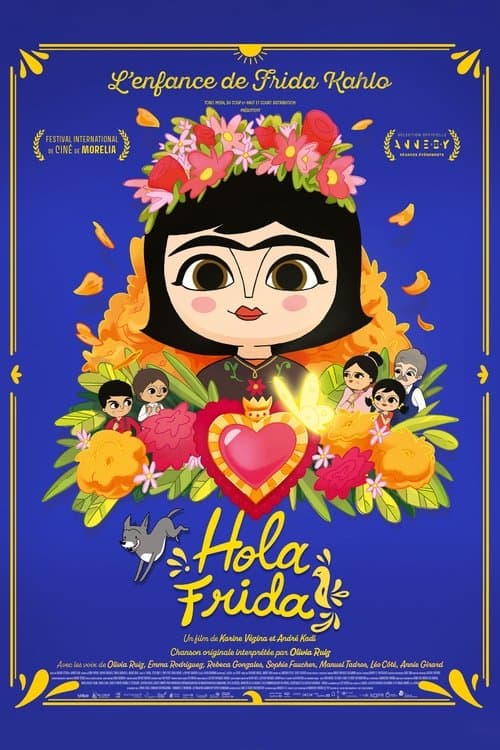
It’s the story of a little girl who is different. Her world is Coyoacan, Mexico City. Sparkling, vibrant, everything interests her and when difficulties arise, she faces them with an overflowing imagination. This little girl is called Frida Kahlo.
Where to watch
Availability checked on Apr 26, 2026
About this title
- Format
- Feature film
- Year
- 2025
- Runtime
- 1h 15m
- Countries
- Canada, France
- Original language
- FR
- Directed by
- Karine Vézina, André Kadi
- Main cast
- Olivia Ruiz, Emma Rodriguez, Rebeca Gonzales, Léo Côté, Sophie Faucher, Manuel Tadros, Anne Girard, Joey Bélanger, Nini Marcelle
- Studios
- Haut et Court, Dandelooo Cinéma, Tobo Media, Du Coup Production
Content barometer
- Violence1/5Mild
- Fear2/5A few scenes
- Sexuality0/5None
- Language0/5None
- Narrative complexity2/5Moderate
- Adult themes0/5None
Values conveyed
- Courage
- Acceptance of difference
- Perseverance
- Compassion
- creativity
- resilience
- difference
- curiosity