
Here We Are: Notes for Living on Planet Earth
Does this age rating seem accurate to you?
Detailed parental analysis
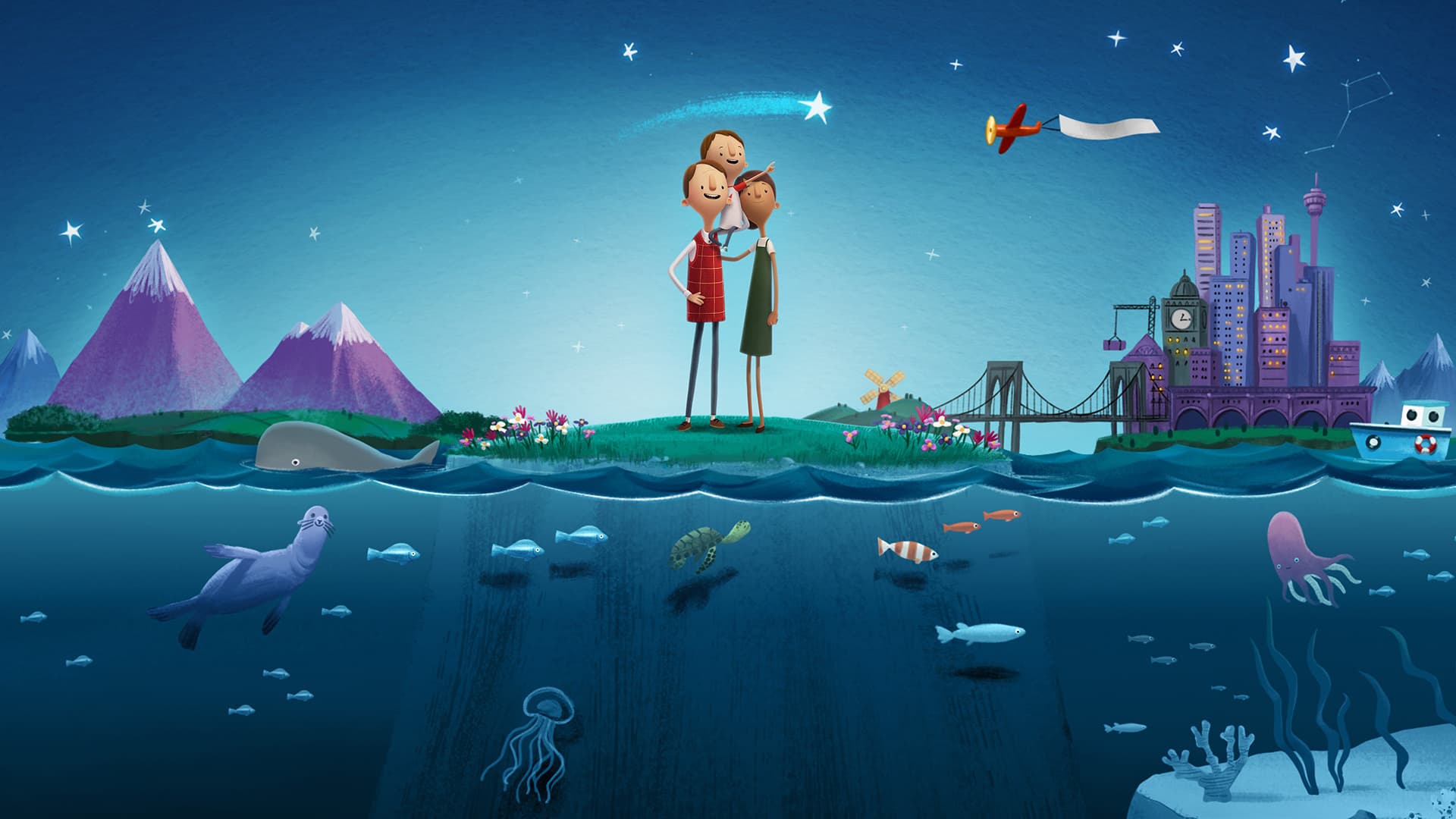
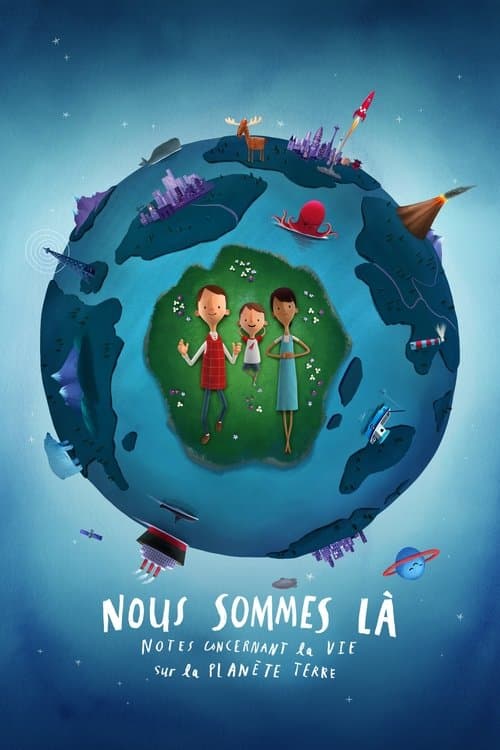
A luminous and contemplative animated short film, this adaptation of an illustrated children's book becomes a poetic celebration of curiosity and wonder at the world. A father answers his young daughter's questions about nature, living creatures and humanity's place on Earth, transforming an ordinary walk into an exploration of the living world. The film is primarily aimed at preschool children and early primary school years, but can be shared as a family experience with older children.
Parental and Family Portrayals
The father is the central character of the narrative and its strongest role model. He is present, attentive, never condescending, and treats his daughter's questions with genuine seriousness. The father-daughter relationship is the emotional engine of the film: it shows concretely how an adult can nurture a child's curiosity without extinguishing it or oversimplifying it excessively. It is a rare portrait of parenthood in its gentleness and consistency, one that can nourish a conversation about what it means to learn together.
Social Themes
Ecology runs through the film from beginning to end, not as an alarmist discourse but as an invitation to observe and respect the living world. The film poses the question of human responsibility towards the planet with a lightness that does not soften the substance: humans are presented as one species among others, with a particular capacity to care for or neglect their environment. This framing naturally opens a discussion about what each person, including a child, can concretely do.
Underlying Values
The film values intellectual curiosity, intergenerational transmission and a form of humility in the face of the world's complexity. It does not preach, but it constructs a perspective: that of a human being who knows themselves to be small within a vast whole and who draws pride rather than anxiety from this. Solidarity with non-human life is presented as natural, almost self-evident, which is an assumed and consistent choice of values from beginning to end.
Strengths
The film draws real strength from its controlled brevity: in thirty-six minutes, it does not attempt to say everything but rather to establish a perspective. The animation is generous in visual detail that rewards the attention of young viewers and invites rewatching. The text, faithful to the spirit of the original book, strikes a rare balance between accessibility for the very young and sufficient substance to avoid boring the adults watching alongside them. From a pedagogical standpoint, the film is a concrete resource: it provides simple words for complex concepts such as biodiversity, species interdependence or resource scarcity, without ever resorting to didactic exposition.
Age recommendation and discussion points
The film is suitable from age 4 in the presence of an adult, and fully accessible from age 5 or 6 independently. After viewing, two angles of discussion are worth pursuing: ask the child what question they would themselves ask about the Earth or about living creatures, and reflect together on one concrete thing the family could do to care for their immediate environment.
Synopsis
On the eve of Earth Day, a precocious seven-year-old learns about the wonders of the planet from his parents—and a mysterious exhibit at the aptly named Museum of Everything.
About this title
- Format
- Short film
- Year
- 2020
- Runtime
- 37m
- Countries
- United Kingdom
- Original language
- EN
- Studios
- Studio AKA
Content barometer
- Violence0/5None
- Fear0/5None
- Sexuality0/5None
- Language0/5None
- Narrative complexity0/5Simple
- Adult themes0/5None
Values conveyed
- Acceptance of difference
- Perseverance
- Compassion
- curiosity
- family
- wonder
- nature