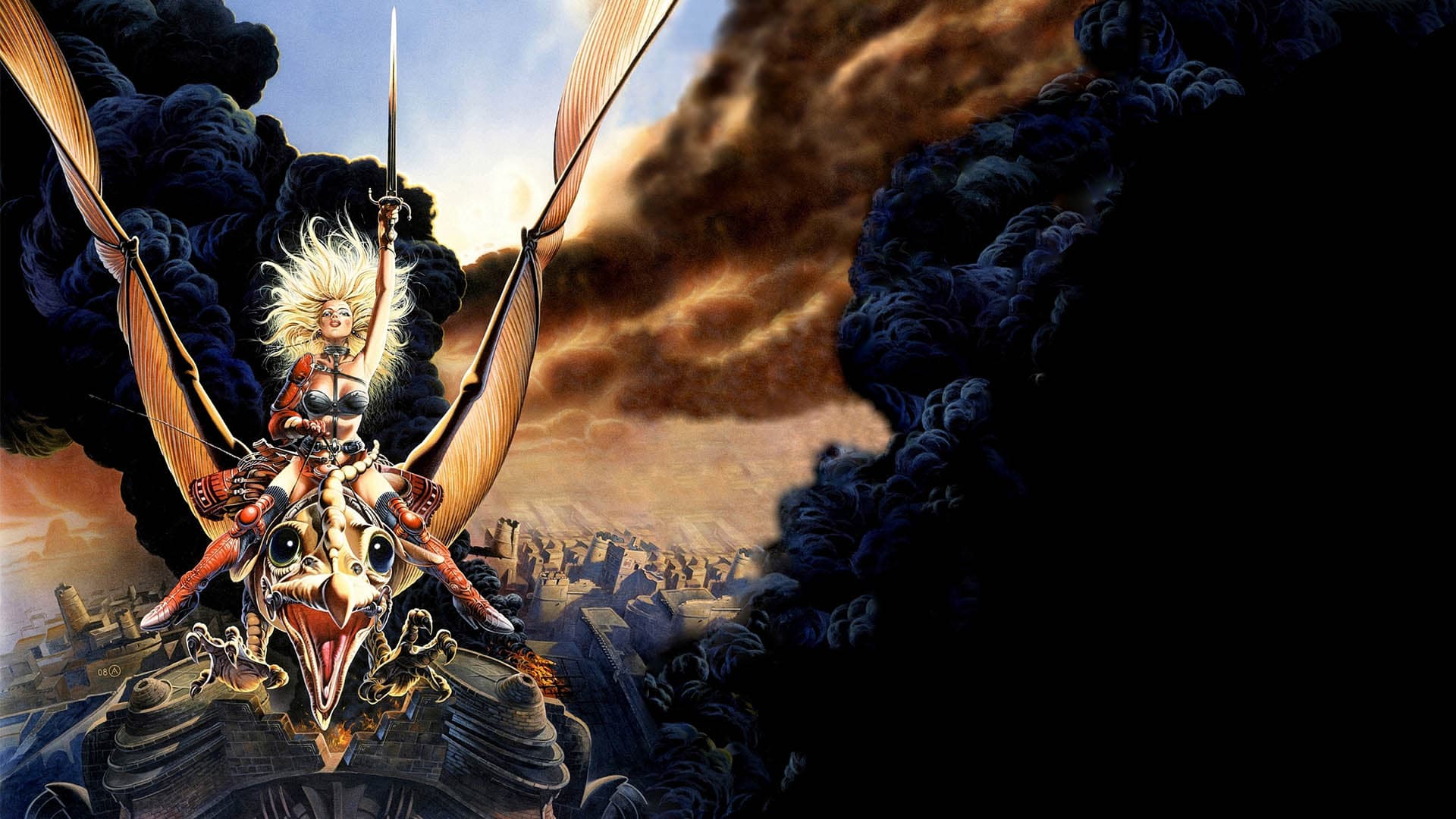

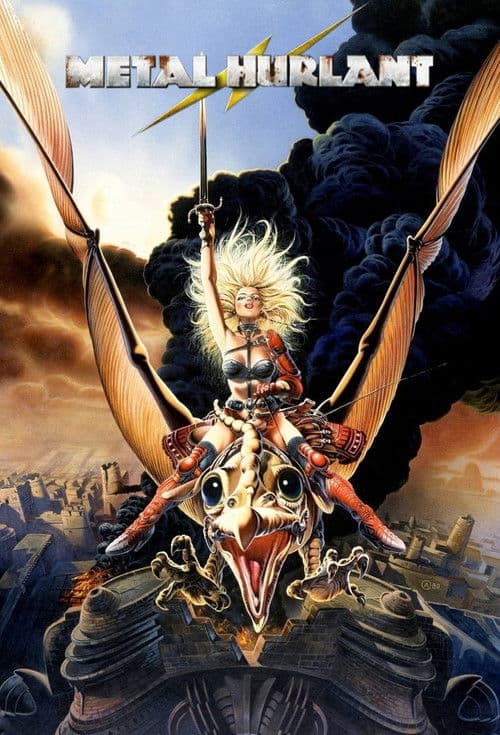
Heavy Metal
Does this age rating seem accurate to you?
Detailed parental analysis
Heavy Metal is an adult animated film with a dark, visceral and deliberately provocative atmosphere, blending science fiction, heroic fantasy and horror in a series of short narratives connected by a fantastical thread. A luminous and malevolent orb, embodiment of absolute evil, travels through time and space sowing destruction, until a young girl mounts an unexpected resistance against it. The film addresses adults unambiguously and has never sought to conceal this intention.
Sex and Nudity
Female nudity is omnipresent and explicit throughout the film: fully naked bodies, sex scenes drawn without restraint, hypersexualised depictions of women whose bodies serve essentially as scenery for male pleasure. There are several clearly depicted scenes of sexual relations and repeated frontal nudity. A scene of attempted rape, though thwarted, is present. This massive sexualisation is accompanied by no critical perspective: women are almost systematically reduced to objects of desire, making it a substantive subject to address should an older teenager come to see the film.
Violence
Violence is graphic, recurring and varied in its forms: decapitation of an elderly character with visible blood, characters melting into skeletons, torture, threats against a child, murder of a father before his child. It is not always narratively justified and often belongs to an aesthetic of shock characteristic of its era and original readership. A few segments give this violence real dramatic purpose, notably the ending which hinges on a sacrifice, but the overall tenor leans more towards gore spectacle than towards any reflection on violence itself.
Substances
Two characters openly sniff large lines of a fictional drug with hallucinogenic effects, depicted with a casual familiarity that contains no warning or negative consequence within the narrative. Consumption is treated on a comic and liberatory register. This segment constitutes a clear signal for parents of adolescents, as the implicit message is one of unqualified normalisation.
Underlying Values
The overall narrative structure posits that an individual force, embodied by a young woman, can defeat absolute evil through personal sacrifice, which constitutes the only coherent moral arc in the film. Apart from this thread, the autonomous segments convey highly disparate values: brutality as solution, seduction as power, physical strength as legitimacy. The film proposes no unified moral framework and this is precisely what makes it difficult to navigate without critical distance.
Discrimination
The representation of women is systematically hypersexualised and passive: they are conquests, victims or bodies at disposal, with rare exceptions. This vision is never questioned within the narrative, it is instead presented as a normal and desirable horizon. This is one of the film's most dated and most problematic aspects to expose without prior discussion.
Parental and Family Portrayals
The opening segment depicts a father killed before his child, and the narrative structure then places a young girl alone facing an absolute threat. The protective parental figure is brutally absent from the opening minutes, anchoring the film in a logic of terrorised and abandoned childhood. This is a powerful image, potentially anxiety-inducing for younger viewers.
Language
The language is raw, with regular use of profanities in English in the original version. Nothing exceptional for an adult film of that era, but the register contributes to the deliberately transgressive atmosphere of the whole.
Strengths
Heavy Metal has genuine cultural value as an object of its time: it represents a singular moment when adult animation sought to assert itself as an autonomous territory, far removed from family codes. Certain segments are visually inventive and the graphic universe, inspired by the eponymous magazine, made an impression on a generation of artists and filmmakers. The rock and metal soundtrack is carefully integrated into each sequence and in itself constitutes a document on the cultural energy of the late 1970s. For an adult or a very mature adolescent already familiar with this type of universe, the film functions as a time capsule and an object of cinephilia, provided one approaches its excesses with the necessary distance.
Age recommendation and discussion points
This film is not suitable before the age of 18 due to the combination of explicit nudity, graphic violence, a scene of attempted rape and non-critical depiction of drug use. For an adult or young adult encountering it, two discussions are worth engaging: why was the systematic sexualisation of women presented as an acceptable aesthetic code, and what does an era say about its own norms when it simply believes itself to be entertaining?
Synopsis
The embodiment of ultimate evil, a glowing orb terrorizes a young girl with bizarre stories of dark fantasy, eroticism and horror.
About this title
- Format
- Feature film
- Year
- 1981
- Runtime
- 1h 26m
- Countries
- Canada, United States of America
- Original language
- EN
- Studios
- Canadian Film Development Corporation, Columbia Pictures, Guardian Trust Company, Famous Players, Potterton Productions