
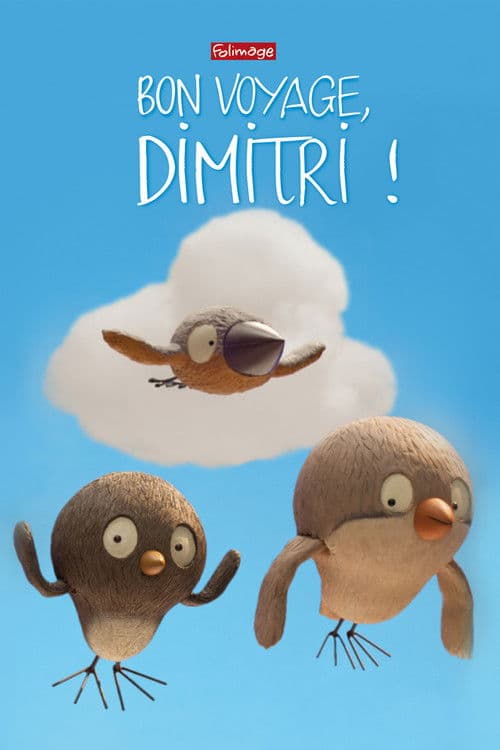
Have a Nice Trip, Dimitri!
Does this age rating seem accurate to you?
Detailed parental analysis
Bon voyage, Dimitri! is an African animated film comprising three independent segments with a gentle and poetic atmosphere, sometimes tinged with melancholy. Each story features an animal character facing a trial that forces them to trust others or accept their own limitations. The film is primarily aimed at young children, but its sensitivity and moral undertones can touch a broader family audience.
Underlying Values
The three segments carry distinct and complementary moral messages. The first celebrates mutual aid and overcoming fear of the unknown, while mounting an explicit critique of manipulation: the marabout monkey uses lies and superstitions to consolidate his power and extort food, and the film does not absolve him of this role. The second questions selfless altruism: an old fisherman learns to put the wellbeing of a strange creature before his own attachment, which is a demanding lesson for young viewers. The third constitutes a poetic critique of advertising exploitation and economic injustice, visible from a child's perspective: an elephant works, is cheated, and ends up letting himself waste away. This last arc is perhaps the most difficult to accompany because it leaves little room for resilience or recovery.
Parental and Family Portrayals
The first segment opens with a brutal separation between a chick and its parents, caused by a storm. This parental absence drives the entire story and generates real separation anxiety for very young children. The resolution comes through animal solidarity rather than the direct return of the parents, which constitutes a message of progressive autonomy but one that may be destabilising for a child under five years old.
Social Themes
The elephant's bicycle segment addresses commercial manipulation, urban pollution and economic inequality with a clarity that goes beyond simple moral fable. The exploitation of a naive character by more powerful actors, followed by their decline, constitutes a social metaphor legible to an accompanied child. The Tulkou segment addresses failed integration and the necessity of respecting the identity and living environment of others, which opens concrete reflection on welcoming the other and its limits.
Strengths
The film stands out through its affirmed geographical and cultural grounding: each segment is situated in a specific African context, which is sufficiently rare in animation to be remarked upon. The narratives avoid easy manichaeism and offer nuanced, sometimes painful endings that respect the intelligence of young viewers without coddling them unnecessarily. The three-segment structure allows for a variety of tones and rhythms that sustains attention. From a pedagogical standpoint, the film is one of the rare works to address manipulation and economic injustice in an accessible register without diluting them in an artificial happy ending.
Age recommendation and discussion points
The film is suitable from age 6 onwards with supervised viewing, but certain segments, particularly the elephant's and the Tulkou's, require an adult present to address questions that the melancholy of the endings may raise. Two angles of discussion are essential after viewing: why does the marabout monkey pretend to have powers, and how can one recognise when someone uses fear to obtain something, on the one hand; and on the other hand, why does the fisherman decide to let the Tulkou go when he cares for it.
About this title
- Format
- Feature film
- Year
- 2014
- Runtime
- 55m
- Countries
- France
- Original language
- FR
- Studios
- Folimage, Gébéka Films
Content barometer
- Violence0/5None
- Fear2/5A few scenes
- Sexuality0/5None
- Language0/5None
- Narrative complexity0/5Simple
- Adult themes0/5None
Watch-outs
Values conveyed
- Acceptance of difference
- Compassion
- Autonomy
- friendship
- helpfulness
- curiosity
- discovery