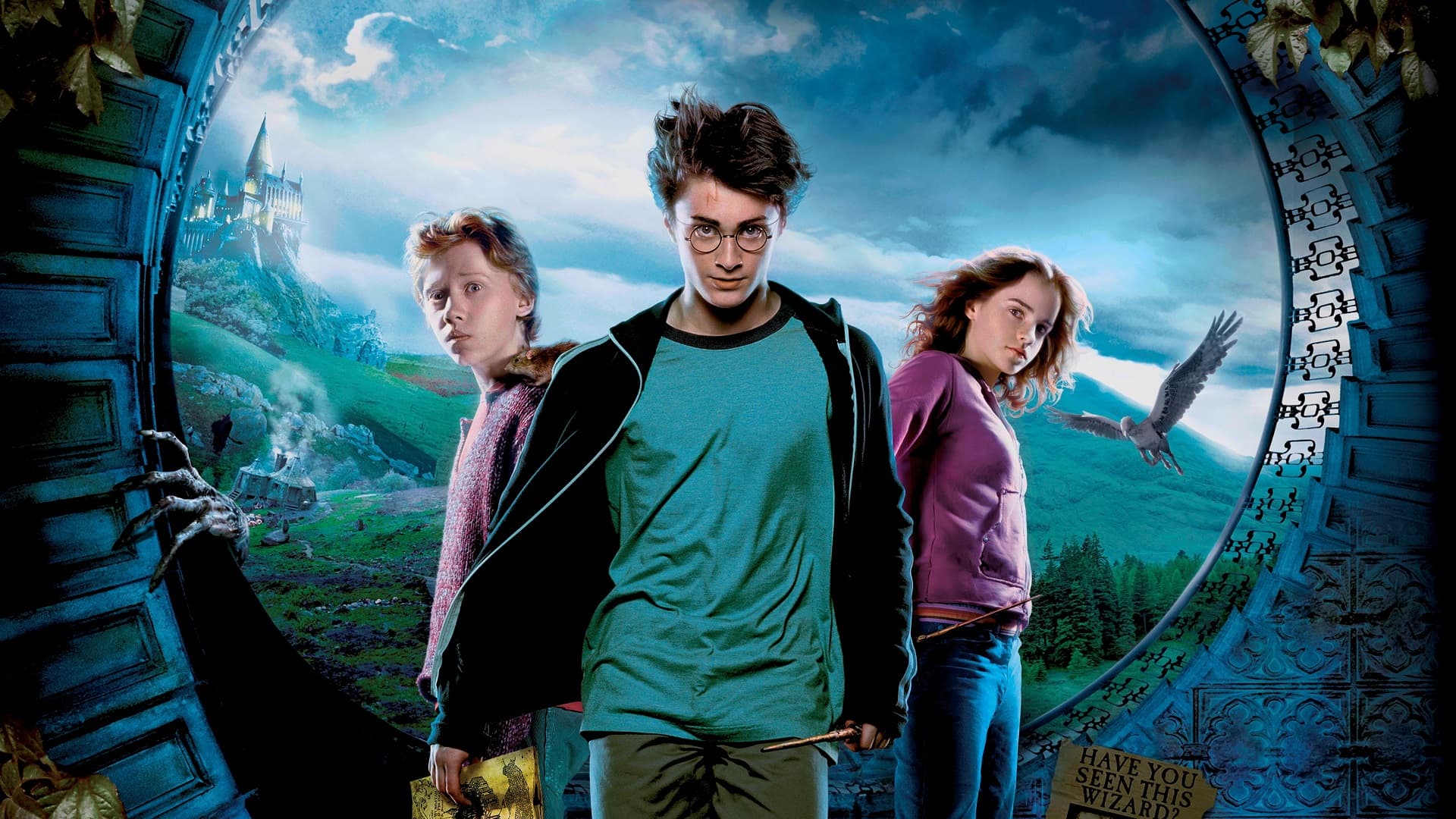
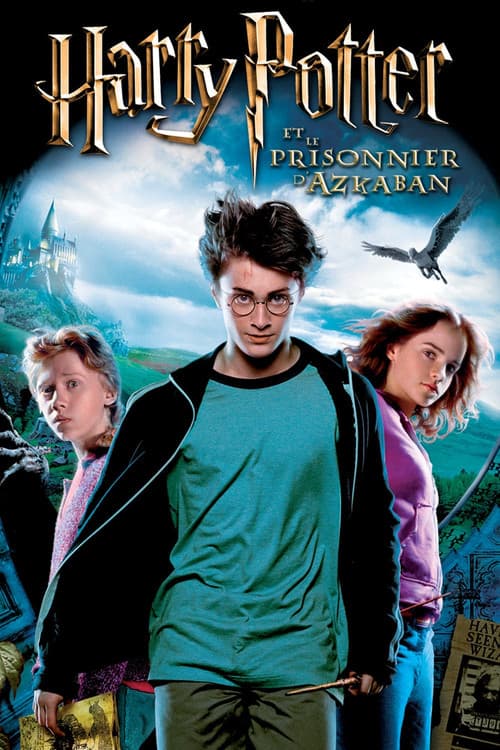
Harry Potter and the Prisoner of Azkaban
Does this age rating seem accurate to you?
Detailed parental analysis
Harry Potter and the Prisoner of Azkaban is a fantasy film with a distinctly darker and more anxiety-inducing tone than the first two instalments of the saga. Harry, now an adolescent, discovers that a dangerous prisoner has escaped and appears to threaten him directly, whilst he encounters for the first time monstrous guards capable of draining every memory of happiness. The film is primarily aimed at children aged 10 and above, as well as at teenagers already familiar with the universe, but its oppressive atmosphere clearly sets it apart from the all-audiences register of the previous episodes.
Violence
Violence is not graphic but it is emotionally intense and repeated. The Dementors are the most distressing elements of the film: these hooded creatures literally drain joy and happy memories from their victims, causing fainting spells and bringing forth the worst traumas. Their mere presence on screen creates an atmosphere of diffuse menace that can leave a lasting mark on sensitive children. Lupin's transformation into a werewolf, with the nocturnal chase that follows, constitutes a sequence of frank physical fear, and the scene in which Ron is bitten and dragged into an underground passage can generate genuine fright in younger viewers. These moments are narratively justified and do not indulge in excess, but their intensity is real.
Parental and Family Portrayals
The death of Harry's parents, omnipresent in the background since the beginning of the saga, takes on a particularly poignant form here: the Dementors conjure up the cries of his mother in her final moments, and Harry is forced to relive this trauma repeatedly. The parental figure is at once a painful absence and a central driving force of the narrative, which can touch children who have themselves experienced loss or separation. Harry's adoptive family remains dysfunctional and contemptuous, presented without ambiguity as a moral repellent, without any real depth.
Underlying Values
The film solidly builds a lesson about courage in the face of fear: Professor Lupin teaches Harry that one can confront what terrifies us, and the mastery of the Patronus symbolises the ability to mobilise happy memories as an inner shield. The arc of Sirius Black carries a strong message about not judging by appearances and the persistence of loyalty despite the world's betrayal. These two narrative threads are cohesive and well constructed, and offer genuine points of conversation with a child. Justice, however, remains a fragile notion in this instalment: the truth emerges but does not suffice to correct institutional injustice, which introduces a bitter nuance unusual in narratives aimed at young audiences.
Discrimination
Aunt Marge, presented as obese, tyrannical and contemptible, embodies the caricature of the stock villain. Her physical appearance is explicitly associated with her cruelty and used as a comedic device in her inflation scene. For an attentive child, the implicit link between corpulence and wickedness deserves to be addressed in post-viewing discussion.
Strengths
This is the instalment of the saga that best marks the passage from the magical universe of childhood to the complexity of adolescence, with colder artistic direction, deeper emotional stakes and far more nuanced characterisation of secondary characters. Lupin is one of the best-constructed mentors in the franchise: he imparts a pedagogy of fear that has genuine psychological coherence, and his own vulnerability grants him a rare humanity. The narrative mechanics of the time loop in the final act are introduced with a clarity and elegance that make it an excellent entry point for discussing causality and consequences with an inquisitive child. The film has real emotional density without ever sacrificing pace.
Age recommendation and discussion points
The film is not recommended for children under 10 years old, and even around that age, children who are sensitive to anxious atmospheres would benefit from waiting until 11 or 12 for a more relaxed viewing experience. Two angles are particularly worth discussing after the film: why Lupin keeps his secret for so long and what that reveals about shame and trust, and why being right is not always enough to obtain justice, as Harry discovers by the end.
Synopsis
Year three at Hogwarts means new fun and challenges as Harry learns the delicate art of approaching a Hippogriff, transforming shape-shifting Boggarts into hilarity and even turning back time. But the term also brings danger: soul-sucking Dementors hover over the school, an ally of the accursed He-Who-Cannot-Be-Named lurks within the castle walls, and fearsome wizard Sirius Black escapes Azkaban. And Harry will confront them all.
Where to watch
Availability checked on Apr 03, 2026
About this title
- Format
- Feature film
- Year
- 2004
- Runtime
- 2h 22m
- Countries
- United Kingdom, United States of America
- Original language
- EN
- Directed by
- Alfonso Cuarón
- Main cast
- Daniel Radcliffe, Rupert Grint, Emma Watson, Robbie Coltrane, Michael Gambon, Gary Oldman, David Thewlis, Timothy Spall, Alan Rickman, Tom Felton
- Studios
- Warner Bros. Pictures, 1492 Pictures, Heyday Films, P of A Productions
Content barometer
- Violence3/5Notable
- Fear4/5Intense
- Sexuality0/5None
- Language1/5Mild
- Narrative complexity4/5Very complex
- Adult themes0/5None
Values conveyed
- Courage
- Loyalty
- Forgiveness
- friendship
- resilience