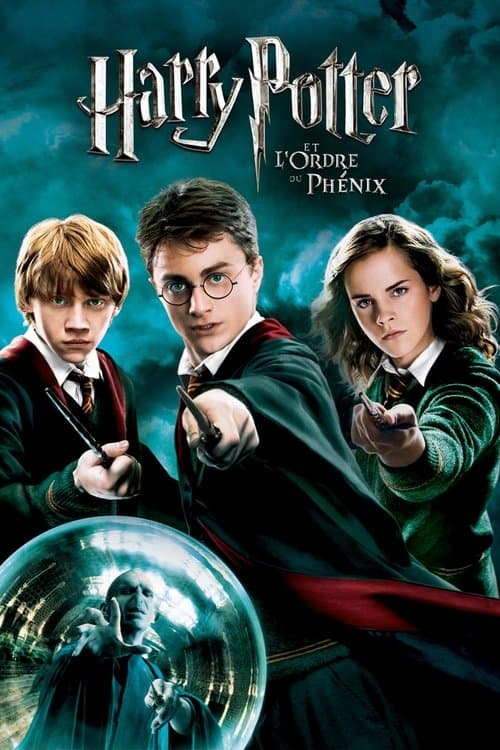
Harry Potter and the Order of the Phoenix
Does this age rating seem accurate to you?
Detailed parental analysis
Harry Potter and the Order of the Phoenix is the darkest and most political instalment of the saga, with an oppressive atmosphere that stands in sharp contrast to the earlier films. Harry, returning to Hogwarts for his fifth year, must confront a Ministry of Magic that denies Voldemort's return and a new headmistress who imposes an authoritarian regime on the school, whilst attempting to prepare his peers for the war to come. The film is primarily aimed at pre-teens and teenagers already familiar with the universe, and its resolutely grave tone makes it unsuitable for young children.
Violence
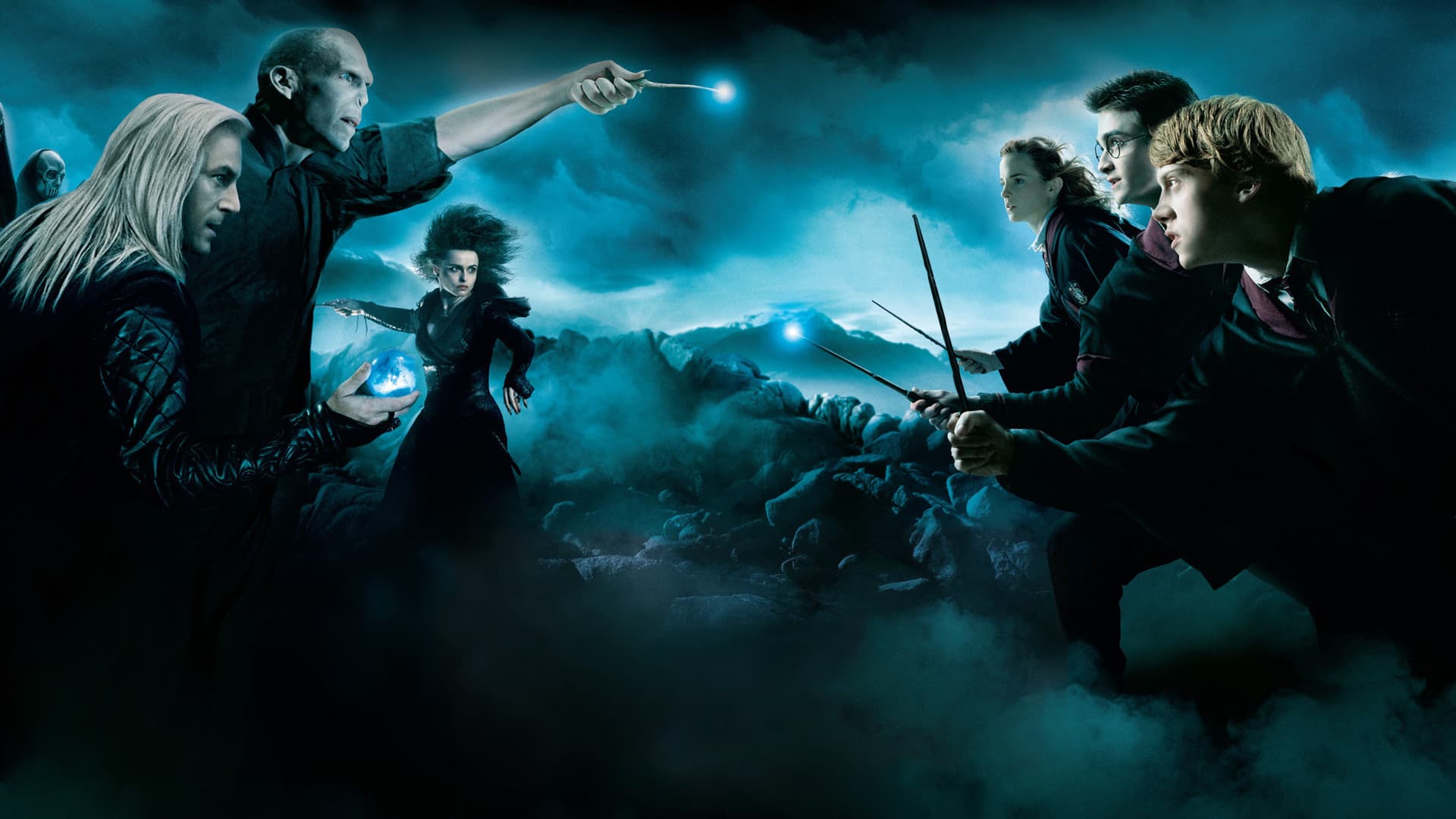
Violence is present in several forms, all narratively justified but of increasing intensity. The Dementor attack at the opening, with their ability to drain joy and paralyse their victims, establishes a visceral and distressing threat. The most difficult scene is one in which Dolores Umbridge forces Harry to carve words into his own hand using a magical quill: it is prolonged physical and psychological torture, shown with sufficient clarity to be disturbing. The final duel between Voldemort and Dumbledore is spectacular and visually intense, without being graphic. The death of a central character occurs suddenly and brutally, without emotional preparation, which can cause genuine shock in children attached to the saga.
Underlying Values
The film constructs its entire narrative around resistance to corrupted authority and institutional censorship: the Ministry lies, the school represses, and adults in positions of power betray their mission. This message is strong and coherent, and it naturally invites reflection on the legitimacy of obedience. Mistrust of institutions is presented as a virtue, which merits discussion with a child or adolescent to nuance the distinction between legitimate contestation and systematic defiance. As a counterpoint, the film valorises collective courage, solidarity amongst peers and individual responsibility in the face of injustice, which balances the message without softening it.
Social Themes
The film is the most explicitly political of the saga. The Ministry's propaganda, the manipulation of media through the Daily Prophet, the repression of dissenting voices at Hogwarts and the formation of a clandestine resistance group form a coherent picture of how authoritarian regimes function. These themes are accessible to an adolescent and offer a concrete entry point for discussing censorship, misinformation and civil resistance. The film does not simplify: institutions are not all bad, but they can be perverted by individuals driven by fear or ambition.
Parental and Family Portrayals
Adult figures are deliberately ambivalent in this instalment. Dumbledore, the quintessential authority figure, proves distant and fallible, having deliberately kept Harry from crucial information. Sirius Black plays the role of a substitute father figure, which makes his disappearance all the more painful. Harry's biological parents are absent by definition, but their memory structures his psychology. Umbridge embodies a figure of radically malevolent adult authority, which can trouble children accustomed to seeing teachers as protectors.
Strengths
The film succeeds in condensing a dense novel into a fluid and taut narrative, sacrificing certain subplots in favour of strong thematic coherence. Harry's emotional progression, torn between anger, isolation and responsibility, is treated with a sincerity that transcends simple genre filmmaking. The staging of Hogwarts under occupation, with its decrees posted everywhere and its monitored corridors, creates an effective claustrophobic atmosphere that gives substance to the political themes without rendering them didactic. For adolescents, this is a film that genuinely speaks to what it is like not to be believed, to feel alone facing a truth that adults refuse to hear.
Age recommendation and discussion points
The film is not recommended before the age of 10 due to psychological violence, the traumatic death of a beloved character and the overall oppressive atmosphere. From 12 years onwards, viewing is straightforward for a child comfortable with strong emotions. Two angles of discussion are worth opening after the film: why do we obey an authority even when we know it is wrong, and how do we recognise the difference between a just rule and one imposed by fear.
Synopsis
Returning for his fifth year at Hogwarts, Harry is stunned to find that his warnings about the return of Lord Voldemort have been ignored. Left with no choice, Harry takes matters into his own hands, training a small group of motivated students to defend themselves against the Dark Arts.
Where to watch
Availability checked on Apr 03, 2026
About this title
- Format
- Feature film
- Year
- 2007
- Runtime
- 2h 18m
- Countries
- United Kingdom, United States of America
- Original language
- EN
- Directed by
- David Yates
- Main cast
- Daniel Radcliffe, Rupert Grint, Emma Watson, Imelda Staunton, Helena Bonham Carter, Robbie Coltrane, Gary Oldman, Ralph Fiennes, Michael Gambon, Alan Rickman
- Studios
- Warner Bros. Pictures, Heyday Films
Content barometer
- Violence3/5Notable
- Fear4/5Intense
- Sexuality0/5None
- Language1/5Mild
- Narrative complexity4/5Very complex
- Adult themes0/5None
Values conveyed
- Courage
- Friendship
- Loyalty
- resistance