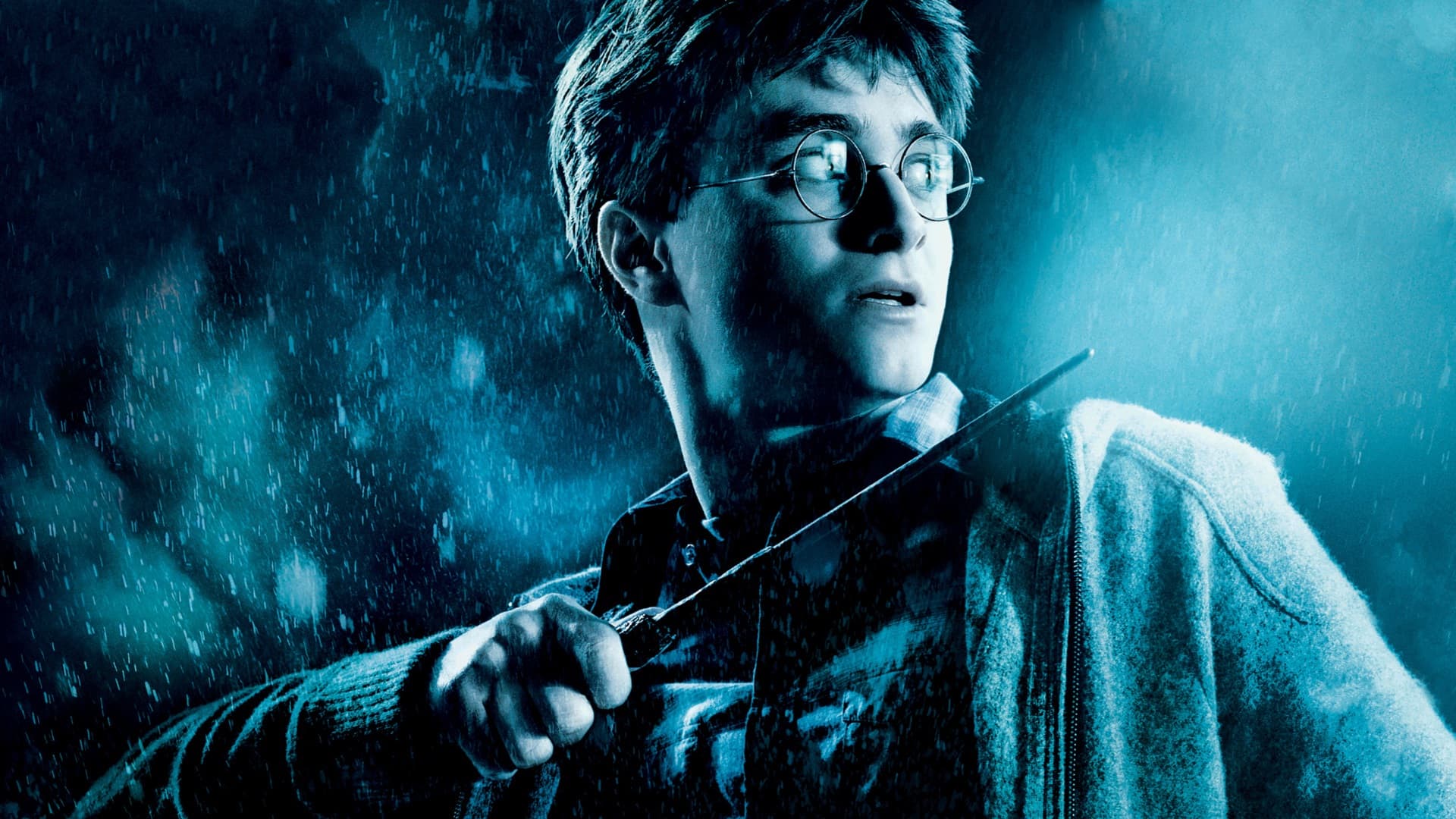
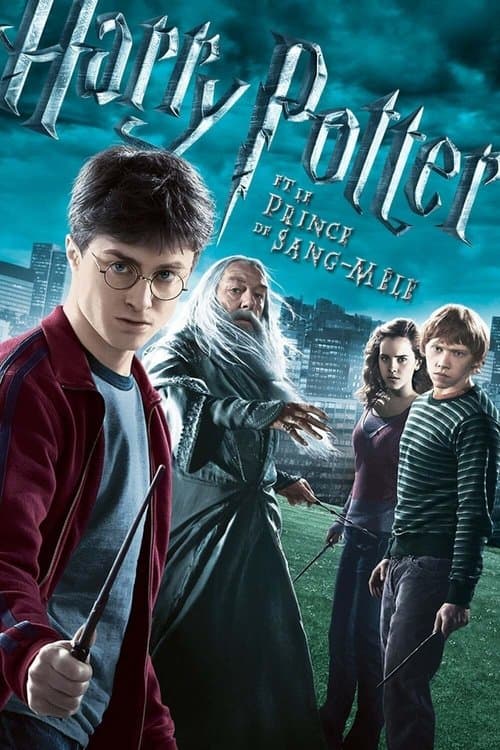
Harry Potter and the Half-Blood Prince
Does this age rating seem accurate to you?
Detailed parental analysis
Harry Potter and the Half-Blood Prince is the sixth instalment of a fantasy saga whose tone has progressively darkened to become decidedly bleak, melancholic and at times oppressive. The plot follows Harry and his friends through their sixth year at Hogwarts, as Voldemort's threat tightens and secrets about the dark wizard's past come to light. The film is primarily aimed at pre-teens and teenagers who have followed the saga from its beginnings, but its narrative darkness sets it distinctly apart from the earlier, more child-accessible episodes.
Violence
Violence is the most demanding aspect of the film for a young audience. The narrative opens with large-scale terrorist attacks, including the collapse of a London bridge and executions filmed in public streets, which immediately anchor the film in a register of realistic and diffuse threat. The most troubling scene remains the duel between Harry and Draco: the Sectumsempra spell causes visible lacerations across Draco's entire body, with blood in abundance, a brief but unusually intense sequence within the franchise. The final cave, with its zombie-drowned figures (the Inferi) surging from black waters to seize the characters, constitutes frankly effective horror. The death of the mentor figure at the film's close is filmed with a dramatic solemnity that can profoundly move young viewers. The violence is never gratuitous: it serves a narrative about grief, war and the loss of innocence, which gives it genuine narrative purpose but also makes it something difficult to process without support.
Underlying Values
The film carries a solid central message about unconditional trust in friends and the necessity of collective action in the face of threat. Dumbledore embodies an ideal of benevolence, sacrifice and intellectual authority exercised in the service of others. In counterpoint, the narrative explores manipulation, fanaticism and the way ordinary adolescents can be drawn into an ideology of fear, which offers a particularly rich angle for discussion. Loyalty is sometimes blind, and the film does not simplify the motivations of those on the dark side, notably Draco, whose trajectory introduces genuine moral complexity.
Social Themes
The film develops a readable political and warlike allegory: the Death Eaters function as a terrorist and totalitarian organisation, their actions deliberately recalling attacks in ordinary public spaces. The notion of imminent civil war, propaganda, collective fear and institutional infiltration runs throughout the narrative. This level of interpretation is accessible to teenagers from around twelve or thirteen years old and offers a concrete entry point for discussing fanaticism, mass manipulation and resistance.
Discrimination
The concept of blood purity lies at the heart of the antagonists' ideology and constitutes an explicit metaphor for racism and ethnic discrimination. The film's title itself refers directly to this. The narrative leaves no ambiguity about the moral worth of this ideology: it is shown as an absurd construction in service of a project of domination. This is a strong pedagogical angle, provided the metaphor is explicitly named with the child.
Parental and Family Portrayals
Parental figures are remarkably absent or failing in this instalment. Harry has been an orphan since childhood, Ron's parents are peripheral, and Draco acts in the shadow of an imprisoned father and an impotent mother. Dumbledore plays the role of substitute mentor figure, which makes his disappearance all the more emotionally striking. The film sketches in outline an universe of adolescents forced to grow up without a safety net, which resonates powerfully at this age.
Substances
A love potion is used for comic purposes in the narrative, and another potion with strong psychoactive effects is ingested in an intensely dramatic context. These elements fit within the fantastical logic of the Hogwarts world, but the scene of forced ingestion deserves to be named with younger viewers to avoid any confusion between narrative magic and the representation of substance use.
Strengths
This sixth episode marks genuine narrative maturity in the franchise: the pace is slower, more contemplative than previous instalments, and the film fully assumes its melancholic and political dimensions. The dramatic construction around the announced death of a central character is handled with effective emotional restraint, without sentimental excess. The secondary character arcs, notably the adolescents' first romantic relationships and their doubts, add a realistic psychological texture that anchors the story beyond pure fantastical spectacle. For a reader of the books, the film offers a bridge to discussions about betrayal, moral complexity and war. For a new viewer, it remains a demanding but coherent entry point into a rich universe.
Age recommendation and discussion points
The film should be reserved for children from eleven or twelve years old who are already familiar with the saga and comfortable with dark narratives, and rather from thirteen years old for fully serene viewing. Two discussion angles become necessary after watching: why blood purity ideology is absurd and dangerous, and how one recognises someone attempting to manipulate others through fear. Dumbledore's death also merits time for discussion, notably around what it means to lose a figure of trust.
Synopsis
As Lord Voldemort tightens his grip on both the Muggle and wizarding worlds, Hogwarts is no longer a safe haven. Harry suspects perils may even lie within the castle, but Dumbledore is more intent upon preparing him for the final battle fast approaching. Together they work to find the key to unlock Voldemorts defenses and to this end, Dumbledore recruits his old friend and colleague Horace Slughorn, whom he believes holds crucial information. Even as the decisive showdown looms, romance blossoms for Harry, Ron, Hermione and their classmates. Love is in the air, but danger lies ahead and Hogwarts may never be the same again.
Where to watch
Availability checked on Apr 03, 2026
About this title
- Format
- Feature film
- Year
- 2009
- Runtime
- 2h 33m
- Countries
- United Kingdom, United States of America
- Original language
- EN
- Directed by
- David Yates
- Main cast
- Daniel Radcliffe, Rupert Grint, Emma Watson, Jim Broadbent, Michael Gambon, Tom Felton, Alan Rickman, Bonnie Wright, Jessie Cave, Evanna Lynch
- Studios
- Warner Bros. Pictures, Heyday Films
Content barometer
- Violence4/5Strong
- Fear4/5Intense
- Sexuality1/5Allusions
- Language1/5Mild
- Narrative complexity4/5Very complex
- Adult themes2/5Present
Values conveyed
- Courage
- Friendship
- Loyalty
- sacrifice