Harry Potter and the Chamber of Secrets
Does this age rating seem accurate to you?
Detailed parental analysis
Harry Potter and the Chamber of Secrets is a fantasy film with an atmosphere noticeably darker and more oppressive than its predecessor, featuring unsettling creatures and sustained narrative tension. The plot follows Harry Potter, returning to Hogwarts for his second year, as a mysterious and dangerous force begins to attack the school's students. The film targets a family audience from a certain age onwards, but its frightening tone makes it unsuitable for young children.
Violence
The Dursleys, Harry's adoptive family, are portrayed as deliberately cruel and neglectful: they lock him in his room, put bars on his window and systematically exclude him from family life. This mistreatment is handled with dark humour, which may lessen or conversely amplify its impact depending on the child's sensitivity. The figure of a loving family is present implicitly, notably through the Weasleys, who offer warmth and inclusion where the Dursleys impose rejection and punishment. This is a concrete angle worth broaching with a child after viewing: the difference between a family that nurtures and a family that harms.
Parental and Family Portrayals
The ideology of blood purity lies at the heart of the film. The character of Draco Malfoy uses the insult 'Mudblood' to humiliate Hermione because of her non-magical origins, a term clearly presented as a racist attack within the film's logic. This supremacy of 'pure blood' constitutes the ideological drive of the main antagonist and the film explicitly shows its violent and unjust consequences. The house-elf Dobby further illustrates a system of forced magical servitude: he is mistreated, silenced and unable to escape his masters without hurting himself. These elements offer a serious entry point for discussing racism, social hierarchy and exploitation with a child or pre-adolescent.
Discrimination
The film structures its values firmly around friendship, courage in the face of injustice and loyalty. Harry chooses repeatedly to put his life in danger to protect vulnerable people, without expecting reward. Bravery is valued without being naive: it has a cost. In counterpoint, the narrative depicts unambiguously the danger of systems founded on hereditary superiority and the domination of the weak. The logic of merit and moral choice is explicitly positioned as more important than birth or status.
Underlying Values
Through the enslavement of house-elves and blood supremacy, the film addresses metaphorically questions of social hierarchy, systemic oppression and silent complicity. These themes remain embedded in the fiction without being didactic, making them accessible to a young audience whilst leaving substance for adult discussion.
Social Themes
The film constructs a coherent and effective visual atmosphere, with an art direction that deepens the Hogwarts universe without simply repeating it. The narrative structure delivers on its promises and reserves a well-constructed final revelation. From a pedagogical standpoint, the narrative offers robust metaphors about racism and social injustice, sufficiently grounded in action to be understood by a young audience without being reductive. The character of Dobby, in particular, opens a reflection on servitude, dignity and emancipation that extends well beyond the scope of the fantasy film.
Strengths
The film is not recommended before age 8 due to its frightening creatures, violent scenes and images of blood, and can be watched comfortably from age 10 onwards. Two angles of discussion are worth opening after viewing: what the child feels when faced with Dobby and his condition, to talk about what it means to be treated as inferior, and why the insult 'Mudblood' hurts Hermione so much, to address the logic of contempt based on one's origins.
Age recommendation and discussion points
The film constructs a coherent and effective visual atmosphere, with an art direction that deepens the Hogwarts universe without simply repeating it. The narrative structure delivers on its promises and reserves a well-constructed final revelation. From a pedagogical standpoint, the narrative offers robust metaphors about racism and social injustice, sufficiently grounded in action to be understood by a young audience without being reductive. The character of Dobby, in particular, opens a reflection on servitude, dignity and emancipation that extends well beyond the scope of the fantasy film.
Synopsis
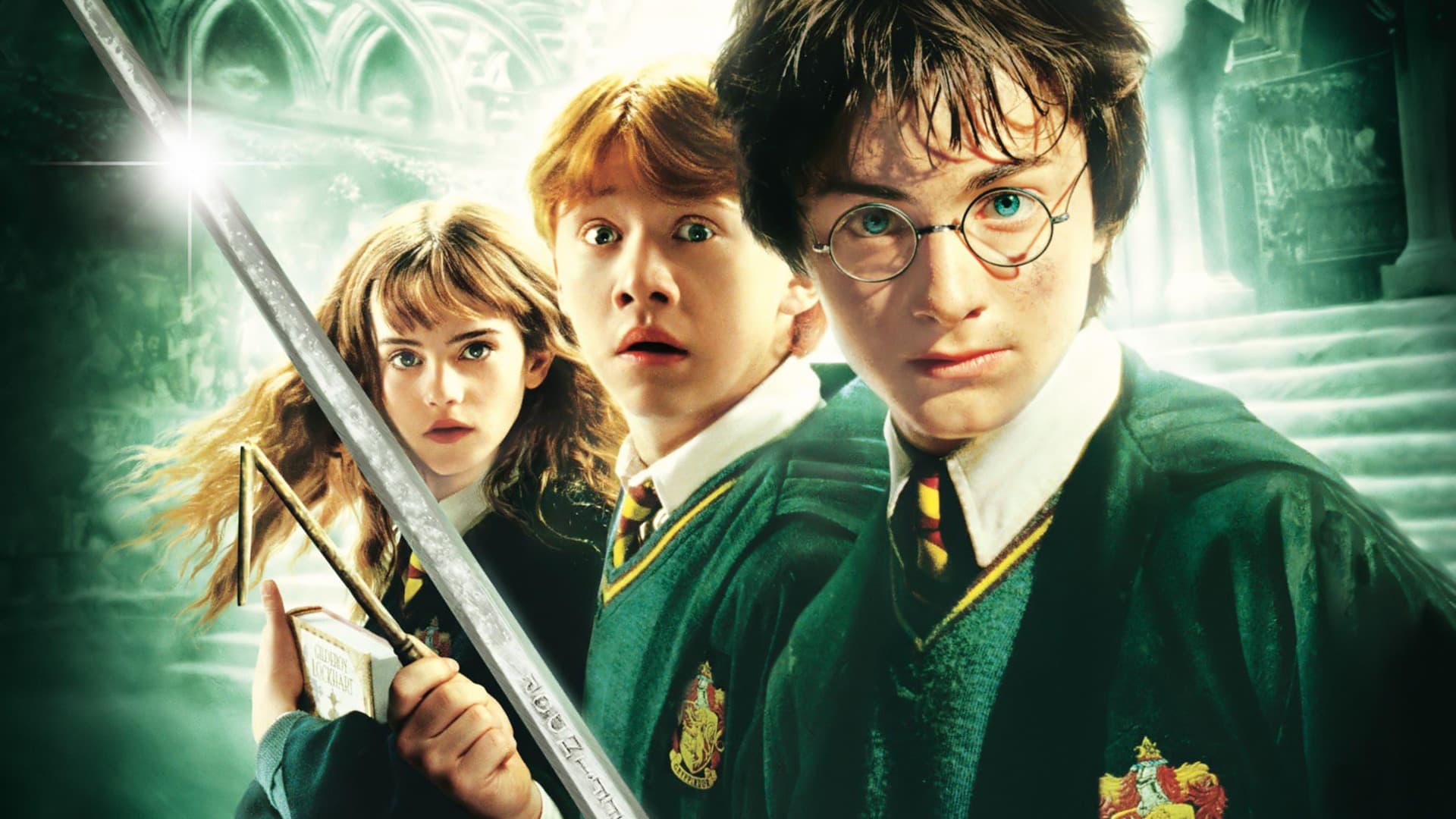
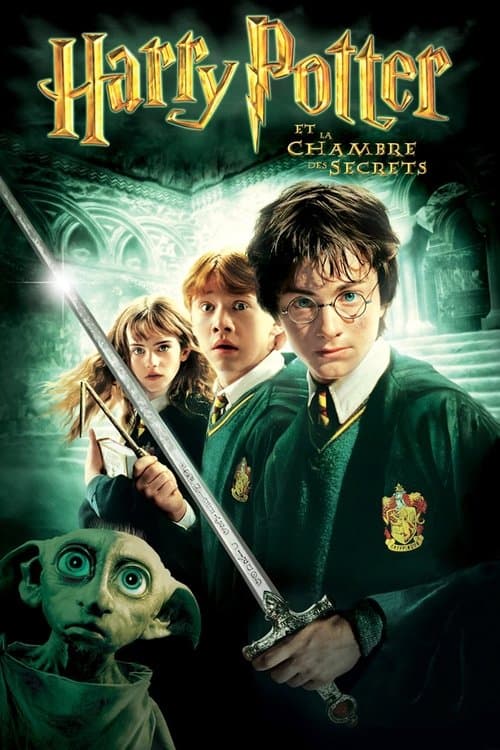
Cars fly, trees fight back, and a mysterious house-elf comes to warn Harry Potter at the start of his second year at Hogwarts. Adventure and danger await when bloody writing on a wall announces: The Chamber Of Secrets Has Been Opened. To save Hogwarts will require all of Harry, Ron and Hermione's magical abilities and courage.
Where to watch
Availability checked on Apr 03, 2026
About this title
- Format
- Feature film
- Year
- 2002
- Runtime
- 2h 41m
- Countries
- United Kingdom, United States of America, Germany
- Original language
- EN
- Directed by
- Chris Columbus
- Main cast
- Daniel Radcliffe, Rupert Grint, Emma Watson, Kenneth Branagh, Toby Jones, Robbie Coltrane, Richard Harris, Alan Rickman, Tom Felton, Jason Isaacs
- Studios
- Warner Bros. Pictures, Heyday Films, 1492 Pictures, MIRACLE Productions
Content barometer
- Violence3/5Notable
- Fear4/5Intense
- Sexuality0/5None
- Language1/5Mild
- Narrative complexity4/5Very complex
- Adult themes0/5None
Watch-outs
- Death
- Ethnic or racial stereotypes
- Abuse