Happy Feet
Does this age rating seem accurate to you?
Detailed parental analysis
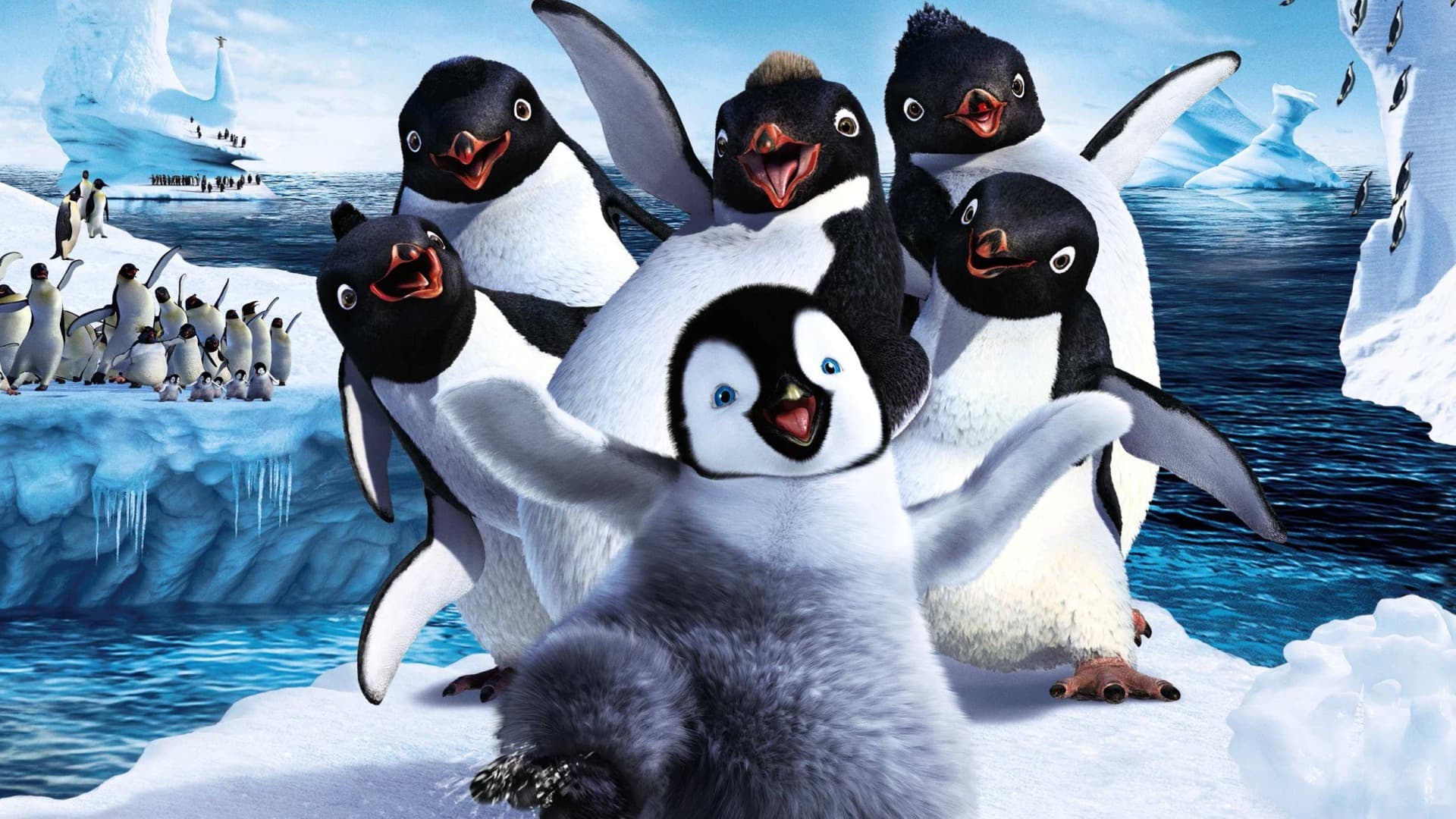
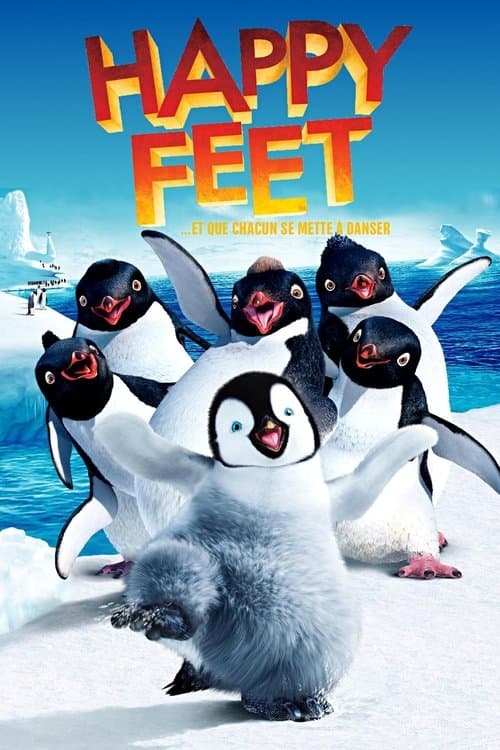
Happy Feet is a musical animated film with an overall joyful atmosphere punctuated by sequences of genuine tension. The story follows Mumble, an Emperor penguin unable to sing like his peers but blessed with extraordinary dancing talent, who seeks his place in a community that rejects him. The film is primarily aimed at children from seven or eight years old, but it also engages adults through a layer of musical references and social satire that speaks more directly to them.
Discrimination
This is the most debatable aspect of the film for parental discussion. Two groups of secondary characters are coded according to marked ethnic stereotypes: the Adelie penguins, small and extroverted, speak with a pronounced Latino accent, use expressions like 'mami' or 'homies', and are presented as particularly festive and sexually demonstrative. The character of Lovelace, a charismatic guru surrounded by admiring females, is modelled on an African-American seducer figure from popular culture, with the posture of a preacher and an emphasis on his virility. These representations are not questioned by the narrative: they are played for entertainment and have no critical arc. This is a concrete point to name with an older child who can already identify this type of shortcut.
Underlying Values
The film carries a strong central message about accepting difference and the courage to remain oneself in the face of collective rejection. The community of Emperor penguins is represented as a conformist, rigid society quick to designate a scapegoat, which gives the film real critical depth about the mechanics of social exclusion. The non-conformist individual is first punished, then eventually recognised, which can open a useful discussion: the narrative suggests that difference is only valuable when it 'serves' the group, a nuance that the child will not perceive alone. Moreover, the film conveys solid positive values: perseverance, loyalty to those close to him, refusal to abandon his identity under social pressure.
Sex and Nudity
The film contains a notable level of suggestive sexual content for mainstream animation. Songs performed by adult characters include original lyrics explicitly evoking physical love. One adult character asks several females 'Who's first?', framing sexuality as competition and females as available. These elements generally go over the heads of young children, but they are perceptible to pre-adolescents and adults. There is no nudity, nor explicit representation: the whole thing remains in the register of allusion, but the allusion is recurring and far from innocuous.
Violence
The film contains several sequences of genuine animal tension: attacks by leopard seals, threats from orcas and skuas. These scenes are designed to be frightening, with a mise-en-scène that does not downplay the danger. They remain within the codes of family animation and do not involve graphic violence, but they can unsettle the most sensitive or youngest children. The narrative purpose is clear: danger is real in nature, and the film does not soft-pedal it, which is a form of respect for the young viewer's intelligence.
Social Themes
In its final third, the film incorporates a critique of industrial overfishing and human responsibility in the disruption of polar ecosystems. This ecological message is direct and explicitly identified as the cause of the penguin community's misfortune. It is a solid educational entry point for discussing with a child questions of the food chain, human impact on wildlife, and collective responsibility.
Parental and Family Portrayals
Mumble's father plays an important role in the narrative. His shame at his son's difference, and the pressure he indirectly exerts for him to conform to the group's norms, constitute a real dramatic knot. The paternal figure is not demonised but clearly shows how a parent's love can coexist with difficulty accepting a child as he is. This is a concrete and accessible angle for discussion with children from eight years old.
Strengths
The film has the merit of a carefully constructed soundtrack, which draws from decades of pop and soul to narrate the characters' emotions rather than simply illustrate them. The satire of religious and social conformism is written with genuine bite that works as well for adults as for attentive pre-adolescents. The final sequence, which links the penguin world to a human political decision, is an original narrative articulation for an animated film: it gives the story a scope that goes beyond a simple tale of accepting difference. The animation of movement on ice and in water is visually precise and contributes to a sense of immersion in a hostile environment that reinforces the dramatic stakes.
Age recommendation and discussion points
The film is suitable from seven or eight years old for the animal tension sequences, but the suggestive content and especially the ethnic stereotypes merit particular attention from around ten or eleven years old, the age at which these representations become legible. Two discussion angles are worth pursuing: why are the Adelie penguins and Lovelace drawn this way, and does it resemble real groups of people we know? And why does Mumble's community eventually accept his difference, and should it have done so sooner?
Synopsis
Into the world of the Emperor Penguins, who find their soul mates through song, a penguin is born who cannot sing. But he can tap dance something fierce!
About this title
- Format
- Feature film
- Year
- 2006
- Runtime
- 1h 48m
- Countries
- Australia, United States of America
- Original language
- EN
- Studios
- Kennedy Miller Productions, Animal Logic, Village Roadshow Pictures, Warner Bros. Pictures
Content barometer
- Violence2/5Moderate
- Fear3/5Notable tension
- Sexuality2/5Mild
- Language1/5Mild
- Narrative complexity2/5Moderate
- Adult themes0/5None
Watch-outs
- Ethnic or racial stereotypes
- Sexuality
Values conveyed
- Courage
- Acceptance of difference
- Perseverance
- friendship
- difference
- ecology