
Guillermo del Toro's Pinocchio
Does this age rating seem accurate to you?
Detailed parental analysis
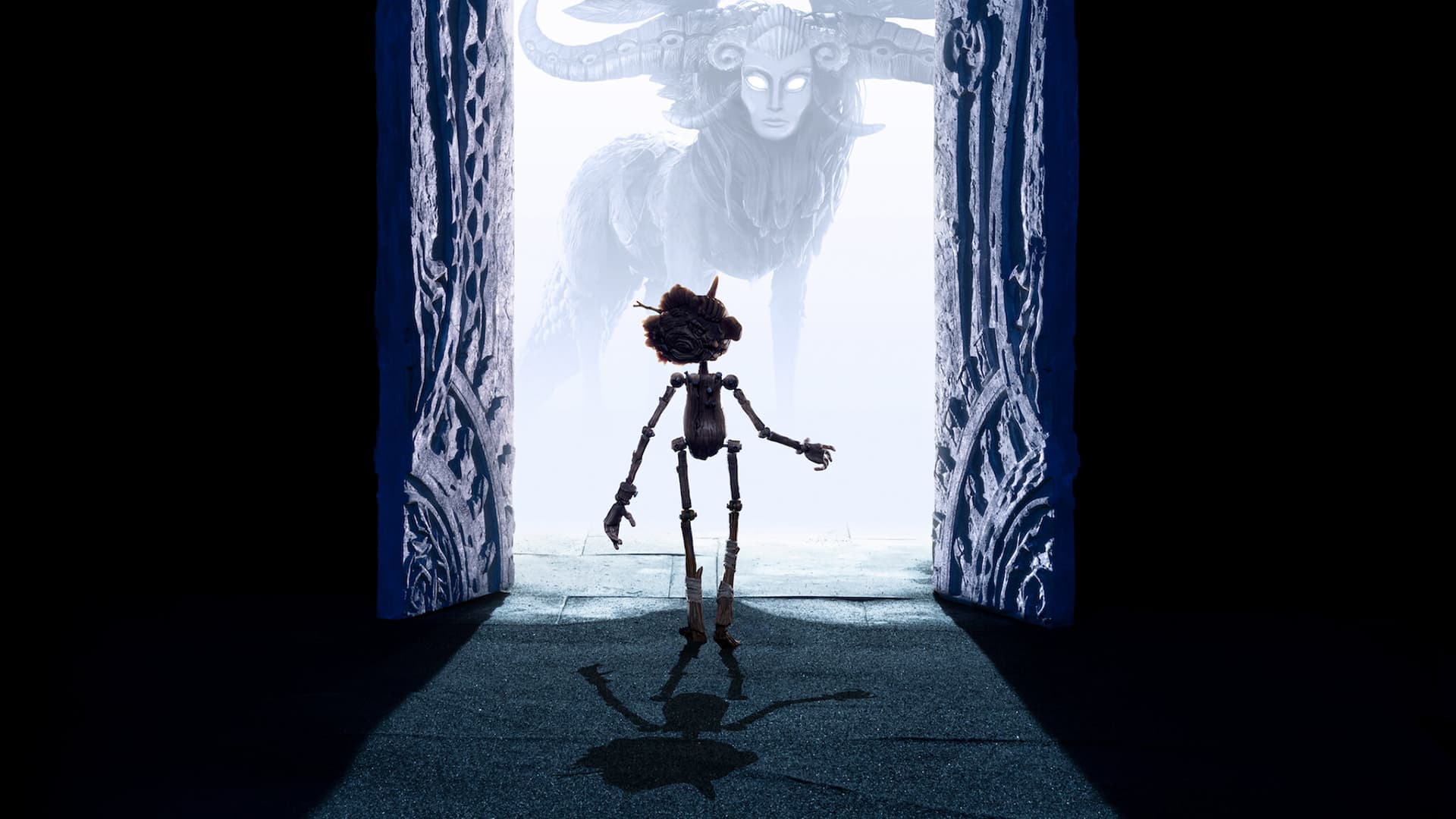
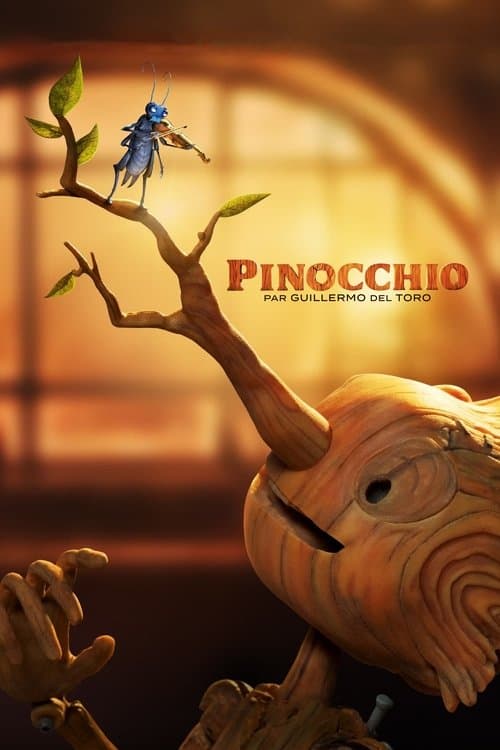
Pinocchio by Guillermo del Toro is a dark, melancholic and visually unsettling animated film, far removed from the childlike imagery associated with the original tale. The story follows a father broken by grief who creates a magical puppet to fill the void left by his son, and discovers that love is not imposed but built. Despite its appearance as an animated film, this feature is aimed primarily at teenagers and adults.
Violence
Violence is present in a recurring and emotionally charged manner. A child dies in a bombing in the opening minutes, establishing a grave tone that never truly eases. Pinocchio dies several times over, crushed or shot down, and whilst these deaths are treated with a certain narrative detachment linked to his magical nature, their repetition remains unsettling. One scene shows Pinocchio bound to a cross and set alight. Adults and children are killed by bombs in a wartime context, with visible explosions and fires. The violence is never gratuitous nor self-indulgent: it serves a purpose about war, grief and loss, but its emotional weight is real and sustained.
Parental and Family Portrayals
The paternal figure lies at the heart of the film and is deliberately imperfect. Geppetto is a father destroyed by grief, consumed by the desire to recreate his dead son rather than accept his loss. His relationship with Pinocchio is initially that of a parent who projects his desires onto his child rather than welcoming him as he is. The arc of the film consists precisely in moving beyond this confusion between the child one imagined and the child one actually has. It is one of the film's most powerful and most honest messages, and also one of the most accessible to discussion with a teenager.
Social Themes
The film unfolds in fascist Italy in the 1930s and uses this context with intention. Blind obedience to authority is presented as a danger, and Pinocchio's disobedience towards authoritarian figures becomes a virtue rather than a moral failing. War is depicted unambiguously as a machine that crushes children and fathers. These political dimensions are sufficiently clear to sustain a serious conversation with a teenager about attitudes towards authority, propaganda and sacrifice.
Underlying Values
The narrative values authenticity over conformity, and unconditional love over possessive affection. Disobedience is redeemed not as wilfulness but as moral conscience in the face of unjust orders. The film also questions sacrifice: to sacrifice oneself for war is not presented as noble but as manipulation. In return, spontaneous altruism and loyalty between unlikely friends are portrayed with warmth. These values are foundational and constitute genuine ground for discussion with a pre-teenager or teenager.
Substances
Geppetto's alcoholism is shown without indulgence or humour. He drinks at his son's grave, he drinks whilst creating the puppet, and falls drunkenly from a ladder. This portrayal is critical and never valorises consumption: it illustrates profound paternal distress and an escape from grief. It is a narrative element useful for discussing with a child how adults manage their pain poorly.
Strengths
The film possesses an emotional density rare in large-scale animation. It addresses death, grief, failed paternal love and attitudes towards authority with an honesty that never condescends to its young audience. The narrative construction is assured, secondary characters have genuine depth, and the visual designs, even when unsettling, carry meaning rather than simply being decorative. The way the film reworks the Pinocchio myth to make it a reflection on what it means to be an acceptable child in a parent's eyes is particularly subtle. For a teenager capable of receiving it, this is a film that leaves useful traces.
Age recommendation and discussion points
The film is not suitable for under-10s due to its darkness, its repeated deaths and its heavy atmosphere. For serene and rewarding viewing, 12 years constitutes a reasonable threshold, provided the child is comfortable with subjects of grief and war. Two angles of discussion are worth preparing after viewing: why did Geppetto struggle to love Pinocchio as he was, and at what point might disobeying a rule or authority be the right thing to do.
Synopsis
During the rise of fascism in Mussolini's Italy, a wooden boy brought magically to life struggles to live up to his father's expectations.
About this title
- Format
- Feature film
- Year
- 2022
- Runtime
- 2h 1m
- Countries
- United States of America
- Original language
- EN
- Directed by
- Mark Gustafson, Guillermo del Toro
- Main cast
- Ewan McGregor, David Bradley, Gregory Mann, Burn Gorman, Ron Perlman, John Turturro, Finn Wolfhard, Cate Blanchett, Tim Blake Nelson, Christoph Waltz
- Studios
- The Jim Henson Company, ShadowMachine, Double Dare You
Content barometer
- Violence4/5Strong
- Fear4/5Intense
- Sexuality0/5None
- Language0/5None
- Narrative complexity3/5Complex
- Adult themes2/5Present
Values conveyed
- Courage
- Acceptance of difference
- Loyalty
- Forgiveness
- friendship
- grief
- resilience