Grizzy & the Lemmings
Grizzy et les Lemmings
Does this age rating seem accurate to you?
Detailed parental analysis
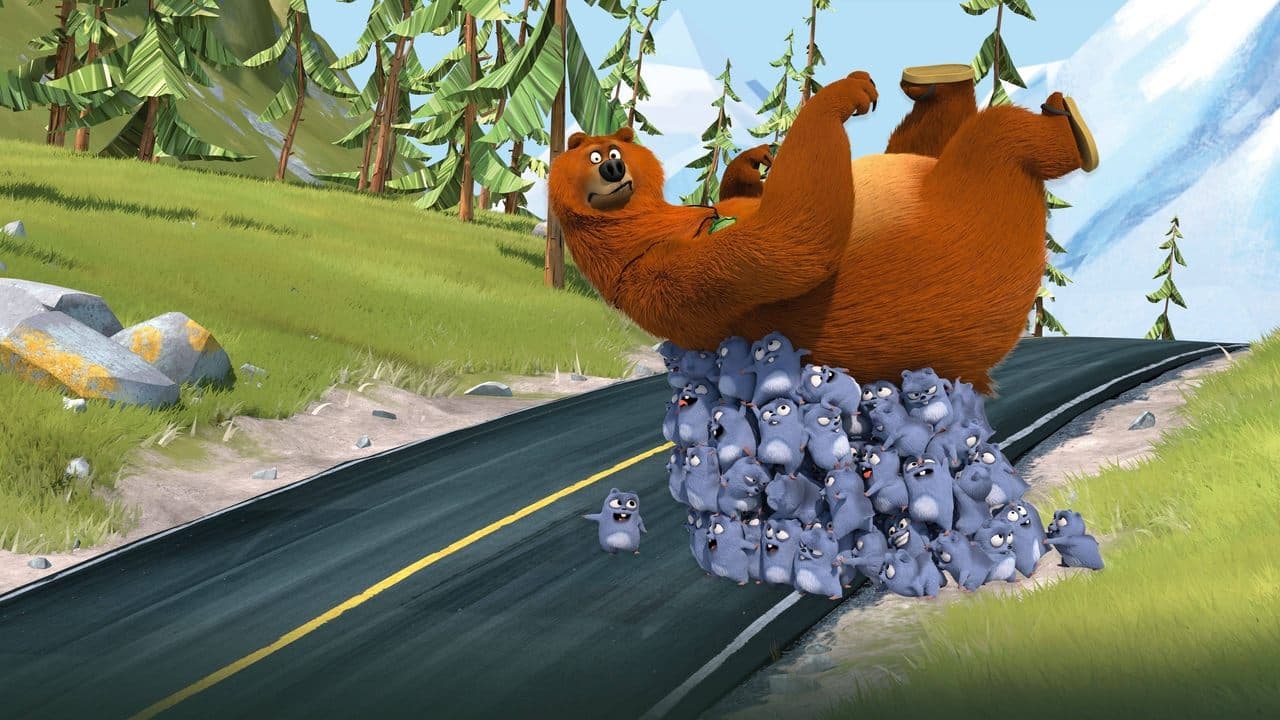
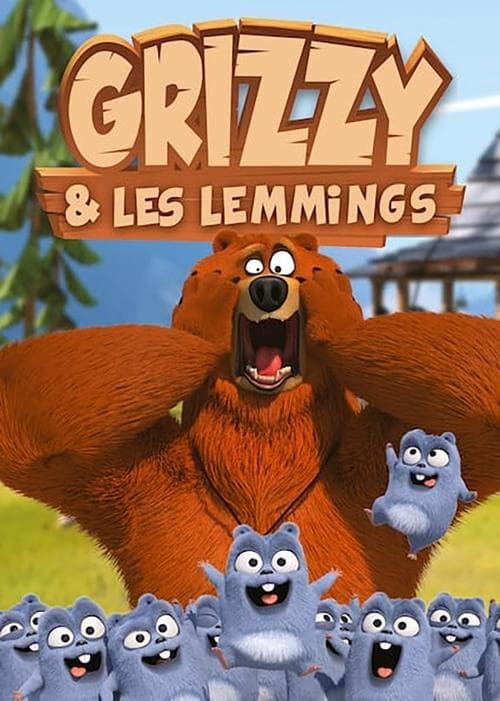
Grizzy & the Lemmings is a short animated series with a fast-paced rhythm and a colourful, saturated aesthetic, designed for a young children's audience. Each episode features a bear attempting to enjoy a forest cabin peacefully, constantly disrupted by a band of turbulent and unpredictable lemmings. The whole thing unfolds without any dialogue, only with sounds and gibberish, which makes it accessible from a very young age.
Violence
Violence is omnipresent and constitutes the comic engine of each episode. Cliff falls, electrocutions, explosions, characters crushed by heavy objects or propelled by rockets: the register is that of classic American cartoon, in the direct line of Looney Tunes. No character is ever permanently injured, which clearly anchors these sequences in a register of assumed unreality. The problem is not the brutality of the images themselves, but their frequency and rhythm: violence is the almost exclusive spring of the gag, repeated without moral variation or consequence. For a very young child, the distinction between this purely fictional register and reality deserves to be verbalised by an adult.
Underlying Values
The narrative structure of each episode rests on a power dynamic between Grizzy, who seeks to preserve his territory and privileges, and the lemmings, who invade and disrupt. Jealousy, possessiveness and competition are the permanent springs of the narrative, never questioned or resolved. There is no cooperation, no reconciliation, no learning: each episode starts from scratch in the same conflictual pattern. This is not a problem in itself for a comic cartoon, but it is a useful angle to point out to a child: why do the characters never get along, and is that how we settle conflicts?
Discrimination
The lemmings are presented, including in the official descriptions of the series, as stupid and ridiculous by nature. This treatment is constant and without nuance: they never demonstrate intelligence or positive initiative, and their narrative function is to be the source of chaos and ridicule. This pattern, repeated in each episode, establishes an implicit hierarchy between a competent central character and an interchangeable and mocked group. For a young child, this type of representation deserves to be named.
Strengths
The complete absence of dialogue is a genuine functional success: it makes the series universally accessible, including to children who cannot yet read, and it requires entirely visual and gestural narration that can develop the reading of expressions and situations. The slapstick is executed with an effective sense of timing, and children who enjoy this register find consistency of tone in it. The series has no particular narrative or emotional ambition, and makes no claim to have any.
Age recommendation and discussion points
The series is accessible from age 4 in terms of content, but supervised viewing is preferable for under 6s, particularly to contextualise the comic violence and very intense rhythm. Two useful angles for discussion after viewing: ask the child why Grizzy and the lemmings never become friends, and whether the lemmings are really stupid or simply different.
Synopsis
The forest ranger's house is the only area of human civilization in the middle of untamed wilderness in a vast natural reserve in Canada. When the ranger is away, a bear named Grizzy feels that the ranger's house is his territory, given that bears sit at the top of the food chain. After making his way inside the home, Grizzy takes advantage of all the modern conveniences there, including a comfortable sofa, air conditioning and fully equipped kitchen. He's not alone, though, because a group of small creatures called lemmings also populate the ranger's house when he is away. Because Grizzy and the lemmings are not civilized enough to live together in peace, it becomes an atmosphere of madness when the two sides try to outdo each other with tricks.
Where to watch
Availability checked on May 04, 2026
About this title
- Format
- TV series
- Year
- 2016
- Runtime
- 7m
- Countries
- France
- Original language
- FR
- Directed by
- Antoine Rodelet, Josselin Charier
- Main cast
- Pierre-Alain de Garrigues, Josselin Charier
- Studios
- Studio Hari
Content barometer
- Violence3/5Notable
- Fear1/5Mild
- Sexuality0/5None
- Language0/5None
- Narrative complexity1/5Accessible
- Adult themes0/5None
Watch-outs
- Violence
- Ethnic or racial stereotypes