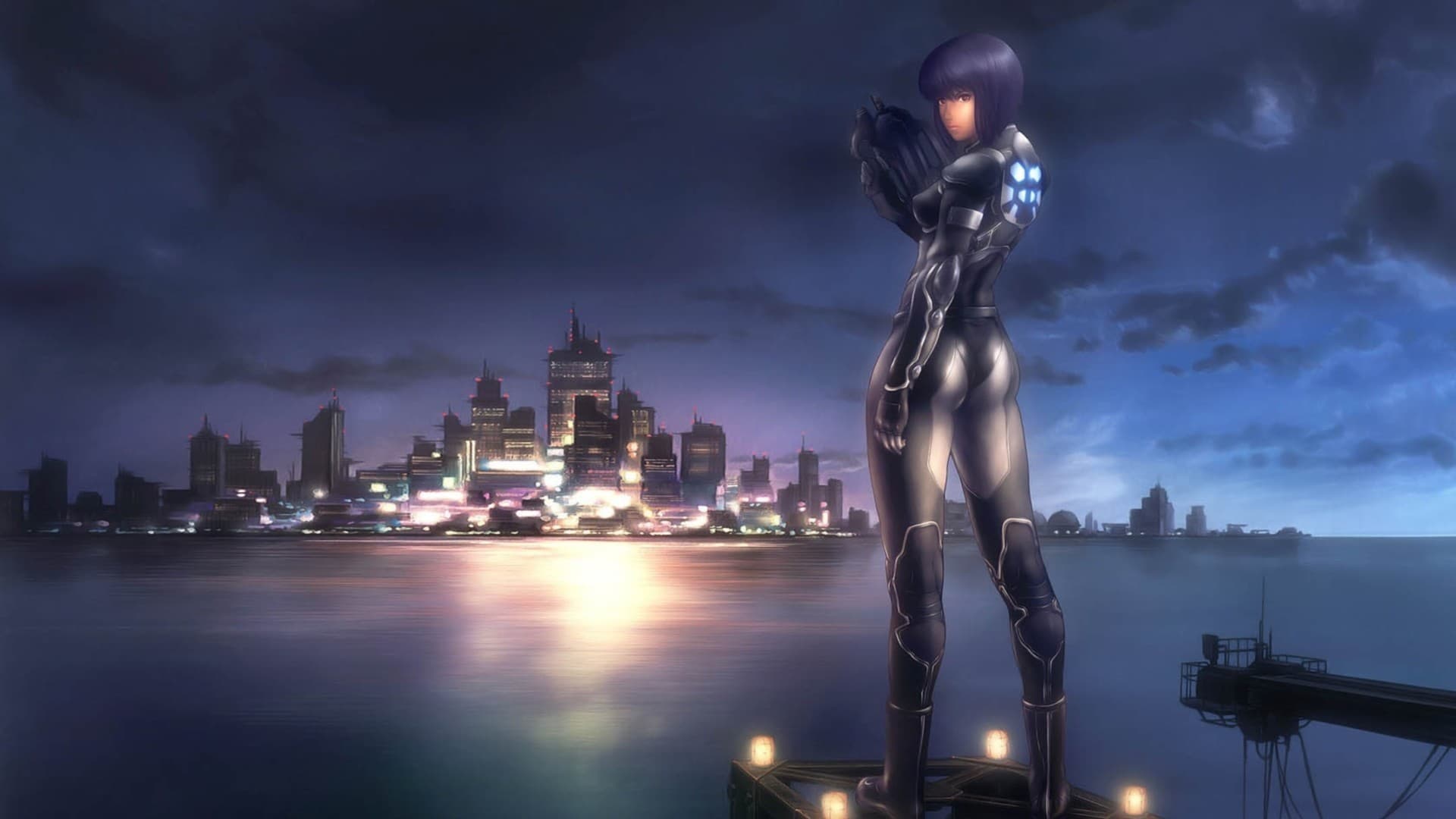

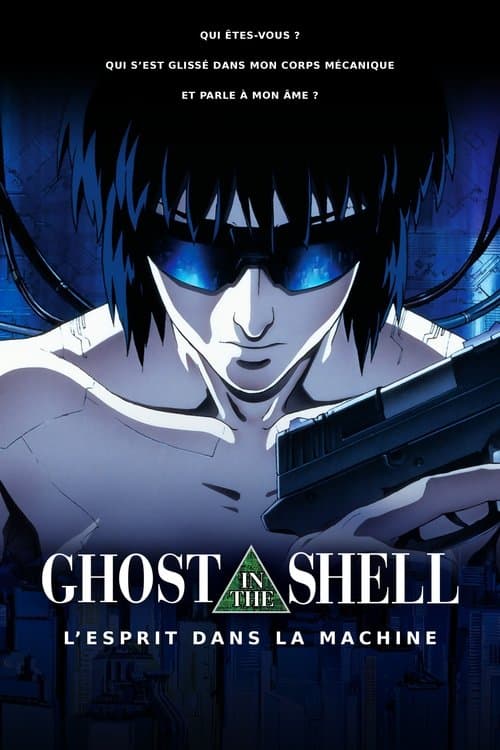
Ghost in the Shell
GHOST IN THE SHELL
Does this age rating seem accurate to you?
Detailed parental analysis
Ghost in the Shell is a science-fiction animated film with a contemplative and dark atmosphere, rooted in an urban cyberpunk future where the boundary between human and machine has become almost indistinguishable. The plot follows an elite agent with advanced cybernetic capabilities who tracks a mysterious computer hacker whilst questioning her own identity and humanity. The film is unambiguously aimed at an informed adult and adolescent audience, and is not suitable for children.
Sex and Nudity
Nudity is frequent and explicit throughout the film. The protagonist appears regularly naked, particularly during sequences involving the activation of her thermoptic camouflage, with shots that are clearly deliberate. This recurring nudity warrants discussion with an adolescent, as the contrast is manifest: the female protagonist is exposed in ways her male counterparts are not. Some interpret this as a narrative choice linked to the cybernetic nature of the body; others see it as an aestheticisation of the female form through a male gaze. Both readings are legitimate and make the film a pertinent basis for discussion about objectification, provided the parent is ready to address the subject frankly.
Violence
Violence is present throughout the narrative, with confrontations between cyborgs, shootouts and one particularly striking scene involving a skull explosion with bloodshed. The intensity is genuine but never gratuitous in the spectacle sense: the violence serves dramatic tension and illustrates the brutality of a world where the boundary between the human body and malleable material has become thin. The film does not indulge in gore, but certain images remain shocking and may leave a lasting mark on an unprepared viewer.
Underlying Values
The film raises profound philosophical questions about consciousness, identity and what constitutes humanity, without ever offering simple answers. It values loyalty within a tight-knit working group and showcases a form of courage that stems from accepting uncertainty rather than from control. The relationship to institutional authority is ambiguous: the protagonist acts within the framework of a state structure whilst questioning the limits of her personal autonomy. It is a film that invites thought rather than adherence, which makes it a rare object.
Discrimination
The film depicts a visible discrepancy in treatment between the female protagonist, regularly shown naked, and male characters who are not. This imbalance is not explicitly thematised within the narrative, yet it is systematic enough to warrant discussion. It is a good opportunity to talk with an adolescent about the way female bodies are viewed in fiction, the difference between functional nudity and aestheticised nudity, and how representation choices reflect cultural presuppositions.
Language
The film contains some coarse language in its English dubbed version, notably the use of the strongest term in the language. The original Japanese version presents a different register that some consider more faithful to the film's intent. This minor detail is not the most salient point, but it is worth consciously choosing which version to watch with a young person.
Social Themes
The film anticipates with unsettling accuracy contemporary concerns: mass surveillance, digital identity, memory manipulation, the boundary between the organic and the artificial. These themes are treated seriously and constitute an exceptional gateway for discussion with an adolescent about artificial intelligence, privacy or the definition of the human person in the technological age.
Strengths
Ghost in the Shell is a landmark work that has durably influenced world science fiction far beyond animated cinema. Its direction is rigorous, its pacing deliberately slow and its sound design of rare coherence. The film does not explain; it shows and lets the viewer construct their own understanding. Its philosophical dimension is authentic and not merely decorative: the questions it raises about consciousness and identity are those that contemporary thinkers address seriously. For a curious adolescent, it is a demanding but accessible introduction to issues that will only grow in importance in the decades to come.
Age recommendation and discussion points
The film is not suitable before the age of 15 due to explicit nudity and certain violent scenes, and genuinely relaxed viewing is more appropriate from age 16 onwards. Two angles of discussion impose themselves after viewing: firstly, why is the protagonist's body so often shown naked whilst that of her male colleagues is not, and what this reveals about how fiction represents women; secondly, what constitutes true humanity according to the adolescent, and whether memory, emotions or the body are sufficient to define a person.
Synopsis
In the year 2029, the barriers of our world have been broken down by the net and by cybernetics, but this brings new vulnerability to humans in the form of brain-hacking. When a highly-wanted hacker known as 'The Puppetmaster' begins involving them in politics, Section 9, a group of cybernetically enhanced cops, are called in to investigate and stop the Puppetmaster.
About this title
- Format
- Feature film
- Year
- 1995
- Runtime
- 1h 22m
- Countries
- Japan, United Kingdom
- Original language
- JA
- Studios
- Bandai Visual, Production I.G, Kodansha, Manga Entertainment
Content barometer
- Violence3/5Notable
- Fear2/5A few scenes
- Sexuality4/5Explicit
- Language2/5Moderate
- Narrative complexity1/5Accessible
- Adult themes0/5None
Watch-outs
- Death
- Gender stereotypes
- Violence
Values conveyed
- Courage
- Acceptance of difference
- Loyalty
- Autonomy
- identity
- search for meaning