Get Santa
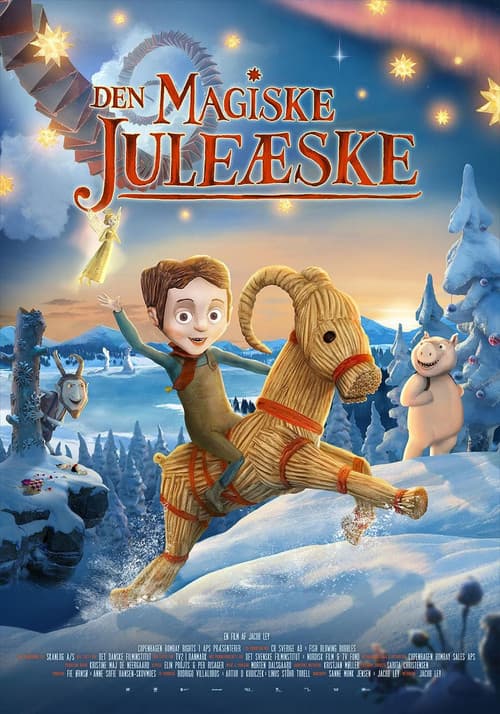
Den magiske juleæske
Does this age rating seem accurate to you?
Detailed parental analysis
Julius and Father Christmas is a fantastical adventure film with contrasting atmospheres, blending the warmth of Christmas tales with sequences of genuine tension and fear. The plot follows a young orphan who becomes caught up in a race against time to save the magic of Christmas in the face of a threatening antagonist. The film targets children of school age and upwards, but its frightening content makes it unsuitable for younger viewers.
Violence
The film multiplies scenes of intense physical peril for a Christmas tale: a child falls from a cliff into a dark abyss, characters fall through ice repeatedly, and a wrapping machine is presented as a destructive threat into which Father Christmas, an elf and Julius are hurled. These sequences are sufficiently realistic in their staging to provoke genuine anxiety in sensitive children, even though all characters emerge unscathed. Violence remains within the register of family adventure without ever descending into gore, and each peril is resolved, which gives it a reassuring narrative finality.
Underlying Values
The narrative is structured around belief, imagination and courage in the face of adversity, solid and consistent values throughout the film. The resolution of the conflict with the intimidating characters is nonetheless dealt with in an unconvincing manner: the bullies learn their lesson, but their turnaround lacks depth and may leave the impression that violent behaviour corrects itself easily. This is a useful point to address with a child who is themselves experiencing bullying, so as not to leave them with an oversimplified view of reality.
Parental and Family Portrayals
Julius is an orphan, and the film thus places the parental figure in absence. The lack of family structures the entire narrative and gives the character genuine emotional vulnerability. The relationship that develops with Father Christmas partially fulfils the function of a benevolent guardian figure, without explicitly substituting for a parental model. This context may resonate differently depending on the child viewer's family situation.
Social Themes
The film addresses the question of bullying in an institutional setting, with Julius being regularly mistreated by older children in the orphanage. The representation is direct and without excessive softening, which gives it an anchor in a reality that many children will recognise. It is one of the rare points in the film that opens a serious conversation about communal living and how to respond to intimidation.
Strengths
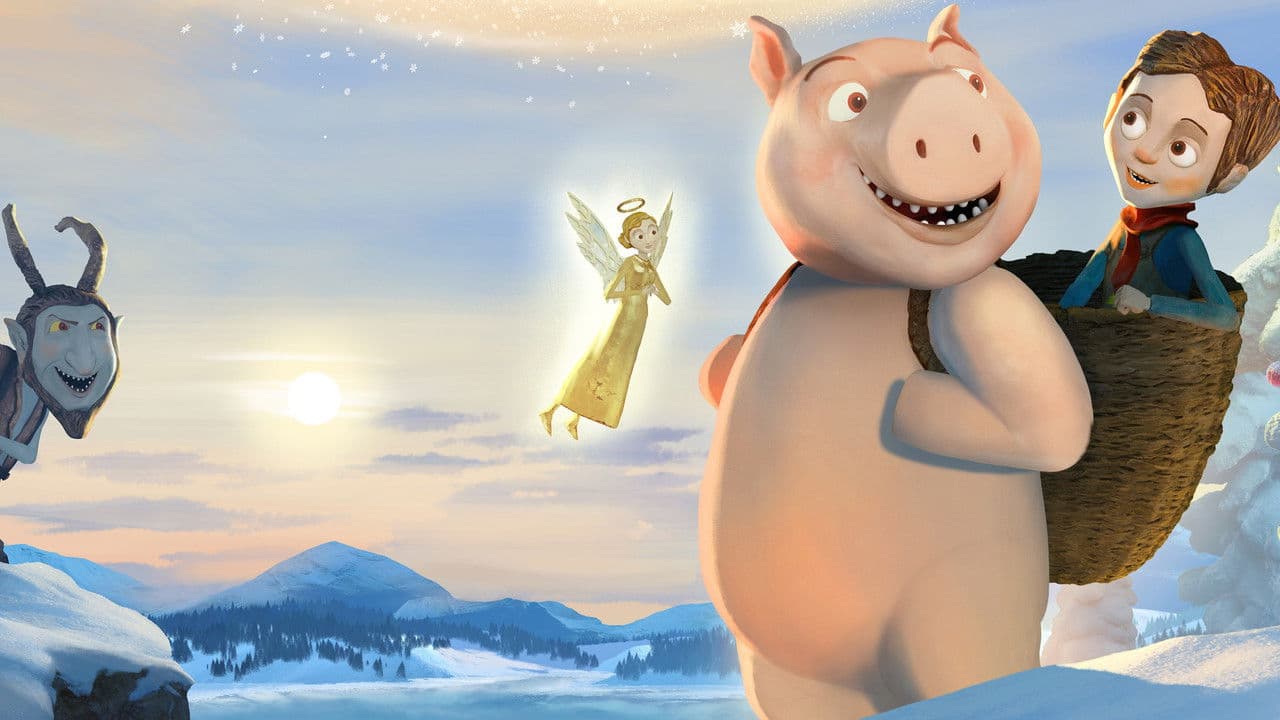
The film succeeds in maintaining a balance between the wonder inherent to Christmas tales and sufficient narrative tension to keep a young audience engaged. The figure of Krampus, an antagonist drawn from European folklore, introduces a mythology less conventional than the usual generic villain scheme, and may spark children's curiosity about popular traditions linked to Christmas. The arc of Julius's character, an orphan who learns to believe in himself, is treated with an emotional sincerity that goes beyond a mere pretext for adventure.
Age recommendation and discussion points
The film is suitable from age 7 or 8 for children comfortable with tense situations and frightening antagonists, and rather from age 9 or 10 for fully serene viewing. Two angles of discussion are worth opening after watching: how to respond to someone who intimidates or mistreats, and why do the bullies in the film change their attitude so quickly, is that really how it happens in real life?
Synopsis
Eight-year old Julius lives at an orphanage. Julius is a bit of an outsider, and secretly still believes in Santa Claus. When he is confronted with the fact that Santa Claus may just be the headmaster of the orphanage dressing up, Julius loses not only his belief in Santa - also his belief in himself. But then something strange happens, and suddenly Julius finds himself in a magic world.
About this title
- Format
- Feature film
- Year
- 2016
- Runtime
- 1h 20m
- Countries
- Denmark, Sweden, Germany
- Original language
- DA
- Directed by
- Jacob Ley
- Main cast
- Rasmus Bjerg, Bodil Jørgensen, Claus Bue, Lars Hjortshøj, Albert Rudbeck Lindhardt, Herman Knop, Malte Houe, Maria Lucia, Uffe Ellemann-Jensen, Flora Ofelia Hofmann Lindahl
- Studios
- Copenhagen Bombay, Fish Blowing Bubbles, Copenhagen Bombay Sverige
Content barometer
- Violence2/5Moderate
- Fear3/5Notable tension
- Sexuality0/5None
- Language0/5None
- Narrative complexity1/5Accessible
- Adult themes0/5None
Watch-outs
- Bullying
- Mockery
Values conveyed
- Courage
- Acceptance of difference
- Perseverance
- friendship
- hope
- self confidence