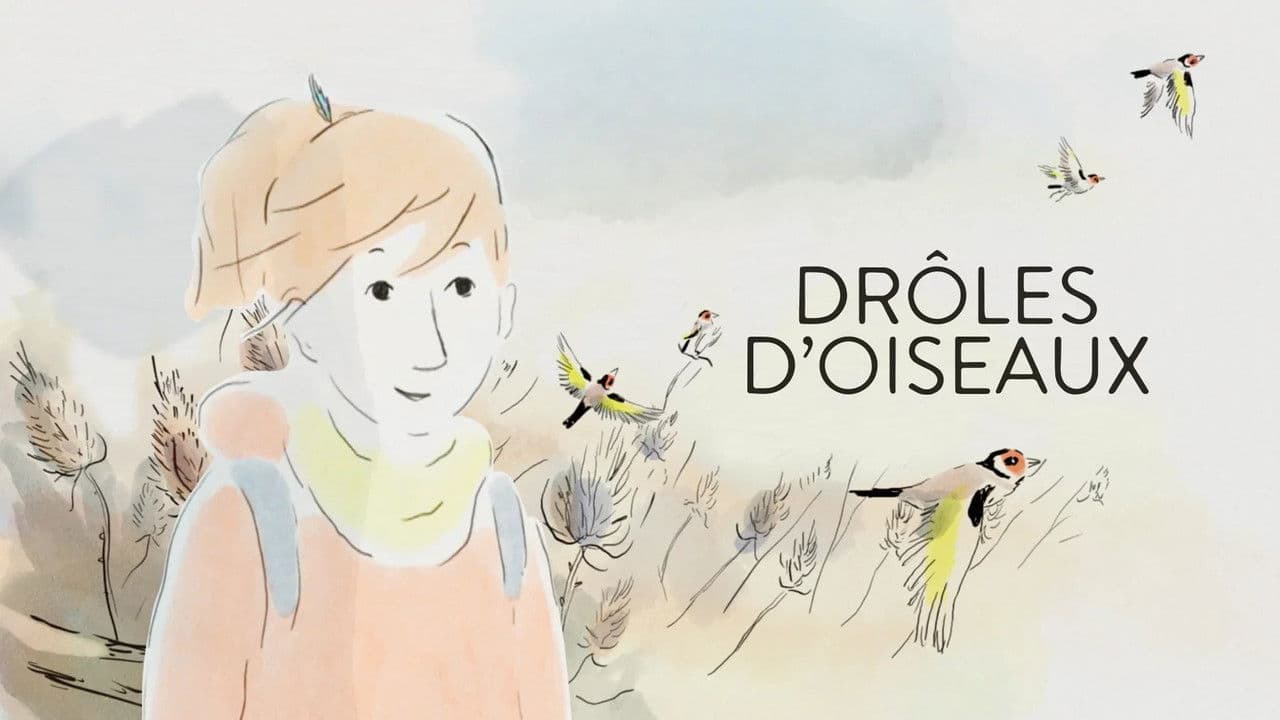
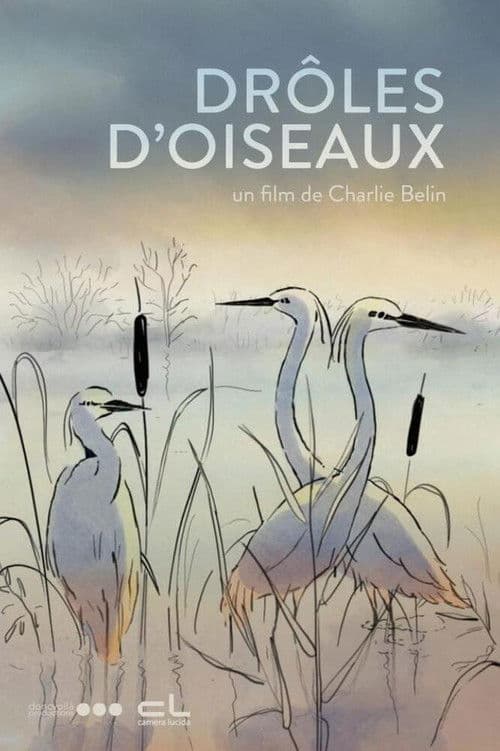
Funny Birds
Does this age rating seem accurate to you?
Detailed parental analysis
Peculiar Birds is a gentle and contemplative adventure film, tinged with a quiet melancholy that lends it an unusual depth for its target audience. A solitary young girl with a passion for ornithology befriends a mysterious woman, and the two set out together to explore an island populated with rare birds. The film is primarily aimed at young children from 4-6 years old, but its emotional sensitivity and the subtlety of certain themes may resonate with older children and their parents.
Underlying Values
The narrative is built around solid and coherent values: intellectual curiosity is presented as a strength, not as a marginalness to be corrected. Ellie draws her confidence not from a forced social transformation but from what she already knows and loves, which is a more nuanced narrative proposition than the classic arc of the shy child who learns to assert herself. The intergenerational friendship between the girl and the adult is founded on mutual respect and genuine complementarity, rather than on a simple mentoring relationship. The film also values slowness, observation and attention to the natural world, which stands out against the usually relentless pace of the genre.
Social Themes
The adult's illness is present in the background, perceptible through concrete signs such as hair loss and repeated absences, but never explicitly named. This narrative choice is delicate: it allows the child living through a similar situation in their own family to feel represented, but it leaves younger viewers in a state of questioning that parents will need to anticipate. This is one of the film's few subjects that calls for conversation before or after viewing, not because the representation is clumsy, but because it is deliberately open-ended.
Parental and Family Portrayals
Ellie's family situation remains in the background, and it is precisely the absence of a strong adult connection in her school and social life that makes the meeting with the ornithologist woman so formative for her. Parental figures are not failing in a dramatic way, but their relative discretion in the narrative allows Ellie to evolve in an unusual space of autonomy for her age, including when she finds herself alone on the island at night. This tension-filled situation, treated without alarmism, remains one of the film's most striking sequences for sensitive children.
Strengths
The film achieves something quite rare in cinema for young audiences: it takes seriously the inner life of an introverted child without seeking to normalise her. Ellie's ornithological passion is not a pretext but a genuine narrative driver, and the sequences on the island have a contemplative and sensory quality that departs from the usual format of childhood adventure. The adult's illness, treated in the background, introduces an adult emotional dimension to a film for children without ever tipping into melodrama or needless anxiety. It is a film that trusts in the intelligence of its young audience, which gives it a lasting educational and emotional value.
Age recommendation and discussion points
The film is suitable from 5-6 years old for children not sensitive to nocturnal atmospheres and situations of solitude, and entirely reassuring from 7-8 years onwards. Two discussion angles are worth preparing: firstly, why Ellie prefers books to the company of other children, and whether this is a strength or a difficulty; secondly, if the child notices that the ornithologist woman seems ill, it is an opportunity to address the subject of illness in the adults around them in an open and reassuring way.
Synopsis
10-year-old Ellie is fascinated by nature and birds, she spends her time reading about them. One day, a few miles from school, she goes onto a little island on the Loire River to take a bird book back to the library. It's an island full of birds.
About this title
- Format
- Short film
- Year
- 2023
- Runtime
- 31m
- Countries
- France
- Original language
- FR
- Studios
- Doncvoilà productions, Camera Lucida
Content barometer
- Violence0/5None
- Fear2/5A few scenes
- Sexuality0/5None
- Language0/5None
- Narrative complexity0/5Simple
- Adult themes0/5None
Watch-outs
- Grief
- Death / grief
Values conveyed
- Friendship
- Acceptance of difference
- Perseverance
- Autonomy
- nature
- curiosity
- mentorship
- independence