
Fun and Fancy Free
Does this age rating seem accurate to you?
Detailed parental analysis
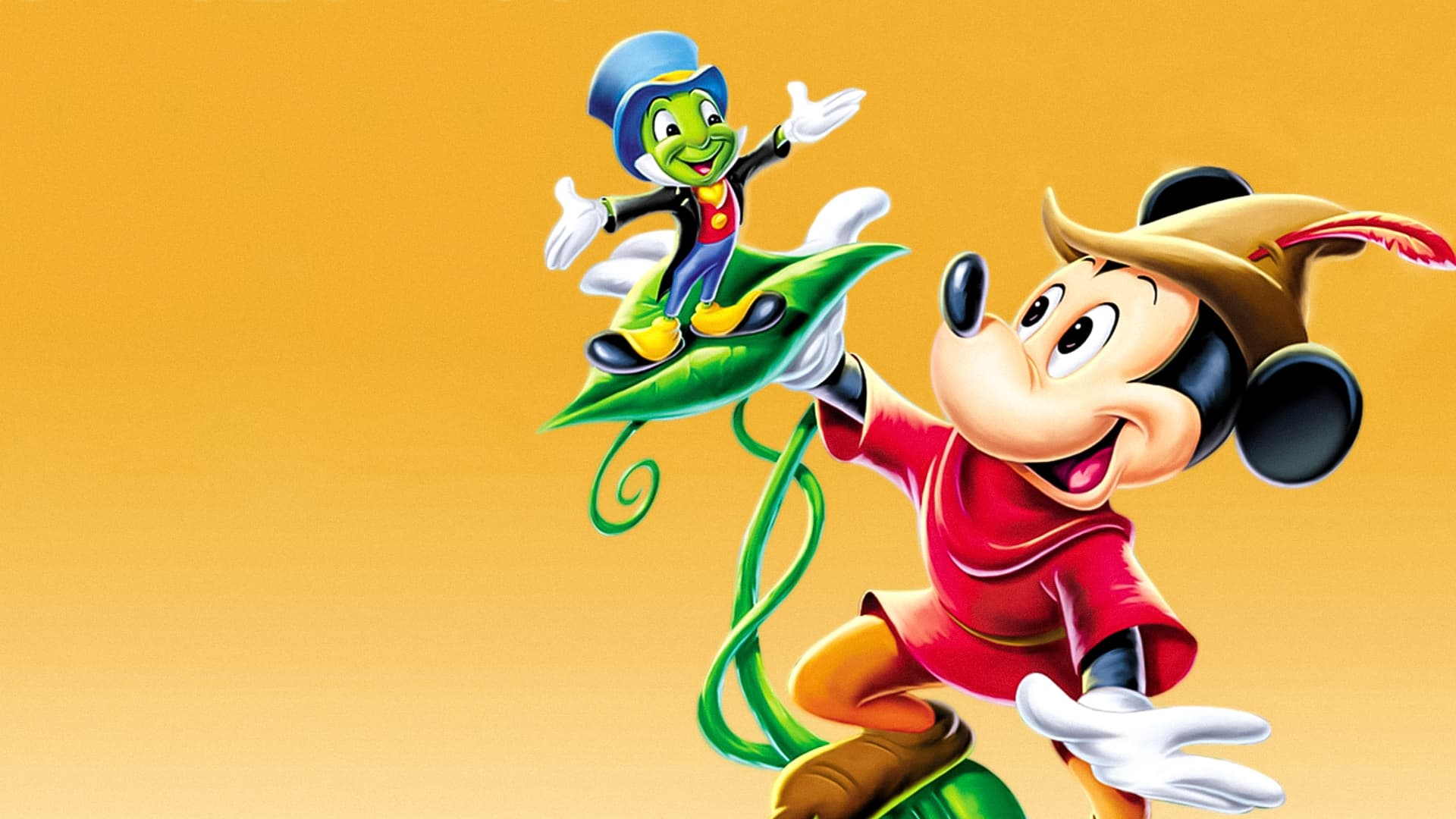
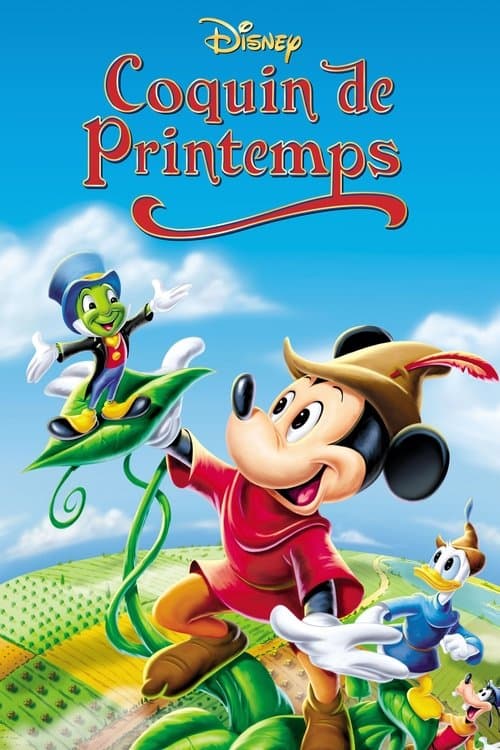
Spring Fever is a joyful and whimsical Disney animated film, comprising two distinct narratives presented alternately by the character Jiminy Cricket. The first follows Bongo, a young circus bear who discovers the wild and love, whilst the second takes Mickey, Donald and Goofy on an adventure against a threatening giant. The film is aimed primarily at young children, but its humour and nostalgia can appeal to a broader family audience.
Violence
Violence is present in both segments of the film, in distinct forms. In the first story, an entire musical sequence presents slaps and blows as the natural mode of romantic expression among bears, with hearts flying away serving to dress up brutality as tenderness. The rival Lumpjaw, imposing and aggressive, engages in a violent fight with Bongo that concludes with a tumbling fall. Nature itself is depicted as hostile, attacking Bongo in a rather intense storm scene. In the second segment, the giant Willie terrorises the heroes, who find themselves trapped, and Donald brandishes an axe against the family cow in a fit of frenzied hunger. These scenes remain within the register of cartoon comedy and have no traumatic purpose, but their accumulation may startle more sensitive children.
Underlying Values
The sequence of the amorous slap amongst the bears is the most questionable point in the film regarding values. It explicitly and cheerfully presents physical violence as a legitimate language of love, without any critical distance. The rest of the film conveys more constructive messages: friendship and solidarity between Mickey, Donald and Goofy in the face of adversity, and Bongo's courage in integrating with nature by overcoming his fears. These two registers coexist without the film becoming aware of their contradiction.
Parental and Family Portrayals
The Mickey segment presents a trio of male friends confronted with a severe food survival situation, without any parental or family figures. The complete absence of a benevolent adult reference point is compensated by solidarity between the three characters, who function as a cell of horizontal mutual aid.
Strengths
The film retains an authentic charm characteristic of post-war Disney production, with inventive musical sequences and expressive animation that have aged well within their genre. The narrative structure in episodes, assured by Jiminy Cricket speaking directly to the viewer, is an accessible and effective narrative device for young children. The Mickey segment offers genuine dramatic tension for its short format, and the figure of the giant Willie, drawn with a real presence, remains memorable. The film also conveys a form of love of nature and a sensitivity to the loneliness of Bongo's character, who seeks to find his place between two worlds.
Age recommendation and discussion points
The film is suitable from ages 5 or 6 for peaceful viewing, even though children most sensitive to imposing figures or tense scenes may benefit from guidance. The sequence of the bears slapping each other to declare their love deserves a brief conversation after the film: can hitting someone really mean that you love them, and how might the bears have done things differently? This is a simple and concrete entry point for discussing the difference between violence and affection.
Synopsis
Jiminy Cricket hosts two Disney animated shorts: Bongo about a circus bear escaping to the wild, and Mickey and the Beanstalk, a take on the famous fairy tale.
About this title
- Format
- Feature film
- Year
- 1947
- Runtime
- 1h 13m
- Countries
- United States of America
- Original language
- EN
- Directed by
- Hamilton Luske, Jack Kinney, Bill Roberts, William Morgan
- Main cast
- Edgar Bergen, Dinah Shore, Luana Patten, Walt Disney, Anita Gordon, Cliff Edwards, Clarence Nash, Pinto Colvig, James MacDonald, Billy Gilbert
- Studios
- Walt Disney Productions
Content barometer
- Violence2/5Moderate
- Fear2/5A few scenes
- Sexuality0/5None
- Language0/5None
- Narrative complexity0/5Simple
- Adult themes0/5None
Watch-outs
- Violence
Values conveyed
- Courage
- Friendship
- Autonomy
- teamwork
- perseverance