
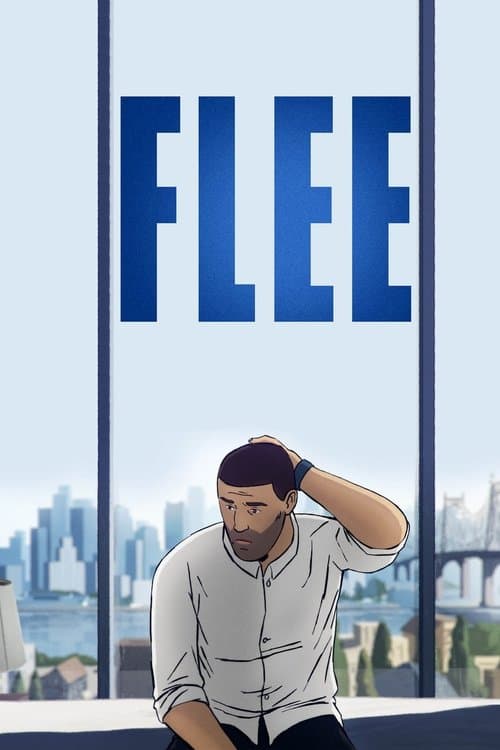
Flee
Flugt
Does this age rating seem accurate to you?
Detailed parental analysis
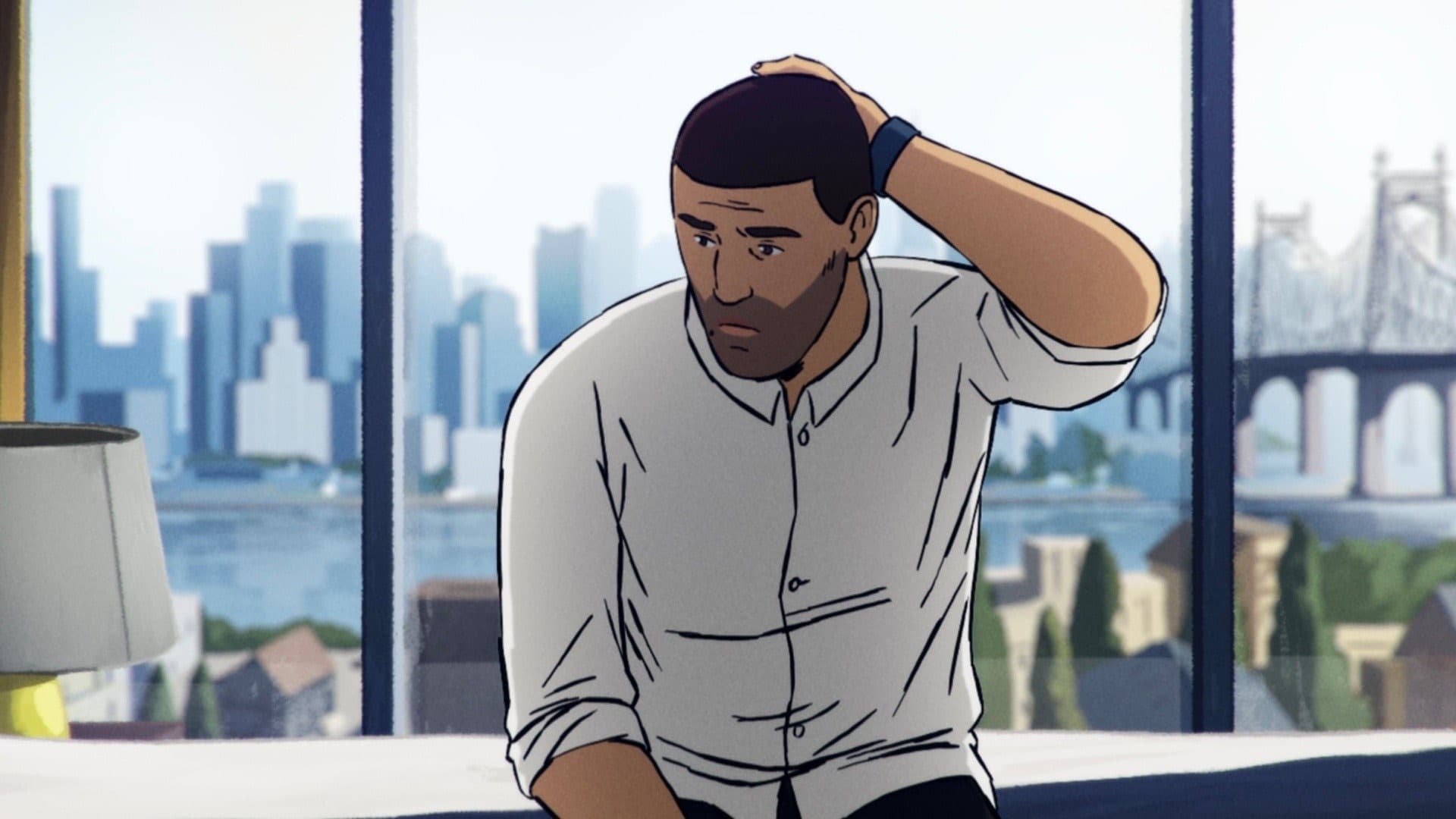
Flee is a serious and intimate animated documentary, with an atmosphere that is at once gentle and profoundly harrowing. It traces the true journey of Amin Nawabi, an Afghan forced to flee his country as a child with his family, crossing Europe at the cost of extreme dangers, and who reflects on this long-hidden past at a pivotal moment in his adult life. The film is unambiguously addressed to an informed teenage and adult audience.
Social Themes
Forced migration and the refugee condition lie at the absolute heart of the film. The narrative describes with precision the perilous sea crossings where overloaded vessels risk sinking, the clandestine journeys in airless trucks and containers, the passages through the hands of smugglers who treat entire families as merchandise. Archive footage shows scenes of war and explosions in the distance. The violence of institutional indifference, notably that of transit authorities, is represented without softening. These themes are treated with a documentary rigour that gives the narrative genuine pedagogical value regarding the reality of contemporary exile.
Violence
The violence present in the film is documentary rather than spectacular. Archive footage shows corpses and blood-covered bodies linked to the context of war in Afghanistan, and scenes of imminent drowning during sea crossings are described and illustrated in a striking manner. A sexual assault is suggested off-screen, without explicit representation but with sufficient narrative clarity to be perceived. This violence is never aestheticised or entertaining: it serves to account for a lived reality, which renders it morally justified but emotionally weighty, particularly for the most sensitive adolescents.
Underlying Values
The film is structured around a central value: the home as a space of safety and belonging, not as a geographical location but as an inner and relational construction. Perseverance in the face of adversity, family solidarity despite dispersal, and the necessity of facing truth in order to move forward run through the entire narrative. No morally questionable value disturbs this line: the film neither romanticises wandering nor sacrifice, it documents them with clarity.
Parental and Family Portrayals
The central parental figure is that of a father who died before the exile, whose absence structures the entire family trajectory. Amin's mother and siblings are loving presences but overwhelmed by circumstances, forced to make impossible decisions within a context of survival. The film shows a family that attempts to remain united despite forced dispersal and years of separation, and whose bonds endure despite time and distance.
Substances
Very brief archive footage shows people smoking and an individual visibly very drunk in the street. These elements are anecdotal and bear no narrative weight in the film's economy.
Language
The film contains a few instances of coarse language, including the English word translated by a strong equivalent according to versions. The register remains measured and contextually justified.
Strengths
Flee is a film of rare formal intelligence for a documentary: animation makes it possible to restore fragmented, blurred or too dangerous memories to exist as real images, whilst preserving the dignity of those involved. The direct voice narration, constructed as a progressive testimony, creates an intimacy with the subject that renders the narrative both universal and singular. The film poses with justness the question of what we owe to the past in order to inhabit the present, without ever yielding to easy moral lesson. Its pedagogical value regarding the realities of exile and migration is substantial, and its treatment of trauma as something that is carried, concealed and eventually must be named is of remarkable emotional maturity.
Age recommendation and discussion points
Flee is not suitable for under 13s because of documentary violence, themes of persecution and the suggestion of sexual assault. For a serene and fruitful viewing experience, 14 to 15 years is a more appropriate threshold. Two angles of discussion are particularly valuable after viewing: to explore with the child what it means to have a home when one has lost everything, and why an individual can carry a secret for years without being able to confide it even to those they love.
Synopsis
Recounted mostly through animation to protect his identity, Amin looks back over his past as a child refugee from Afghanistan as he grapples with a secret he’s kept hidden for 20 years.
About this title
- Format
- Feature film
- Year
- 2021
- Runtime
- 1h 23m
- Countries
- Denmark, Estonia, Netherlands, Norway, Sweden, United Kingdom, United States of America, Finland, France, Slovenia, Spain, Belgium, Italy
- Original language
- DA
- Directed by
- Jonas Poher Rasmussen
- Main cast
- Amin Nawabi, Daniel Karimyar, Fardin Mijdzadeh, Milad Eskandari, Belal Faiz, Elaha Faiz, Zahra Mehrwarz, Sadia Faiz, Georg Jagunov, Rashid Aitouganov
- Studios
- Final Cut for Real, Vivement lundi !, Sun Creature, Participant, MostFilm, Mer Film, VPRO, Vice Studios, RYOT Films, Left Handed Films, ARTE, RTV Slovenija, Estonian Public Broadcasting (ERR), MEDIA Programme of the European Union, I Wonder Pictures
Content barometer
- Violence3/5Notable
- Fear4/5Intense
- Sexuality1/5Allusions
- Language2/5Moderate
- Narrative complexity1/5Accessible
- Adult themes1/5Mild
Values conveyed
- Courage
- Acceptance of difference
- Perseverance
- resilience
- acceptance
- family
- truth