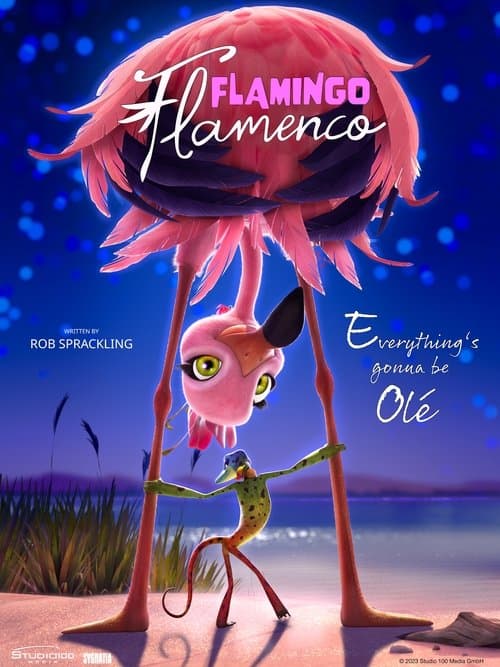
Flamingo Flamenco
Does this age rating seem accurate to you?
Detailed parental analysis
Flamingo Flamenco is an adventurous and warm animated film, rooted in the landscapes and musical traditions of Andalusia. A young flamingo must confront sudden loss and overcome her fear to guide her group in the face of an external threat. The film targets children aged 6 to 11 and adopts the register of family animal adventure, with an emotional palette darker than its festive appearance initially suggests.
Violence
The film's central scene depicts an attack by wild dogs on a group of flamingos, during which a character close to the protagonist is killed. The violence is not graphic in the gore sense, but it is real in its consequences: a loved one disappears, and the protagonist emerges durably broken by it. This sequence may surprise or frighten children aged 6 or 7, who expect a lighter register. The attack is presented as a serious threat rather than as spectacle, which gives it narrative coherence, but the emotional shock remains sharp. The dogs are depicted as antagonists without nuance, which simplifies the predator-prey relationship into a clear-cut moral conflict.
Underlying Values
The film builds an arc of collective reconstruction: after loss and depression, the protagonist regains her strength not alone but by drawing her group into a shared response to the threat. This pattern values solidarity and collective action over individual withdrawal, which is a positive and coherent orientation. However, the portrayal of wild dogs as a uniformly evil entity deserves discussion with children: the film offers no perspective on these animals beyond their role as antagonists, which can feed a binary reading of the natural world.
Social Themes
The film is grounded in an Andalusian natural setting and implicitly addresses the fragility of species and conflictual coexistence within ecosystems. Without being an ecological film in the strict sense, the threat hanging over the flamingo group and the logic of collective survival can open a conversation about wildlife, predators and humanity's place in that balance. Andalusia and flamenco are treated with care as living cultural heritage, which gives the film an appreciable dimension of geographical and artistic discovery.
Strengths
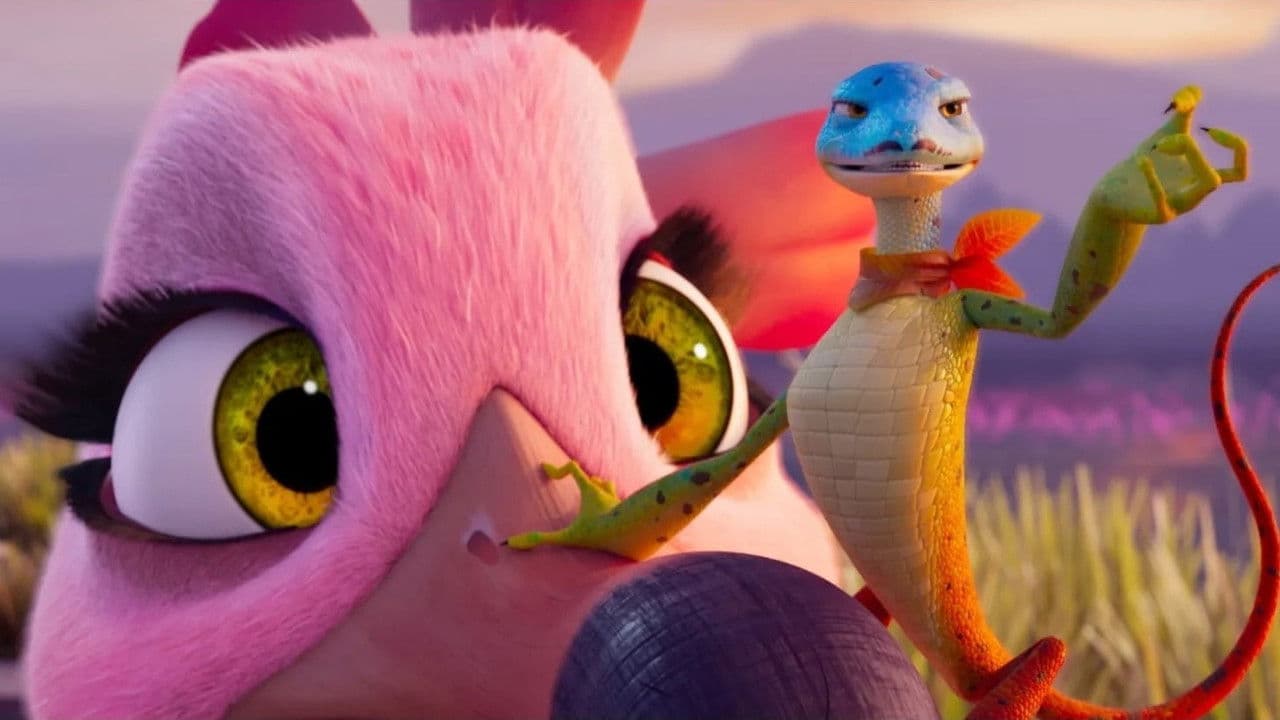
The film makes genuine use of its Andalusian setting: the flamenco dance sequences are integrated into the narrative rather than imposed upon it, and they serve to express the protagonist's inner states with an effectiveness that dialogue alone would not have achieved. The protagonist's emotional arc, which passes through real grief before reconstruction, is treated with an honesty unusual for this age group: the film does not resolve loss through narrative sleight of hand, it allows it time and weight. The duo between the flamingo and her lizard companion works well as a spring for humour and support without falling into comic condescension. The whole is served by writing seasoned in genre conventions, solid enough not to tire the adults accompanying the children.
Age recommendation and discussion points
The film is suitable from around age 7 onwards for children who can tolerate animal tension scenes and the death of a secondary character without lasting anxiety; for more sensitive viewers, it is better to wait until age 8 or 9. Two angles of discussion are worthwhile after viewing: ask the child how she understands the protagonist's sadness and what helped her move forward, and question together why the dogs are presented as wicked when they are simply following their instinct.
Synopsis
The Fuente de Piedra lagoon in Spain is home to one of the largest flocks of flamingos in Europe. Once a year, the adolescent birds perform a dance that looks like... flamenco! But when the flock is attacked by hateful podencos (wild dogs) our heroine Rosie, a fun, dance crazy flamingo, loses her beloved sister and the flamenco is cancelled henceforth. She grows up a shadow of her former self, robbed of her sisters love and the joy of dance. One day she meets Carlos, an exuberant lizard, who encourages her to dance once more - rekindling her inner flame. Over time, she transforms back into her old confident self, before leading her flock to face down the podencos and dance once more.
About this title
- Format
- Feature film
- Year
- 2026
- Runtime
- 1h 20m
- Countries
- Germany, Spain
- Original language
- EN
- Directed by
- Rob Sprackling, Raúl García
- Studios
- Studio 100 Media, Sygnatia, 3 Doubles Producciones
Content barometer
- Violence2/5Moderate
- Fear3/5Notable tension
- Sexuality0/5None
- Language0/5None
- Narrative complexity1/5Accessible
- Adult themes0/5None
Values conveyed
- Courage
- Friendship
- Perseverance
- resilience
- self confidence