
Fireworks
打ち上げ花火、下から見るか?横から見るか?
Does this age rating seem accurate to you?
Detailed parental analysis
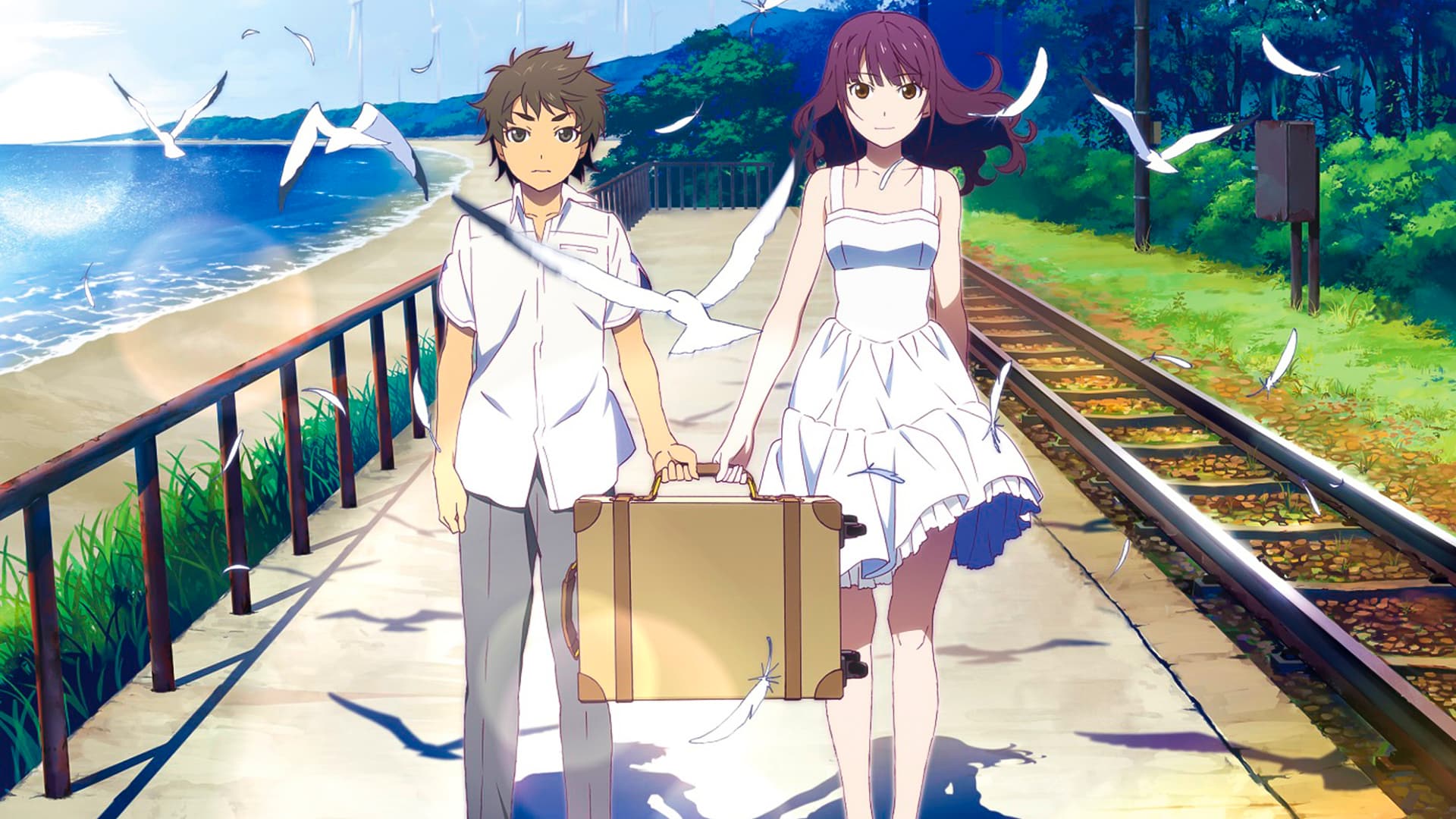
Fireworks is a romantic animated film with a soft and melancholic atmosphere, characterised by luminous aesthetics and teenage sensibilities. The plot follows a high school student who discovers a mysterious object capable of rewinding time, which he uses to relive a crucial day with a classmate he secretly loves. The film targets a teenage audience, with an assumed teenage sensitivity that makes it of little relevance for younger children.
Discrimination
This is the most structural point to flag. The female protagonist is constructed almost exclusively around her physical appearance: she is beautiful, passive, and her role amounts essentially to being rescued and desired. She takes little initiative, rarely expresses a will of her own, and her family background serves chiefly as a pretext for mobilising the male hero. In parallel, male characters make sexualised comments about a female teacher, and one scene is built around a bet concerning the colour of a woman's underwear. These elements are not questioned by the narrative, which makes them all the more important to discuss with a teenager.
Underlying Values
The film presents the manipulation of time as a legitimate romantic act: the hero relives the same day repeatedly not to undo a wrong or save a life, but to obtain the romantic conclusion he desires. This logic of repetition in service of personal desire is never questioned morally. Romantic love is posited as sufficient motivation for everything, which is a straightforward but debatable proposition worth putting into perspective with a teenager.
Sex and Nudity
The film contains no explicit nudity, but several sequences are designed to draw attention to the protagonist's body: shots of her legs, light clothing highlighted, and a scene in which the two characters find themselves in a physically ambiguous position after a fall. Added to this is a joke about a female teacher's breasts, delivered without distance or irony. The whole remains in the realm of the suggestive, but the accumulation of these elements constructs a female representation oriented towards the male gaze.
Parental and Family Portrayals
The protagonist's mother is characterised by her infidelity and an out-of-wedlock pregnancy presented as elements of shame or family instability. This exposure of the mother's past serves as the catalyst for the daughter's escape and thus the triggering of the narrative. The parental figure is therefore dysfunctional but not treated with depth: it remains a narrative device rather than a character. An adult father strikes a teenager in a scene of family conflict, which is shown without real commentary.
Substances
A secondary character is presented as the village drunk, shown repeatedly with a staggering gait and muddled speech. His representation is comedic and without critical weight. It is a light but repeated presence.
Language
The language contains a few familiar or slightly vulgar expressions, without excess. Nothing particularly striking for a teenage audience, but worth mentioning for parents of younger children.
Strengths
The film possesses careful visual direction, with nocturnal sequences and lighting effects that create a successfully contemplative atmosphere. The time-loop structure offers several moments of inventive mise en scène and genuine emotional tension in the final section. The theme of regret and the desire to relive a day to experience it better is universally readable and can find a genuine echo in a teenager. These formal and emotional qualities are not sufficient to offset the representation problems, but they justify the film serving as a starting point for a substantive conversation.
Age recommendation and discussion points
The film is suitable from age 13 onwards, accompanied by an adult or followed by discussion. Two angles of conversation naturally arise: why does the narrative construct the young woman as an object to be rescued rather than as a full character, and is it legitimate to manipulate a situation, even magically, to obtain what one desires from another person?
Synopsis
Moshimo, Japan. The annual fireworks festival is about to take place and a group of schoolboys, arguing over whether they are round or flat when viewed from different angles, set out to find it out.
About this title
- Format
- Feature film
- Year
- 2017
- Runtime
- 1h 30m
- Countries
- Japan
- Original language
- JA
- Directed by
- Nobuyuki Takeuchi, Akiyuki Shinbo
- Main cast
- Suzu Hirose, Masaki Suda, Mamoru Miyano, Shintaro Asanuma, Toshiyuki Toyonaga, Yuki Kaji, Shin-ichiro Miki, Kana Hanazawa, Takahiro Sakurai, Michiko Neya
- Studios
- SHAFT, Aniplex, jeki, Lawson Entertainment, TOHO, TOY'S FACTORY, LINE, KADOKAWA