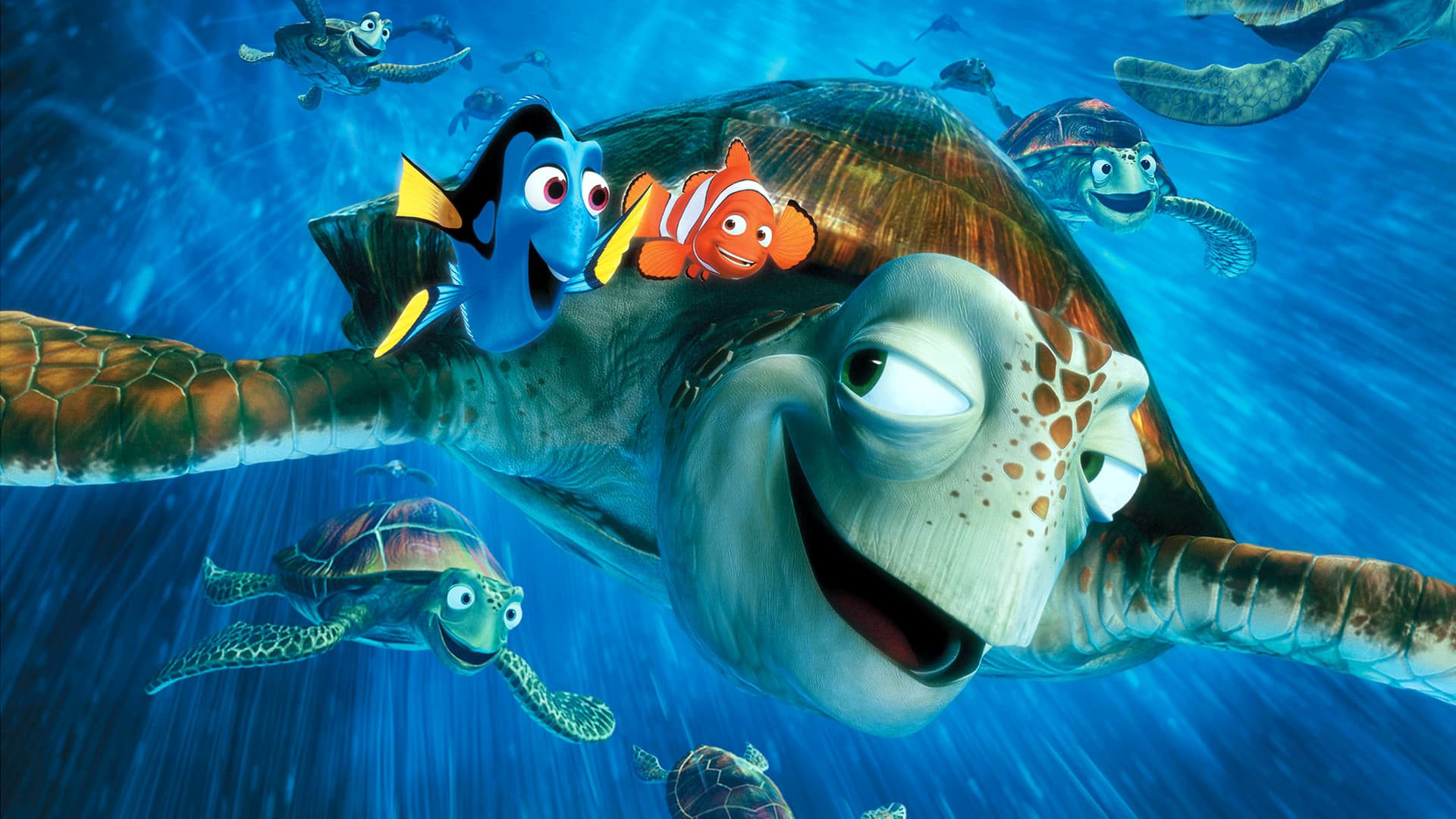

Finding Nemo
Does this age rating seem accurate to you?
Detailed parental analysis
Finding Nemo is an animated adventure film by Pixar, luminous in its aesthetic but punctuated by genuinely distressing sequences. A traumatised and overprotective clownfish father travels across the ocean to find his son, captured by a diver. The film targets young children, but several scenes of intense peril and an emotionally charged opening warrant careful consideration for the very young.
Parental and Family Portrayals
The father-son relationship is the absolute heart of the film. Marlin is a single father, traumatised by the loss of his wife and nearly all of his eggs during a predator attack, and this unresolved grief explains an overprotectiveness that hinders Nemo's independence. The narrative clearly poses the question: can one love a child so much as to suffocate him? The film does not condemn Marlin; it shows him a path forward. Single paternal parenthood is treated with seriousness and empathy, without victimisation or caricature. It is one of the most finely drawn paternal portraits in mainstream animated cinema.
Violence
The film is not violent in the traditional sense, but it accumulates sequences of intense peril that can affect very young children. The opening, with the barracuda attack, is brutal in its narrative effectiveness: Marlin regains consciousness alone, his wife and eggs have disappeared without the film explicitly showing what happened, but the conclusion is unambiguous. What follows are sharks with impressive teeth who tip into predatory mode after sensing blood, a lanternfish with white eyes that emerges from the abyss attempting to devour the heroes, and Nemo sucked towards an aquarium filter's propeller. These scenes are constructed with genuine dramatic tension, never gratuitous, always in service of the story, but their sensory impact on a child under five should not be underestimated.
Underlying Values
The film advocates with remarkable narrative coherence for parental letting go and the trust placed in a child to develop his own independence. This message is not delivered morally: it is built through Marlin's progressive failure and transformation. Simultaneously, Nemo embodies perseverance in the face of physical limitation: his atrophied fin is a real obstacle that the film does not minimise, but which it refuses to transform into destiny. These two arcs reinforce each other and lend the film a thematic depth rare for its intended audience.
Social Themes
The film discreetly addresses concrete environmental issues: the capture of wild marine animals to stock domestic aquariums, the ocean pollution evoked through a crossing of a fishing net zone, and life in captivity opposed to natural freedom. These elements are not didactic, but they naturally open a conversation about the place of wild animals in artificial environments.
Strengths
Finding Nemo is a film of solid narrative mastery: the emotionally courageous opening, which establishes the father's trauma without softening it, gives the entire narrative an unusual psychological consistency for a film intended for children. The writing of the character Dory, who suffers from short-term memory loss, succeeds in transforming a disability into a resource for comedy and a lesson in presence in the world without ever turning her into a target or a burden. The film knows how to alternate tension and breathing space, which prevents it from exhausting its young audience. Its ability to treat sincerely grief, parental fear and the necessity of growing up, in an accessible visual language, makes it an exceptionally rich entry point for an adult-child conversation after viewing.
Age recommendation and discussion points
The film is suitable from age 5 with an adult present, and entirely fine from age 6 for children comfortable with sequences of tension. Below age 5, the opening and predator scenes may generate lasting fear. Two concrete angles to explore after viewing: why does Marlin struggle so much to let Nemo take risks, and can protecting someone sometimes harm him? And, for older children, if the fish in aquariums had families waiting for them somewhere, what would that change?
Synopsis
Nemo, an adventurous young clownfish, is unexpectedly taken from his Great Barrier Reef home to a dentist's office aquarium. It's up to his worrisome father Marlin and a friendly but forgetful fish Dory to bring Nemo home -- meeting vegetarian sharks, surfer dude turtles, hypnotic jellyfish, hungry seagulls, and more along the way.
About this title
- Format
- Feature film
- Year
- 2003
- Runtime
- 1h 41m
- Countries
- United States of America
- Original language
- EN
- Studios
- Pixar
Content barometer
- Violence2/5Moderate
- Fear3/5Notable tension
- Sexuality0/5None
- Language0/5None
- Narrative complexity2/5Moderate
- Adult themes0/5None