
Fillmore!
Does this age rating seem accurate to you?
Detailed parental analysis
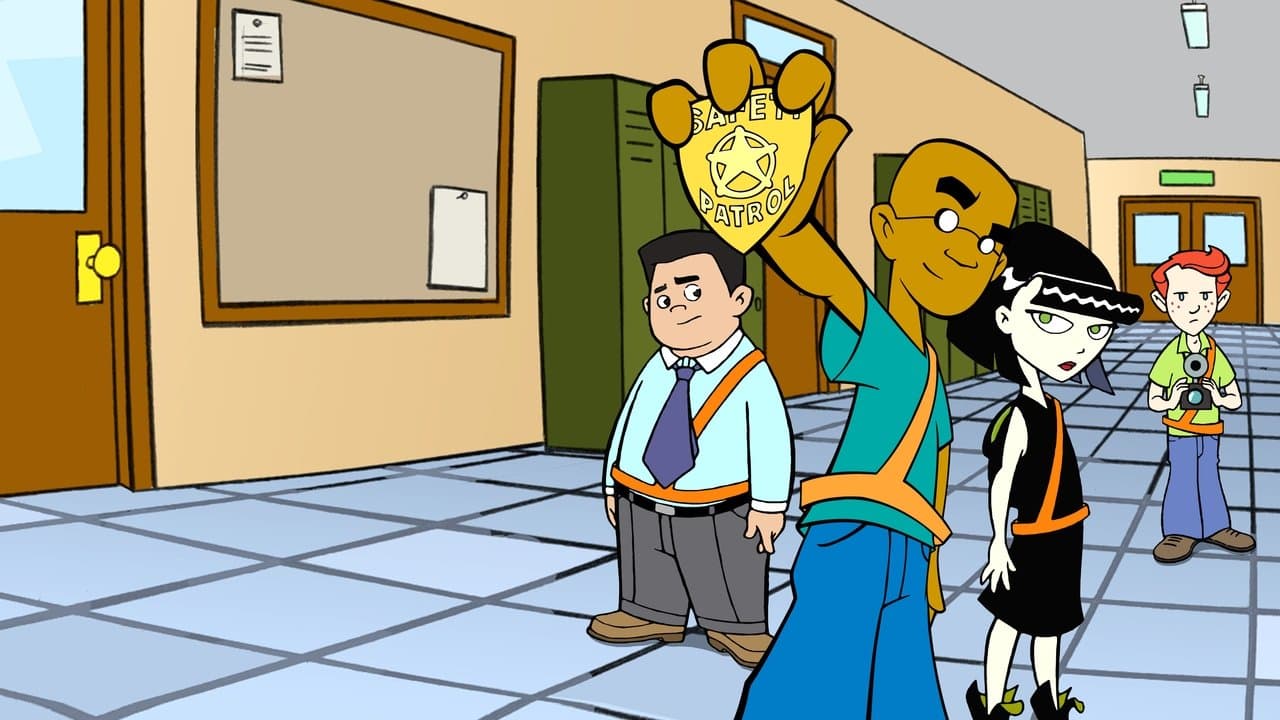
Fillmore! is an animated series with a lighthearted and parodic tone that transposes the codes of noir and detective films into the world of an American primary school. A former troublemaking student turned safety patrol officer solves miniature criminal cases with his partner, set in a deliberately absurd and humorous context. The series targets school-age children and pre-adolescents, but its dual-level humour also works for parents watching alongside them.
Underlying Values
The series builds its narrative on a strong and well-sustained idea: a child's past does not determine their future. Fillmore, a former troublemaker, embodies redemption through commitment and responsibility, without the narrative either idealising him or downplaying his past mistakes. Justice is presented as a process founded on collective rules rather than individual revenge, which is a rare and coherent narrative stance. The partnership between Fillmore and Ingrid values mutual trust, respect for each other's skills and complementarity rather than competition. These values are structural, not decorative.
Violence
Violence is present in parodic form and systematically downplayed by the school setting and humorous tone. Chases result in destruction of school property, cases involve childish versions of serious crimes such as intimidation attempts or sabotage, and certain episodes explicitly parody adult action films like Die Hard or The Silence of the Lambs. This stylised violence is never gory or realistic, but it assumes the child understands it is a parody in order to grasp the second-degree humour. For a younger child, the reference to the police genre may be perceived at face value without the comic filter.
Sex and Nudity
One episode features a situation where middle school boys catch sight of a girl in her underwear following a clothes exchange in a locker. The scene is treated lightly and without explicit sexual intent, but it deserves to be flagged because it normalises a situation of involuntary exposure without the narrative really questioning its problematic nature. It is not a central element of the series, but it is a useful talking point for a conversation about respect for privacy.
Social Themes
The series parodies serious adult institutions, notably the police, justice and politics, by transposing them into a school setting. Episodes reference political assassinations and police brutality in the form of humorous mirror games. For a child, these references often go unnoticed. For a pre-adolescent or parent, they open an interesting door onto how institutions function and what fiction says about social reality.
Strengths
Fillmore! is an animated series written with genuine narrative intelligence. The noir parody is sustained with consistency across all episodes, with constructed plots, plot twists and a sense of pacing proper to the genre. The writing works on two levels simultaneously: children follow the investigation, adults pick up on cultural references and meta-humour. The main character is one of the rare animated children's heroes whose redemption arc is treated with nuance and without heavy-handed moralising. The series also offers a portrayal of teamwork and problem-solving through reasoning, which gives it real pedagogical value beyond entertainment.
Age recommendation and discussion points
The series is suitable from age 8 onwards for supervised viewing, and fully appropriate for independent viewing from age 10. Two discussion angles are worth pursuing after watching: ask the child what they think about the fact that Fillmore was a bad student before becoming a patrol officer, and what that says about the possibility of change; and return to the locker episode to talk about respect for privacy and what it feels like when someone sees something you did not choose to show.
Synopsis
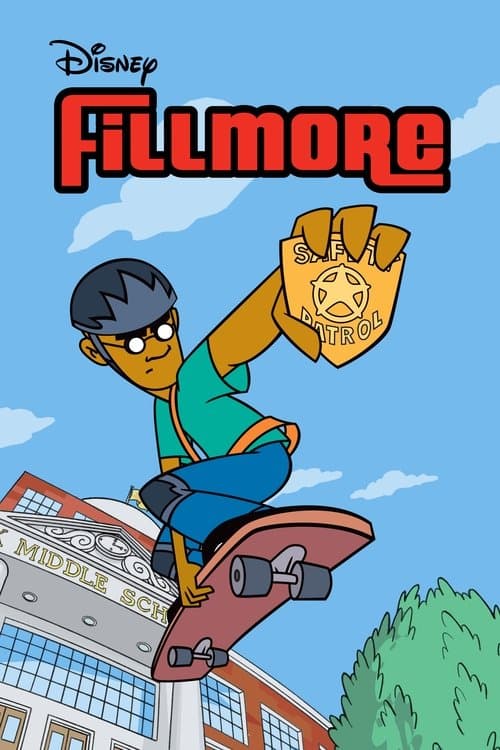
Former delinquent Cornelius Fillmore saw the light, and now fights on the side of justice at X Middle School. Joining him is Ingrid Third, who has a photographic memory. Together, Fillmore and Third fight all those who attempt to break the rules at X, all while keeping Jr. Commissioner Vallejo off their backs and trying to please the school's overly-image-conscious Principal Folsom. Fillmore! is an American animated television series which was produced by Walt Disney Television Animation. The series was created by Scott M. Gimple and directed by Christian Roman. It was the last series produced by Walt Disney Television Animation alone, without association with Disney Channel.
About this title
- Format
- TV series
- Year
- 2002
- Runtime
- 22m
- Original language
- EN
- Directed by
- Scott M. Gimple
- Main cast
- Orlando Brown, Tara Strong, Horatio Sanz, Wendie Malick, Danny Tamberelli, Kyle Sullivan, Lauren Tom, Jeff Probst, Don LaFontaine
- Studios
- Disney Television Animation, Walt Disney Television
Content barometer
- Violence2/5Moderate
- Fear1/5Mild
- Sexuality1/5Allusions
- Language0/5None
- Narrative complexity1/5Accessible
- Adult themes0/5None
Watch-outs
- Violence
Values conveyed
- Friendship
- Perseverance
- Loyalty
- Forgiveness
- justice
- teamwork
- responsibility