

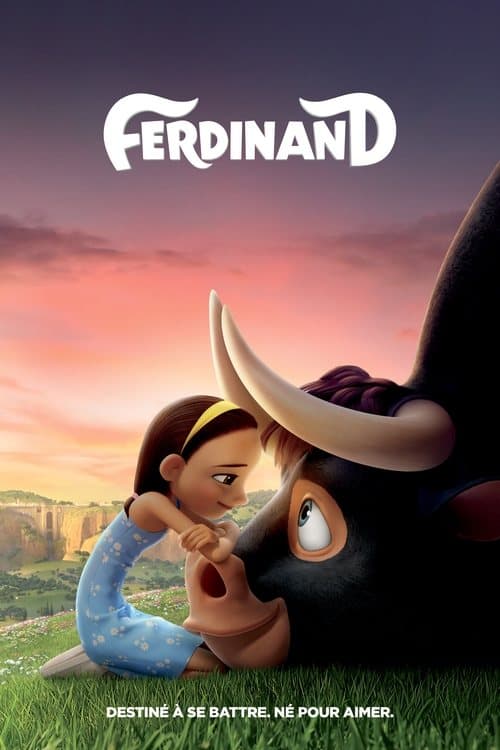
Ferdinand
Does this age rating seem accurate to you?
Detailed parental analysis
Ferdinand is a family animated film with a broadly warm atmosphere, punctuated by tense sequences and moments of genuine sadness. The plot follows a gentle and peaceful bull who, after fleeing the arena, is drawn against his will into the world of bullfighting that he refuses to join. The film is aimed at children from 5-6 years old and their families, with a real sensitivity to the emotions of the youngest viewers.
Violence
Violence is never graphic, but its narrative presence is real and deliberate. The film explicitly exposes children to the fact that bulls end up either in the arena or at the slaughterhouse, and this threat of death hangs over the entire story. A slaughterhouse scene, punctuated by dangerous machinery and sustained tension, may affect the youngest viewers. The bullfight itself results in a minor injury to Ferdinand, with no visible blood, and the film concludes with a peaceful victory rather than a confrontation. Violence is therefore functional and meaningful: it serves to denounce bullfighting and to give weight to the hero's non-violent resolution, making it a coherent narrative tool rather than gratuitous spectacle.
Underlying Values
The film builds its entire narrative around a rejection of conformism and the legitimacy of being oneself in the face of intense collective pressure. Ferdinand loves flowers in a world that values strength and aggression, and this identity choice is never presented as a weakness to be corrected but as a virtue to be embraced. The non-violence message is structural: it is precisely by refusing to fight that the hero wins, which effectively inverts the logic of the classical arena film. Solidarity also occupies a central place, with Ferdinand putting his own safety at risk to free his friends. These values are coherent and well integrated into the narrative, without being delivered in a preachy manner.
Parental and Family Portrayals
Ferdinand's father's death is handled implicitly: he leaves for the bullfight and never returns. This offscreen parental loss is the triggering event of the film and weighs emotionally on the opening sequences. The scene is not softened: the child understands what has happened, even though nothing is shown explicitly. This is a genuine point of concern for sensitive children or those who have experienced loss, and it deserves to be anticipated by parents before viewing.
Discrimination
The film features three horses with pronounced German accents, snobbish manners and open contempt for bulls, even going so far as remarks about lineage and origins. These characters are presented as comic antagonists, which means their ethnic and class caricatures are primarily a tool of humour. The stereotype works as a comic device without being dismantled, which leaves it intact in the mind of the child viewer. Additionally, Ferdinand is initially mocked by his peers for interests associated with the feminine, invoking traditional gender roles that the narrative ultimately contests without ever naming it explicitly.
Social Themes
Bullfighting is at the heart of the film, and its treatment is openly critical: the film presents it as a deadly practice imposed on animals without consent, to whom it grants interiority and voice. This stance is clear and deliberate. For a child, it is often a first confrontation with the reality of this practice, which makes post-viewing discussion all the more valuable. The film also touches on, in the background, the question of animal captivity and freedom as a fundamental good.
Strengths
Ferdinand succeeds in delivering a genuinely non-violent message without distorting it into a moral lesson. The dramatic construction is honest: the stakes are real, secondary characters have enough depth that friendship and solidarity feel credible rather than decorative. Humour is present and effective, notably in the urban rampage sequences, without ever defusing the emotionally strong moments. The film manages to make difficult concepts such as death, social pressure and the refusal of violence intelligible to young children, with a narrative economy of means that commands respect.
Age recommendation and discussion points
The film is suitable from 6 years old for children without particular sensitivity to bereavement or animal death, and rather from 5 years old with a parent present to support the more stressful sequences. Two angles merit discussion after viewing: why does Ferdinand win precisely because he refuses to fight, and what does that say about the true definition of courage? And also: what does the child think of the fate of the bulls in the film, and does that seem fair to them?
Synopsis
Ferdinand, a little bull, prefers sitting quietly under a cork tree just smelling the flowers versus jumping around, snorting, and butting heads with other bulls. As Ferdinand grows big and strong, his temperament remains mellow. But one day five men come to choose the "biggest, fastest, roughest bull" for the bullfights in Madrid— and Ferdinand is mistakenly chosen.
About this title
- Format
- Feature film
- Year
- 2017
- Runtime
- 1h 47m
- Countries
- United States of America
- Original language
- EN
- Studios
- Blue Sky Studios, 20th Century Fox Animation, Davis Entertainment, 20th Century Fox
Content barometer
- Violence2/5Moderate
- Fear2/5A few scenes
- Sexuality0/5None
- Language0/5None
- Narrative complexity2/5Moderate
- Adult themes0/5None
Values conveyed
- Courage
- Acceptance of difference
- Forgiveness
- friendship
- empathy
- difference